Εμφάνιση αναρτήσεων με ετικέτα Νόμος. Εμφάνιση όλων των αναρτήσεων

Τετάρτη 11 Φεβρουαρίου 2026

Από τον βασιλιά στο Σινά: η θεϊκή αυθεντία της Τορά / From the King to Sinai: The Torah’s Divine Authority

Στα νομικά κείμενα της αρχαίας Εγγύς Ανατολής — από τον Κώδικα του Χαμμουραμπί έως τους χεττιτικούς και ασσυριακούς νόμους — ο νόμος επικυρώνεται από τον θεό, αλλά συντάσσεται από ανθρώπους: ο βασιλιάς νομοθετεί, βέβαια, κατόπιν θείας εντολής. Η Τορά συνιστά ριζική καινοτομία: ο ίδιος ο Θεός γίνεται νομοθέτης και ο Μωυσής απλός διαμεσολαβητής του θεϊκού λόγου. Στο πλαίσιο του ERC project How God Became a Lawgiver, ο Konrad Schmid (Πανεπιστήμιο Ζυρίχης) ιχνηλατεί τους ιστορικούς παράγοντες που οδήγησαν σε αυτήν τη μετατόπιση: την κατάρρευση της μοναρχίας μετά το 586 π.Χ., την ανάγκη να θεμελιωθεί η κανονιστική ζωή της κοινότητας χωρίς τον βασιλικό θεσμό, και τη σταδιακή θεολογική εξέλιξη του Γιαχβέ από τοπική θεότητα της καταιγίδας σε κύριο όλου του κόσμου. Σε αυτό το πλαίσιο, η Τορά λειτουργεί ως «φορητό σύνταγμα» συλλογικής ταυτότητας: δίνει κίνητρο για την τήρηση των εντολών (μνήμη, θεολογία, παιδαγωγία) και, σταδιακά, η αυθεντία μετακινείται «από τον ναό στο κείμενο». Ιδιαίτερα σημαντική είναι η κατακλείδα του άρθρου: η «θεϊκή νομοθεσία» δεν σημαίνει ένα άχρονο, αδιαπραγμάτευτο σύστημα∙ η ίδια η βιβλική παράδοση προϋποθέτει εσωτερική ερμηνεία και διαρκή εξήγηση — κάτι που μπορεί να προστατεύει, αλλά και να οδηγήσει σε κατάχρηση, όταν «ανθρώπινοι» νόμοι αποκτούν μεταφυσικό κύρος.

Konrad Schmidt, "Why the Torah’s Law Is from God"


Δευτέρα 31 Οκτωβρίου 2022

Το τρέχον τεύχος του Biblica / The current issue of Biblica

 Biblica 103/2 (2022)

  • Yitzhak Lee-Sak, "Benjamin's Birth, the Absence of Jerusalem, and the Insertion of Bethlehem in Gen 35,16-21," 165 - 185 (abstract)
  • Fernando Milán, "Stones That Strike Down Giants: Daniel and David in a New Light," 186 - 212 (abstract)
  • Benjamin D. Suchard, "Historical (In)accuracy and Linguistic Archaism in Daniel 5," 213 - 226 (abstract)
  • Jerome H. Neyrey, "Mark's 'Legal System':  Contributions from the Anthropology of Law," 227 - 253 (abstract)
  • Michael Bachmann, "Abschaffung der Tora bei Gesetzeskennern? Beobachtungen an und zu Röm 7,1-6," 254 - 268 (abstract)
  • Terrance Callan, "One Day Like a Thousand Years (2 Pet 3,8)," 269 - 286 (abstract)

Σάββατο 18 Ιουνίου 2022

Το τρέχον τεύχος του HeBAI / The current issue of HeBAI

Hebrew Bible and Ancient Israel 11/1 (2022)

  • John J. Collins, "The Torah in its Symbolic and Prescriptive Functions," 3-18 (abstract)
  • Timothy H. Lim, "Implicit Criticism of Scriptures and Josephus' Rewritten Bible," 19-30 (abstract)
  • Christopher Rollston, "Ad Fontes: The Authorship of the Pentateuch according to the Pentateuch," 31-48 (abstract)
  • Sidnie White Crawford, "Where is Moses? The Temple Scroll's Claim to Authority," 49-59 (abstract)
  • Laura Quick, "Detextualizing and Retextualizing the Torah," 60-77 (abstract)


Τρίτη 17 Αυγούστου 2021

Ο λευιρατικός νόμος / The Levirate Law

 Στην ιστοσελίδα TheTorah.com η Sara Milstein (University of British Columbia) συζητά το περιεχόμενο και τη φιλοσοφία του λευιρατικού νόμου καθώς επίσης και την εξάρτησή του από ανάλογες νομικές διευθετήσεις της αρχαίας Εγγύς Ανατολής:

The Levirate Law: A Marriage Contract Clause that became Legislation

Τετάρτη 17 Φεβρουαρίου 2021

O Χαμουραμπί κι ο Μωσαϊκός Νόμος / Hammurabi and the Mosaic Law

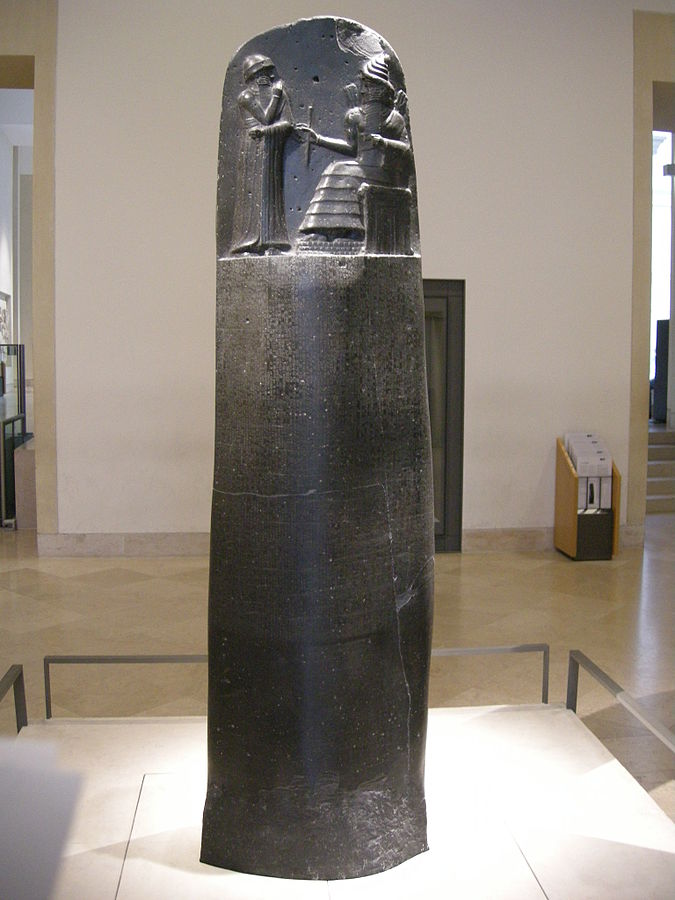
Στήλη του Hammurabi - Μουσείο Λούβρου (Φωτο: wikimedia)
 Στην ιστοσελίδα TheTorah.com ο Felix Wiedemann (Freie Universität Berlin) κάνει μία σύντομη  ανασκόπηση στη συζήτηση για τη σχέση των νόμων του Hammurabi προς εκείνων του Μωυσή και σκιαγραφεί το ιδεολογικό πλαίσιο αυτής της συζήτησης: 

Did the Discovery of Hammurabi’s Laws Undermine the Torah?

Παρασκευή 8 Ιανουαρίου 2021

Στο τρέχον τεύχος του Eugesta / In the current issue of Eugesta

 Eugesta 10 (2020)

Open edition: Le nouveau testament et les droits de l’Antiquité

Marie-Bernadette Bruguière (éd.), Jean Dauvillier: Le nouveau testament et les droits de l’Antiquité. Études d’histoire du droit et des idées politiques 9. Toulouse:  Presses de l’Université Toulouse, 2021


Δευτέρα 31 Αυγούστου 2020

O γάμος με μία αιχμάλωτη γυναίκα / Marriage with a captive woman

Στην ιστοσελίδα  TheTorah οι Shaye J. D. Cohen και Zev Farber συζητούν τις διατάξεις του Δευτερονομίου (20:13-14) για το γάμο με μία όμορφη αιχμάλωτη γυναίκα και τη μετέπειτα ερμηνεία τους από τους ραββίνους:

Marrying a Beautiful Captive Woman

Τρίτη 16 Απριλίου 2019

Στη μνήμη του Krister Stendahl / Remembering Krister Stendahl

Με αφορμή την επέτειο του θανάτου του γνωστού καινοδιαθηκολόγου Krister Stendahl στη σελίδα του Harvard Divinity School ο Marc Zvi Bettler ανάρτησε ένα μικρό αφιέρωμα στο μεγάλο αυτό ερμηνευτή. Ο Stendahl συνέβαλε μαζί με άλλους στη στροφή των βιβλικών σπουδών όσον αφορά στην κατανόηση της σχέσης του Παύλου με το Νόμο. Ανάτρεξε κριτικά στην παράδοση του λουθηρανισμού, στην οποία ο ίδιος ανήκε, για να διαπιστώσει ότι η αντίληψη που επικρατεί στην έρευνα σχετικά με τη σχέση Παύλου και Νόμου είναι αποτέλεσμα μιας μακράς πορείας ερμηνείας με σαφείς ιδεολογικές προϋποθέσεις. Δύο έργα του υπήρξαν καθοριστικά ως προς αυτήν την κατεύθυνση: "The Apostle Paul and the Introspective Conscience of the West" (HTR 56:3 (1963): 199-215) και το βιβλίο του Paul Among Jews and Gentiles (1977):

Τετάρτη 2 Ιανουαρίου 2019

Το τρέχον τεύχος του TynBull / The current issue of TynBull

Tyndale Bulletin 69:2 (2018)

Matthew B. Leighton, "Mosaic Covenant' as a Possible Referent for Νομος in Paul," 161-182
Any serious enquiry into Paul's view of the law must include lexical considerations regarding the meaning of νόμος ('law') itself. A general consensus has emerged that νόμος predominantly refers to Mosaic legislation. A few scholars, however, have suggested that νόμος should sometimes be taken as a synecdoche for the Mosaic covenant administration. This article attempts to substantiate the plausibility of that referent by appealing to precursors for it in the OT and intertestamental literature, examples of a few of Paul's uses of νόμος, and linguistic considerations related to word choice. 

Cornelis Bennema, "Moral Transformation Through Mimesis in the Johannine Tradition,"  183-204
Johannine ethics is a problematic area for scholarship but recently there has been a breakthrough. In this new era of exploring Johannine ethics, the present study examines the concept of moral transformation through mimesis. The argument is that when people live in God's world, their character and conduct are shaped in accordance with the moral beliefs, values, and norms of the divine reality, and that mimesis proves to be instrumental in this process of moral transformation. The study also explores how Johannine Christians in the late first century could imitate an 'absent' Jesus and what they were seeking to imitate. 

Christopher S. Northcott, "'King of Kings' in Other Words: Colossians 1:15a as a Designation of Authority Rather Than Revelation," 205-224
Colossians 1:15a is typically understood to designate Jesus as the way in which the otherwise unknowable God can be known by human beings. Support for this conclusion is drawn from Hellenistic Judaism, Greek philosophy, and theology merely inferred from the 'image of God' concept in Genesis 1:26-28. However, a more satisfactory reading of this verse sees in it a presentation of Jesus as Yahweh's representative ruler of the earth. There are several supports for this reading: (1) the explicit development of the 'image of God' concept in Genesis; (2) parallel uses of the 'image of God' concept in ancient Near Eastern and Greco-Roman sources; (3) the modification made to the preposition in Colossians 1:15a; (4) an alternative reading of the word 'invisible'; and (5) the subsequent phrase in Colossians 1:15b, 'firstborn of all creation'. By describing Jesus in such a way, he is presented as the legitimate ruler of the world, potentially in deliberate contrast to the world rulers of that day: the emperors of Rome, who were thus viewed by the merit of their special relationship with their gods.

Gareth Lee Cockerill , "Hebrews 12:18-24: Apocalyptic Typology or Platonic Dualism?," 225-240
Those who have approached Hebrews either from the point of view of apocalyptic eschatology or from the perspective of neoplatonism have often misinterpreted the two 'mountains' in Hebrews 12:18-24. The first understand these 'mountains' as representing the Old and New Covenants; the second, the earthly and heavenly worlds. This paper argues that the two 'mountains' represent two present possibilities. The first is the present state and future destiny of the disobedient who are excluded from fellowship with God; the second, the present state and future destiny of the faithful who enter into that fellowship. 
This interpretation is substantiated by a careful examination of the text and confirmed by the way this interpretation fits with Hebrews' rhetorical strategy and use of the Old Testament. Crucial to the argument is the total lack of continuity between the two mountains that would be essential to substantiate either of the traditional interpretations.

Coleman Ford, "'Tantum in Domino': Tertullian's Interpretation of 1 Corinthians 7 in His Ad Uxorem,"  241-258
Tertullian of Carthage (c. AD 155–240) is most remembered for his adherence to the Montanist sect and subsequent moral rigidity. While various opinions exist as to the Montanist influence upon his writings, signs of such adherence are evident from an early period. This is true of his treatise Ad uxorem, written in the early third century. His views of marriage, specifically in light of the Pauline injunctive from 1 Corinthains 7:39, provide readers with an early, and relatively unexplored, perspective on Christian marriage. This essay examines this early treatise from Tertullian, and his interpretation of Paul, in order to better understand the complexities of Tertullian's early view of marriage. Addressing the work of Elizabeth Clark on this topic, this essay presents the tantum in Domino ('only in the Lord') phrase as pivotal for understanding Tertullian's view of marriage (and subsequent remarriage) as a created good. 

Paul R. Williamson, "The Pactum Salutis: A Scriptural Concept or Scholastic Mythology?," 259-282
One of the three foundational covenants Reformed/Covenant theology is built upon is the Pactum Salutis or covenant of redemption. This refers to an intratrinitarian covenantal agreement, purportedly made before the creation of the world, to secure the salvation of God's elect. The theological rationale and exegetical support for such a pre-temporal covenant is set out and examined, and it is argued that there are serious exegetical problems with the alleged biblical foundations for such a theological construct. 

Anthony N. S. Lane, "Justification by Faith 1517–2017: What Has Changed?," 283-303
Justification was a key issue at the Reformation, and Protestants and Catholics have polarised over it. There was a brief moment of agreement at the Regensburg Colloquy in 1541, but this was swept away by the Council of Trent, whose Decree on Justification (1547) took care to demarcate itself from Protestantism. Hans Küng initiated a new approach, seeking points of agreement rather than difference. That approach eventually gave birth to the Joint Declaration on the Doctrine of Justification (1999). This does not pretend that no differences remain but claims that they are acceptable. It is fruitful to consider the differing concerns of each side.
The focus of this paper is what may or may not have changed in Protestant–Catholic relations on justification, not the changing picture of modern biblical studies. In particular, I will not be looking at the New Perspectives (plural) on Paul nor at John Barclay's recent magnum (if not maximum) opus. 

Κυριακή 14 Οκτωβρίου 2018

Στο τρέχον τεύχος του ExpT / In the current issue of ExpT

Expository Times 130:2 (2018)

  • Michael Jin Choi, "Irenaeus on Law and Justification," 53-61 (abstract)
  • Ho Hyung Cho, "Another Look at ἔννομος Χριστοῦ in 1 Corinthians 9:21," 62-71 (abstract)
  • Chris Knights, "Prophecy and Preaching: Does What Paul Calls ‘Prophecy’ in 1 Corinthians 14 Include What We Would Today Call ‘Preaching’?," 72-79 (abstract)


Παρασκευή 21 Ιουλίου 2017

Παύλος και Νόμος και πάλι / Paul and Law again

Στη σειρά των αναρτήσεων του SBL 2016 Pauline Epistles Review Panel δημοσιεύεται το κείμενο του Stephen Young για τα νέα βιβλία των Thiessen και Kaden σχετικά με το θέμα:

Παρασκευή 14 Ιουλίου 2017

Christine Hayes για τη στάση του Παύλου απέναντι στους εθνικούς / Christine Hayes on Paul's position towards the gentiles

Στη σειρά των αναρτήσεων από τη στρογγυλή τράπεζα για τις παύλειες επιστολές στην SBL του 2016 δημοσιεύεται η παρέμβαση της Christine Hayes (Yale University) για την στάση του Παύλου όσον αφορά στο ζήτημα των εθνικών:

Σάββατο 8 Ιουλίου 2017

Η στρογγυλή τράπεζα συζήτησης δύο νέων βιβλίων για τον Παύλο / The panel on two new books on Paul

Στην ιστοσελίδα Ancient Jew Review εγκαινιάστηκε ένα νέο forum όπου θα φιλοξενηθεί η συζήτηση που έλαβε χώρα το 2016 στο SBL Pauline Epistles Panel σχετικά με δύο νέα βιβλία για τον Παύλο, του David A. Kaden, Matthew, Paul, and the Anthropology of Law και του Matthew Thiessen, Paul and the Gentile Problem. Ήδη έχει ανεβεί το κείμενο του  J. Albert Harrill:

Παρασκευή 12 Αυγούστου 2016

Δικαιώματα γης στις γυναίκες της ΠΔ / Land Rights of Women in OT

Στην ιστοσελίδα The Bible and Interpretation έχει αναρτηθεί το σύντομο άρθρο του Don C. Benjamin σχετικά με τα δικαιώματα γης για της γυναίκες που είχαν συνάψει λεβιρατικό γάμο: