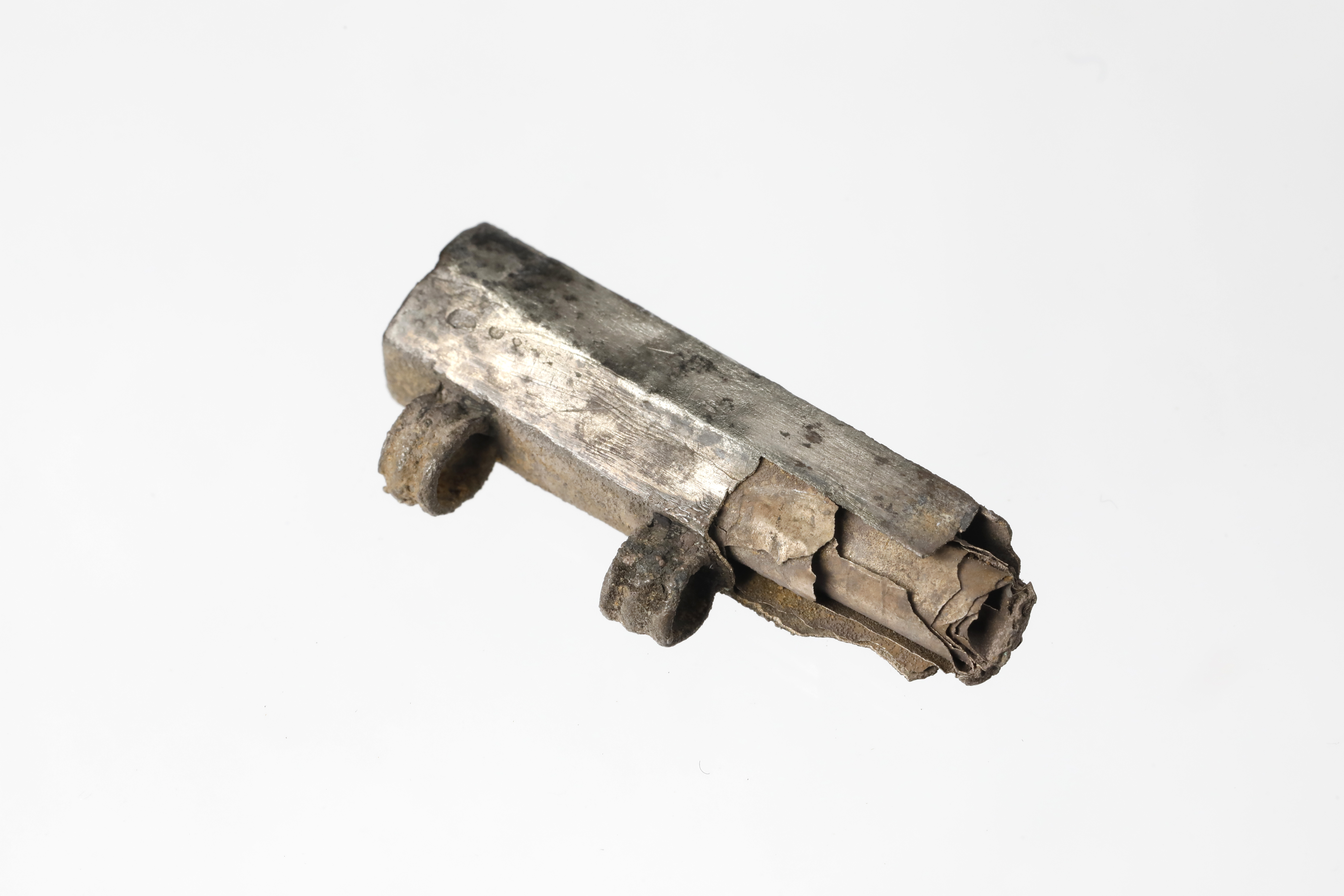
Μια εντυπωσιακή ανακάλυψη φέρνει στο φως την παλαιότερη επιγραφική χριστιανική μαρτυρία βόρεια των Άλπεων και μας δείχνει πώς οι αρχαίοι χριστιανοί «ξαναδιάβαζαν» τον Παύλο. Πρόκειται για ένα φυλακτό (3,5 εκ.) που περιείχε ένα ασημένιο έλασμα (35-90 χιλ.) με μία εκτενή λατινική επιγραφή (18 στ.). Aς σημειωθεί ότι το υλικό για τέτοιου είδους αντικείμενα είναι συνηθισμένο (ενώ ελάσματα από μόλυβδο χρησιμοποιούνται στις defixiones). Η ανάγνωση του κειμένου κατέστη δυνατή μέσω αξονικής τομογραφίας (CT) και ψηφιακής “αποτύλιξης”, ακριβώς επειδή το άνοιγμα του ελάσματος θα οδηγούσε σε καταστροφή.
Το φυλακτό βρέθηκε στο λαιμό ενός νεκρού άνδρα 35-45 ετών σε τάφο του ρωμαϊκού νεκροταφείου της αρχαίας Nida (περιοχή της σημερινής Φρανκφούρτης στο Praunheim). Η Nida υπήρξε στρατιωτική βάση κατά τον 1ο αι. μ.Χ. και εξελίχθηκε σε σημαντικό οικονομικό και πολιτιστικό κέντρο κατά τον 2ο αι. μ.Χ. (civitas Taunensium) Η εγκατάλειψη της πόλης περί το 260 μ.Χ. παρέχει ένα ασφαλές terminus ante quem, ενώ τα κτερίσματα του τάφου (π.χ. θυμιατήριο και κεραμικό αγγείο) τοποθετούν την ταφή μεταξύ 230–260 μ.Χ. Κατά τις εκτιμήσεις των ειδικών πρόκειται για την αρχαιότερη μαρτυρία για τη χριστιανική παρουσία στην περιοχή βόρεια των Άλπεων (οι προηγούμενες μαρτυρίες χρονολογούνται στον 4ο αι.).
 |
Το ασημένιο έλασμα
[© Leibniz Institute for Archaeology
in Mainz (LEIZA)] |
Το Κείμενο και η σημασία του
Το κείμενο, γραμμένο σε επισεσυρμένη λατινική γραφή, τη γραφή δηλαδή των καθημερινών κειμένων και των defixiones, περιέχει μία σειρά επικλήσεων και αιτήσεων για προστασία και παρουσιάζει ένα ιδιαίτερο ενδιαφέρον για παλαιογραφικούς, ιστορικούς λόγους και για την ιστορία του κειμένου και της πρόσληψής του κατά τον 3ο αι. μ.Χ.
Το κείμενο της επιγραφής έχει ως εξής:
1 IN NOMINE SANCTI TIT̅ I
2 AGIOS AGIOS AGIOS
3 IN NOMINE I͞H X͞P DEI F(ilii)
4 MVNDI DOMINVS
5 VIRIBVS OMNIBVS
6 INCVRSIONIBVS OPONIT
7 DEVS VALETVDINIBVS
8 SALVIS ACCESSVM
9 PRAESTAT HAEC SALUS TVEAT
10 HOMINEM QVI SE
11 DEDIT VOLVNTATI
12 DOMINI I͞H X͞P TI DEI F(ilii)
13 QVONIAM I͞ H X͞PO
14 OMNES GENVA FLEC
15 TENT CAELESTES
16 TERRESTRES ET
17 INFERI ET OMNIS LIN
18 GVA CONFITEATVR
(και η μετάφραση με βάση την αποκατάσταση του Santiago Guijarro: Στο όνομα του Αγίου Τίτου. Άγιος, Άγιος, Άγιος. Στο όνομα του Ιησού Χριστού Υιού του Θεού, ο Κύριος του κόσμου με όλη τη δύναμή του αντιτάσσεται στις επιθέσεις. Ο Θεός στις θεραπευμένες ασθένειες δίνει πρόσβαση. Αυτή η σωτηρία (ή: αυτό το φυλακτό) ας προστατεύει τον άνθρωπο που τον εαυτό του παρέδωσε στη βούληση του Κυρίου Ιησού Χριστού Υιού του Θεού. Επειδή ενώπιον του Ιησού Χριστού όλοι θα λυγίσουν τα γόνατα – οι ουράνιοι, οι επίγειοι και οι υπόγειοι – και κάθε γλώσσα θα ομολογήσει.)
Ειδικότερα:
- Η γλώσσα του κειμένου είναι στα λατινικά, κάτι ασυνήθιστο, αφού συνήθως φυλακτά και defixiones γράφονταν στα ελληνικά και με εβραϊκά/αραμαϊκά στοιχεία ή voces magicae
- Δεν υπάρχει επίκληση σε διάφορους θεούς και δυνάμεις, αλλά στον απόστολο Τίτο (πιθανόν τον συνεργάτη του Παύλου) και στον Ιησού Χριστό. Ας σημειωθεί ότι είναι το πρώτο κείμενο αυτού του είδους που αναφέρεται στον Τίτο
- Το όνομα του Ιησού Χριστού γράφεται ως nomen sacrum στα ελληνικά (aυτό υποδηλώνει προφανώς την ιερότητα που ο συγγραφέας του κειμένου αποδίδει στο πρόσωπο του Ιησού Χριστού
- O τρισάγιος ύμνος, γνωστός από τη λειτουργική πράξη της αρχαίας Εκκλησίας είναι στα ελληνικά, γραμμένος με λατινικούς χαρακτήρες, κάτι που ίσως υποδηλώνει την εδραιωμένη λειτουργική του πράξη ως δοξολογική φόρμουλα
- Οι τίτλοι που αποδίδονται στον Ιησού Χριστό («υιός του Θεού, κύριος του κόσμου) παραπέμπει στην αυτοκρατορική ορολογία για το πρόσωπο του αυτοκράτορα κι έχει, επομένως, ιδιαίτερη σημασία ως ομολογία σε μία εποχή που οι χριστιανοί διώκονται
- Το κείμενο κλείνει με μία σχεδόν κατά λέξη παράθεση στα λατινικά από το χριστολογικό ύμνο της και συγκεκριμένα το χωρίο 2:10-11
Η παράθεση του Φιλ 2:10-11
Το συγκεκριμένο καινοδιαθηκικό παράθεμα παρουσιάζει ιδιαίτερο ενδιαφέρον. Ειδικότερα, το φυλακτό από την Φρανκφούρτη διασώζει την αρχαιότερη μαρτυρία του συγκεκριμένου χωρίου στα λατινικά (ο αρχαιότερος μάρτυρας του ελληνικού κειμένου είναι ο Ρ46, περ. 200 μ.Χ.). Αποτελεί, επομένως, μία από τις αρχαιότερες μαρτυρίες της Vetus Latina, των λατινικών μεταφράσεων, δηλαδή, πριν την Vulgata του Ιερωνύμου.
Είναι επίσης ενδιαφέρουσες οι αλλαγές τις οποίες κάνει ο συγγραφέας του κειμένου στο συγκεκριμένο φυλακτό, οι οποίες κατά την εξαιρετική ανάλυση του Guijarro έχουν και βαθύτερη θεολογική σημασία:
- Το κείμενο εισάγεται με το αιτιολογικό quoniam αντί του τελικού/συμπερασματικού «ἵνα» του ελληνικού πρωτοτύπου. Έτσι η προσκύνηση των πάντων στον Ιησού αποτελεί την απόδειξη της δύναμης του Ιησού (ενώ το τελικό ή συμπερασματικό «ἵνα» υποδηλώνει ότι η καθολική υποταγή είναι η συνέπεια της κένωσης και της υπακοής του Χριστού. Με αυτόν τον τρόπο, το φυλακτό μετατρέπει τον θεολογικό ύμνο ταπείνωσης σε κείμενο δύναμης και προστασίας.
- Αποδίδει με το omnes genua και το μελλοντικό χρόνο flectent, κάτι που ταιριάζει στον αποτροπαϊκό χαρακτήρα του φυλακτού.
Συμπερασματικά
Το φυλακτό της Φρανκφούρτης αποτελεί ένα ακόμη εξαιρετικό παράδειγμα του πώς η επιγραφική υποστηρίζει τη μελέτη της ιστορίας του κειμένου της Καινής Διαθήκης και της πρόσληψής του κατά την αρχαιότητα. Αποτελεί, επίσης, μία σημαντική μαρτυρία για το πώς εκείνοι οι αρχαίοι χριστιανοί βίωσαν την πίστη τους. Η αναφορά στον Τίτο και το παύλειο κείμενο, στην προκειμένη περίπτωση, βεβαιώνει τη σημασία που έχει η παύλεια παράδοση σε αυτήν την πρώιμη περίοδο στο δυτικό τμήμα της αρχαίας Εκκλησίας.
Οι επικλήσεις στο πρόσωπο του Ιησού, ο χαρακτήρας του ευρήματος και ο τρόπος που αξιοποιείται το Φιλ 2:10-11 υπενθυμίζουν ότι υπήρχαν πολλοί τρόποι να είσαι χριστιανός στον 3ο αιώνα – και ότι η θρησκεία των καθημερινών ανθρώπων, αυτών που αγωνίζονταν να επιβιώσουν στα σύνορα της αυτοκρατορίας, είχε τις δικές της στρατηγικές ανάγνωσης της Γραφής και συχνά αξιοποιεί το βιβλικό κείμενο ως αντικείμενο πίστης. Ο ίδιος βιβλικός στίχος μπορεί να σημαίνει διαφορετικά πράγματα για διαφορετικούς ανθρώπους – και ότι αυτό είναι μέρος της πλούσιας ιστορίας της πρώιμης Εκκλησίας.
Βιβλιογραφία
- Guijarro, Santiago, "The Frankfurt Amulet: Popular Christianity in the Limes Germanicus," Isidorianum 34/1 (2025) 25-48
- Steinmeyer, N., "Evidence of Early Christianity in Northern Europe," Bible History Daily, Biblical Archaeology Society, 5 Ιανουαρίου 2026.
- Universität Bonn, "University of Bonn Researcher Involved in Sensational Find in Frankfurt", 13.12.2024
- Archäologisches Museum Frankfurt, "Frankfurt silver inscription"
--------------------------------------------------------------------------
A remarkable discovery reveals how ancient Christians "re-read" Paul for everyday protection
A remarkable discovery brings to light the earliest Christian evidence north of the Alps. An amulet (3.5 cm) containing a silver sheet (35-90 mm) with an 18-line Latin inscription was found around the neck of a man aged 35-45 in a tomb at the Roman cemetery of ancient Nida (modern Frankfurt, Praunheim). Reading the text was made possible through CT scanning and digital "unrolling."
The city's abandonment around 260 CE provides a secure terminus ante quem, while the tomb's grave goods place the burial between 230–260 CE. This is the earliest epigraphic evidence of Christian presence in the region north of the Alps (previous evidence dates to the 4th century).
The Text and Its Significance
The text, written in cursive Latin script—the script of everyday texts—contains a series of invocations and requests for protection. The English translation (based on Santiago Guijarro's reconstruction):
"In the name of Saint Titus. Saint, Saint, Saint. In the name of Jesus Christ Son of God. The Lord of the world with all his might faces attacks. God, to the diseases healed grants access. This salvation (this amulet?) may protect the man who himself surrendered to the will of the Lord Jesus Christ Son of God. For before Jesus Christ everyone knees shall bend, those of heavens, those of the earth and those underneath and all tongue confess."
Key features:
- Written in Latin (unusual—most amulets were in Greek with Hebrew/ Aramaic elements and voces magicae)
- Invokes the apostle Titus (probably Paul's collaborator) and Jesus Christ—the first text of this kind referring to Titus
- Jesus Christ's name written as Greek nomina sacra, indicating veneration
- The Trisagion in Greek written with Latin characters, suggesting established liturgical practice
- Titles for Jesus ("Son of God," "Lord of the world") echo imperial terminology—a significant confession in an era of persecution
- Closes with an almost word-for-word Latin quotation from Philippians 2:10-11
The Philippians 2:10-11 Quotation
This is of special interest. The Frankfurt amulet preserves the earliest witness of this passage in Latin (the earliest Greek witness is P46, ca. 200 CE), making it one of the earliest attestations of the Vetus Latina.
The changes made by the author have deeper theological significance (Guijarro's analysis):
The text is introduced with the causal "quoniam" instead of the final "ἵνα" of the Greek original. Thus the worship of all to Jesus constitutes proof of Jesus' power (while the Greek "ἵνα" indicates that universal submission is the consequence of Christ's kenosis and obedience).
It renders with "omnes genua" and the future tense "flectent," which suits the apotropaic character of the amulet.
With this change, the amulet transforms the theological hymn of humiliation into a text of power and protection.
In Conclusion
The Frankfurt amulet exemplifies how epigraphy supports the study of New Testament textual history and its ancient reception. The reference to Titus and the Pauline text confirms the importance of Pauline tradition in the early western Church.
The invocations to Jesus, the character of the find, and the way Phil 2:10-11 is utilized remind us that there were many ways to be Christian in the 3rd century—and that the religion of everyday people struggling to survive on the empire's frontiers had its own reading strategies for Scripture and often utilized biblical text as an object of faith. The same biblical verse could mean different things to different people—and this is part of the rich history of the early Church.
Bibliography: