Εμφάνιση αναρτήσεων με ετικέτα θρησκεία. Εμφάνιση όλων των αναρτήσεων

Τετάρτη 28 Ιανουαρίου 2026

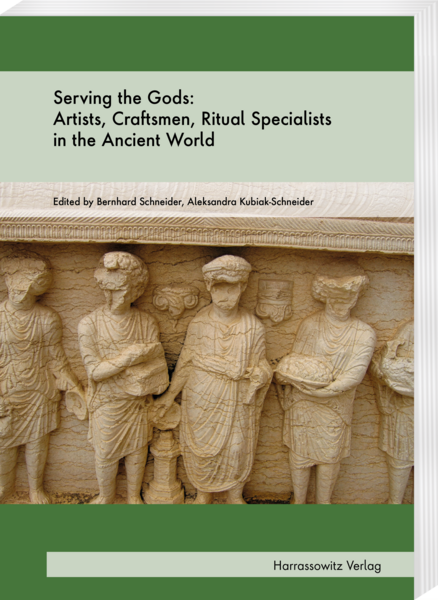
Serving the Gods: ένας νέος Open Access τόμος για τους ανθρώπους των ιερών στην αρχαιότητα / Serving the Gods: A New Open-Access Volume on the People Who Served Ancient Sanctuaries

Kυκλοφόρησε πρόσφατα (2025) σε open access από τον οίκο Harrassowitz ένας συλλογικός τόμος Serving the Gods: Artists, Craftsmen, Ritual Specialists in the Ancient World, σε επιμέλεια Bernhard Schneider και Aleksandra Kubiak-Schneider. Οι μελέτες που φιλοξενούνται σε αυτόν τον τόμο προσφέρουν μια διεπιστημονική και διαπολιτισμική ματιά στο ερώτημα: ποιος, πέρα από τους ιερείς, υπηρετούσε τους θεούς στην αρχαιότητα;

Πρόκειται για τα πρακτικά του 23ου Melammu Workshop (Βρότσλαβ, Σεπτέμβριος 2024), με 16 μελέτες που καλύπτουν μία ευρεία γεωγραφικά, χρονικά και πολιτισμικά περιοχή: από τη Μεσοποταμία μέχρι τη ρωμαϊκή Παλαιστίνη και από την αρχαϊκή εποχή μέχρι την όψιμη αρχαιότητα.

Η βασική ιδέα είναι απλή αλλά πολύ γόνιμη: όταν μιλάμε για ναούς και λατρεία, συνήθως το ενδιαφέρον στρέφεται στο ιερατείο. Ο τόμος, όμως, μεταθέτει την προσοχή σε όσους/όσες στήριζαν πρακτικά τη λατρευτική ζωή και τη λειτουργία των ιερών: τεχνίτες, καλλιτέχνες, εργάτες, ειδικούς των τελετουργιών, μουσικούς, διαχειριστές, και γενικότερα το προσωπικό που έκανε δυνατή την καθημερινότητα του ιερού.

Ο τόμος είναι οργανωμένος σε δύο μέρη: 

  • Ιστορία/Φιλολογία (μελέτες που δουλεύουν κυρίως με κείμενα και ιστορικές μαρτυρίες)
  • Αρχαιολογία/Εθνογραφία (με έμφαση στην υλικότητα, τις πρακτικές και τα κατάλοιπα)

Ενδεικτικά αναφέρω εδώ κάποια θέματα του τόμου που έχουν ενδιαφέρον για τους αναγνώστες αυτού του ιστολογίου:

  • Το μη-ιερατικό προσωπικό του Ναού Ιερουσαλήμ στην περσική περίοδο (πυλωροί, Νετινείμ, υιοί δούλων του Σολομώντα, ψάλτες) με βάση τα βιβλία Έσδρα και Νεεμία
  • Παιδιά-ιερείς στη ρωμαϊκή Ιταλία – από τις Εστιάδες Παρθένες μέχρι τους Salii και την αυτοκρατορική οικογένεια
  • Κτίστες, γλύπτες και διακοσμητές στους παρθικούς και ρωμαϊκούς ναούς της Ανατολής
  • Εβραίοι στρατιώτες στο ρωμαϊκό στρατό και η θρησκευτική τους δράση (Dura-Europos, Παλμύρα, Σάρδεις)
  • Τεχνίτες και προμηθευτές στους αιγυπτιακούς ναούς της ρωμαϊκής εποχής
  • Εθνογραφικές προσεγγίσεις: από τους κεραμείς της αρχαίας Εγγύς Ανατολής μέχρι τους σύγχρονους κατασκευαστές θυμιατηρίων στην Κύπρο

Οι μελέτες του τόμου αναδεικνύουν πώς οι ναοί ήταν πολύπλοκοι κοινωνικοί, οικονομικοί και θρησκευτικοί θεσμοί που αξιοποιούσαν τεχνίτες, κτίστες, μουσικούς, διαχειριστές, βοσκούς, και πολλούς άλλους – και σίγουρα όχι μόνο ιερείς. Ο τόμος υπενθυμίζει ότι η λατρεία δεν είναι μόνο θεολογικό ή τελετουργικό γεγονός, αλλά και κοινωνική πράξη που προϋποθέτει ρόλους, εργασία και οργάνωση—και γι' αυτό έχει αξία ως υλικό συγκριτικής ανάγνωσης.

Bernhard Schneider / Aleksandra Kubiak-Schneider, Serving the Gods: Artists, Craftsmen, Ritual Specialists in the Ancient World, Harrassowitz Verlag 2025

doi: 10.13173/9783447125116

------------------------------------------------------------------

A new open access volume has recently been published (2025) by Harrassowitz: Serving the Gods: Artists, Craftsmen, Ritual Specialists in the Ancient World, edited by Bernhard Schneider and Aleksandra Kubiak-Schneider. The studies in this volume offer an interdisciplinary and cross-cultural perspective on the question: who, besides priests, served the gods in antiquity?

The volume contains the proceedings of the 23rd Melammu Workshop (Wrocław, September 2024), with 16 studies covering a broad geographical, chronological, and cultural area: from Mesopotamia to Roman Palestine and from the archaic period to late antiquity.

The core idea is simple but highly productive: when we talk about temples and worship, attention typically focuses on the priesthood. This volume, however, shifts attention to those who provided practical support for religious life and the functioning of sanctuaries: craftsmen, artists, laborers, ritual specialists, musicians, administrators, and more generally the personnel who made the daily operations of the sanctuary possible.

The volume is organized in two parts:

  • History/Philology (studies working primarily with texts and historical evidence)
  • Archaeology/Ethnography (emphasizing materiality, practices, and material remains)

Some topics in the volume of particular interest to readers of this blog include:

  • Non-priestly personnel of the Jerusalem Temple in the Persian period (gatekeepers, Netinim, sons of Solomon's servants, singers) based on the books of Ezra and Nehemiah
  • Child priests in Roman Italy – from the Vestal Virgins to the Salii and the imperial family
  • Builders, sculptors and decorators in Partho-Roman Eastern temples
  • Jewish soldiers in the Roman army and their religious activities (Dura-Europos, Palmyra, Sardis)
  • Craftsmen and suppliers in Egyptian temples during the Roman era
  • Ethnoarchaeological approaches: from potters in the ancient Near East to modern incense-burner makers in Cyprus

The studies in this volume demonstrate how temples functioned as complex social, economic, and religious institutions that employed craftsmen, builders, musicians, administrators, shepherds, and many others – and certainly not just priests. The volume reminds us that worship is not only a theological or ritual event, but also a social practice that presupposes roles, labor, and organization—and for this reason it has value as material for comparative analysis.

Bernhard Schneider / Aleksandra Kubiak-Schneider, Serving the Gods: Artists, Craftsmen, Ritual Specialists in the Ancient World, Harrassowitz Verlag 2025

doi: 10.13173/9783447125116

Πέμπτη 15 Ιανουαρίου 2026

Το τρέχον τεύχος του RRE / The current issue of RRE

 Religion in the Roman Empire 11:3 (2025)

Activating Rituals (I): Materiality, Performativity, and Communication with the Superhuman

  • Chiara Di Serio - Silvia Fogliazza - Sofia Bianchi Mancini, "Activating Rituals (I) : Materiality, Performativity, and Communication with the Superhuman," 277-290 (OA)
  • Veronika Kolomaznik, "‘Revealing the Phallus’ : The Imagery of Dionysiac Mysteries on the Campana Reliefs," 291-317 (OA)
  • Chiara Di Serio, "Ritual Practices Performed by the Prophetess Manto in the Greco-Roman Sources," 318-342 (OA)
  • Luisa Mollweide, "Materiality and Communication: Rituals on Stage in Roman Comedies," 343-366 (OA)
  • Charlotte Spence, "Communication with the Superhuman through Curse Tablets," 367-385 (OA)
  • Gabriela De Tord Basterra, "Communicating with the Gods: Structures and Order of the Dedications in Local Languages from Italy," 386-403 (OA)

Κυριακή 11 Ιανουαρίου 2026

ΟΑ: Κλέβοντας από τους θεούς: η ιεροσυλία στο ρωμαϊκό αυτοκρατορικό αφήγημα / ΟΑ: Stealing from the Gods: Temple Robbery in the Roman Imperial Narrative

Το open access βιβλίο της Isabel K. Köster, Stealing from the Gods: Temple Robbery in the Roman Imagination (University of Michigan Press, 2026), προσεγγίζει την ἱεροσυλία όχι απλώς ως ποινικό αδίκημα, αλλά ως λόγια και πολιτισμική κατηγορία με καθοριστική λειτουργία στο ρωμαϊκό αυτοκρατορικό αφήγημα.

Η συγγραφέας δείχνει ότι η ἱεροσυλία (sacrilegium, με τη βασική σημασία της αφαίρεσης ιερού πράγματος) λειτουργεί στη ρωμαϊκή γραμματεία ως ισχυρός μηχανισμός ηθικής κατηγοριοποίησης. Ο ιερόσυλος περιγράφεται ως μορφή ακραίας ηθικής απόκλισης: άπληστος, χωρίς μέτρο και αποκομμένος από τις αξίες της pietas. Μέσω αυτής της κατασκευής, η ευθύνη για την προσβολή του ιερού μετατοπίζεται από συλλογικές πρακτικές—όπως η αρπαγή ιερών αντικειμένων στο πλαίσιο της πολεμικής επέκτασης—σε μεμονωμένα πρόσωπα, επιτρέποντας στη Ρώμη να διατηρεί την αυτοεικόνα της ως κατ' εξοχήν ευσεβούς αυτοκρατορίας και εξουσίας.

Κεντρική θέση στο επιχείρημα του βιβλίου κατέχει η κατανόηση της ιερότητας όχι ως σταθερής ιδιότητας, αλλά ως έννοιας διαρκώς υπό διαπραγμάτευση, της οποίας το περιεχόμενο καθορίζεται από το εκάστοτε αφηγηματικό και ιδεολογικό πλαίσιο. Τα ίδια αντικείμενα μπορούν, ανάλογα με τα συμφραζόμενα, να παρουσιαστούν είτε ως απαραβίαστα αφιερώματα είτε ως θεμιτή λεία, αποκαλύπτοντας τη στενή διαπλοκή θρησκείας, ιδιοκτησίας και αυτοκρατορικής ισχύος στον ρωμαϊκό κόσμο.

Το βιβλίο προσφέρει μια ιδιαίτερα γόνιμη συμβολή στη μελέτη της αρχαίας θρησκείας και της πολιτικής του ιερού, δείχνοντας πώς αφηγήσεις περί ἱεροσυλίας λειτουργούν ως εργαλεία οριοθέτησης της ηθικής τάξης και νομιμοποίησης της αυτοκρατορικής εξουσίας.

Κρίσιμο στοιχείο της μελέτης είναι ότι η ἱεροσυλία δεν αντιμετωπίζεται ως αυτονόητη ή αντικειμενικά οριζόμενη πράξη, αλλά ως ρητορική κατασκευή, η οποία αποκτά νόημα μέσα σε συγκεκριμένα αφηγηματικά και ιδεολογικά πλαίσια. Οι ρωμαϊκές πηγές δεν περιγράφουν μόνο την προσβολή του ιερού· την παράγουν νοηματικά, ορίζοντας ποιος μπορεί να χαρακτηριστεί ἱερόσυλος, υπό ποιες συνθήκες και με ποιες ηθικές συνέπειες.

Με τον τρόπο αυτό, ο λόγος περί ἱεροσυλίας λειτουργεί κανονιστικά: συγκροτεί πρότυπα ορθής θρησκευτικής συμπεριφοράς, αποκλείει αποκλίνουσες πρακτικές και συμβάλλει στη νομιμοποίηση της αυτοκρατορικής εξουσίας ως προστάτιδας του ιερού.

Η θεματική αυτή ανοίγει και ένα γόνιμο συγκριτικό πεδίο με βιβλικά, αρχαία ιουδαϊκά και πρώιμα χριστιανικά κείμενα, όπου η γλώσσα της ἱεροσυλίας εμφανίζεται άλλοτε ως κατηγορία εναντίον «άλλων» και άλλοτε ως κριτική της ίδιας της εξουσίας. Ενδεικτικά, ο Παύλος χρησιμοποιεί ρητά το ρήμα «ἱερὰ συλᾶν» ως ηθική αιχμή (Ρωμ 2:22), ενώ στις Πράξεις ο όχλος της Εφέσου διαβεβαιώνει ότι οι σύντροφοι του Παύλου «οὔτε ἱερόσυλοι εἰσίν» (Πρξ 19:37), δείχνοντας πόσο φορτισμένη ήταν η κατηγορία στον δημόσιο λόγο. Παράλληλα, η εβραϊκή ιστοριογραφία προσφέρει κλασικές αφηγήσεις «αρπαγής του ιερού» από φορείς εξουσίας: η απόπειρα του Ἡλιοδώρου να αφαιρέσει χρήματα από τον ναό (2 Μακκ 3) λειτουργεί ως υπόδειγμα της βίας της κοσμικής ισχύος απέναντι στο ιερό, ενώ στον Ιώσηπο απαντούν επεισόδια όπου ρωμαϊκοί διοικητές κατηγορούνται ότι πήραν χρήματα από το ἱερόν. Χαρακτηριστικά παραδείγματα: Πόντιος Πιλάτος (Αρχαιολ. 18.55–62) και Γέσσιος Φλώρος (Ιουδ. Πόλ. 2.293–296). Έτσι, σε αυτά τα σώματα κειμένων η «ἱεροσυλία» δεν είναι μόνο ατομικό έγκλημα· μπορεί να λειτουργεί και ως ερμηνευτική κατηγορία πολιτικής κριτικής.

[Το βιβλίο διατίθεται ελεύθερα (open access) με άδεια CC BY-NC 4.0.]

-------------------------------------------------------

[ENGLISH TRANSLATION] 

Isabel K. Köster's open access book, Stealing from the Gods: Temple Robbery in the Roman Imagination (University of Michigan Press, 2026), approaches temple robbery not simply as a criminal offense, but as a discursive and cultural category with a defining function in the Roman imperial narrative.

The author demonstrates that, in Roman literature, temple robbery (sacrilegium, meaning the removal of sacred property) functions as a powerful mechanism of moral categorisation. The temple robber is depicted as an extremely deviant figure: greedy, immoderate and disconnected from the values of pietas. Through this construction, responsibility for the violation of the sacred is shifted from collective practices, such as the seizure of sacred objects in the context of military expansion, to isolated individuals. This allows Rome to maintain its self-image as a supremely pious empire and power.

Central to the book's argument is the idea that sacredness is not a fixed property, but a constantly negotiated concept whose meaning is determined by the prevailing narrative and ideological framework. Depending on the context, the same objects can be presented either as sacred dedications or as legitimate spoils, revealing the close entanglement of religion, property and imperial power in the Roman world.

This work makes a significant contribution to the study of ancient religion and the politics of the sacred by showing how narratives about temple robbery function as tools for establishing moral order and legitimising imperial power.

A critical element of the study is that temple robbery is not treated as an inherently evil act, but as a rhetorical construction that acquires meaning within specific narrative and ideological frameworks. Roman sources do not merely describe the violation of the sacred; they semantically produce it, defining who can be characterised as a temple robber, under what conditions, and with what moral consequences.

In this way, discourse about temple robbery functions normatively: it establishes standards of proper religious behaviour, excludes deviant practices, and contributes to the legitimisation of imperial power as protector of the sacred.

This theme also opens up fertile ground for comparison with biblical, Jewish and early Christian contexts, in which the language of temple robbery is sometimes used to accuse 'others' and sometimes to critique power itself. For example, Paul explicitly uses the verb 'ἱερὰ συλᾶν' (to rob temples) as a moral weapon (Rom. 2:22), while in Acts, the crowd in Ephesus asserts that Paul's companions 'are not temple robbers' (Acts 19:37), demonstrating the gravity of this accusation in public discourse. Similarly, Jewish historiography provides classic examples of the 'seizure of the sacred' by those in power. Heliodorus' attempt to steal money from the Temple in 2 Maccabees 3 is a prime example of the violence of secular power against the sacred. Conversely, Josephus recounts instances in which Roman governors are accused of stealing from the Temple. Characteristic examples include: Pontius Pilate (Ant. 18.55–62) and Gessius Florus (B.J. 2.293–296). Thus, in these bodies of texts, 'temple robbery' is not only an individual crime, but can also function as an interpretive category of political critique.

Παρασκευή 26 Αυγούστου 2022

Στο τρέχον τεύχος του Ancient Society / In the current issue of Ancient Society

 Ancient Society 51 (2021)

  • Julien Dechevez, "Construire la figure religieuse des souverains lagides: À propos d'une dédicace à Hestia Pantheos et aux Theoi Euergetai pour Ptolémée IV et Arsinoé III,"  51 - 79 (abstract)
  • Nico Dogaer, "Beer for the Gods and Coin for the Priests: Temple Involvement in the Beer Industry in Hellenistic Egypt," 81 - 100 (abstract)
  • Michael J. Taylor, "Centurions in Early Rome," 101 - 121 (abstract)
  • Sam Heijnen, "Statues in Dialogue:  Visual Similarities in 'Grown' Roman Imperial Statue Groups from the Greek East," 123 - 156 (abstract)

Σάββατο 9 Ιουλίου 2022

Open Access: Cities, Resources and Religion


Anna-Katharina Rieger und Johanna Stöger (επιμ.), Cities, Resources and Religion – Economic Implications of Religion in Graeco-Roman Urban Environments. Panel 7.7:  Archaeology and Economy in the Ancient World – Proceedings of the 19th International Congress of Classical Archaeology, Cologne/Bonn 2018, (Archaeology and Economy in the Ancient World – Proceedings of the 19th International Congress of Classical Archaeology, Cologne/Bonn 2018, Band 40), Heidelberg: Propylaeum, 2022

doi: https://doi.org/10.11588/propylaeum.904 

Σάββατο 18 Ιουνίου 2022

Στο τρέχον τεύχος του Religion in the Roman Empire / In the current issue of Religion in the Roman Empire

 Religion in the Roman Empire 7/3 (2021)

  • Sarah Parkhouse, "Selling the Mysteries in Roman Egypt," 315-333 (abstract)
  • William Glyn-Jones, "Epiphany, Exaltation and the 'Sky Astonished'," 334-367 (abstract)
  • Otto H. Linderborg, "'The Firstborn of Satan': The Origins of Heresy in Polycarp's Letter to the Philippians," 368-383 (abstract)
  • Tibor Grüll, "'The Book of Fate': A Distinctive Representation of Matronae/Parcae and the Spread of Literacy in the Northern Provinces of the Roman Empire," 403-429 (abstract)
  • Markus Vinzent, "The Argument from Silence in Religio-Historical Research," 430-456 (abstract)

Πέμπτη 17 Φεβρουαρίου 2022

H λατρεία των βοδιών στην αρχαία Εγγύς Ανατολή και στον αρχαίο Ισραήλ / The cult of bulls in ancient Near East and Israel

Ορειχάλκινο αγαλματίδιο βοδιού από το ιερό  
Dhahrat et-Tawileh, Σαμάρεια, 12ος αι. 
Πηγή: Wikimedia (Nathaniel Ritmeyer

 Στην ιστοσελίδα TheTorah.com o Rami Arav (University of Nebraska) συζητά τις μαρτυρίες για τη λατρεία των βοδιών στην αρχαία Εγγύς Ανατολή και στον αρχαίο Ισραήλ. Αρχαιολογικές και βιβλικές μαρτυρίες πιστοποιούν την λατρεία αυτών των ζώων στο βόρειο βασίλειο του Ισραήλ, κάτι για το οποίο ασκούν κριτική τα κείμενα της Παλαιάς Διαθήκης:

The Golden Calf: Bull-El Worship

Τρίτη 1 Φεβρουαρίου 2022

Στο τρέχον τεύχος του Religion in the Roman Empire / In the current issue of Religion in the Roman Empire

 Religion in the Roman Empire 7/2 (2021)

An Urban Archaeology of Ancient Religion

  • Rubina Raja, Jörg Rüpke, "Introduction: Urban Archaeology," 217-220 
  • Christopher H. Hallett, "The Wood Comes to the City: Ancient Trees, Sacred Groves, and the 'Greening' of Early Augustan Rome," 221-274 (abstract)
  • Christopher P. Dickenson, "From 'Civic' to 'Urban' Religion in Roman Britain," 275-296 (abstract)
  • Eivind Heldaas Seland, "Trade, Traders, and Religion in Gateway-Cities of the Roman East," 297-312 (abstract)

Δευτέρα 8 Νοεμβρίου 2021

Το τρέχον τεύχος του περιοδικού Electra / The current issue of the e-journal Electra

 Το ηλεκτρονικό περιοδικό Electra εκδίδεται από το Τμήμα Φιλολογίας του Πανεπιστημίου Πατρών και φιλοξενεί στα θεματικά του τεύχη μελέτες για την αρχαία ελληνική και ρωμαϊκή μυθολογία και θρησκεία. Το τρέχον τεύχος είναι αφιερωμένο στον Ασκληπιό:

Electra 5 (2020)

Asclepius (Figures, Therapies, Cult)

Appendix

Παρασκευή 17 Σεπτεμβρίου 2021

Οpen Access: Η Μητέρα Θεών στον ελληνορωμαϊκό κόσμο / Open Access: The Mother of Gods in the Graeco-Roman World

 Διαβάστε στην ηλεκτρονική του μορφή τη μελέτη της Françoise Van Haeperen για τη λατρεία της Μητέρας Θεών στον ελληνορωμαϊκό κόσμο:

Françoise Van Haeperen, Étrangèr et ancestrale: La mère des dieux dans le monde romain. Les conférences de l’EPHE. Paris: Publications de l’École Pratique des Hautes, 2019

e-ISBN: 9782492861024


Δευτέρα 9 Αυγούστου 2021

Τρίτη 13 Ιουλίου 2021

Στο τρέχον τεύχος του Numen / In the current issue of Numen

 Numen 68/4 (2021)

  • Luther H. Martin, "Seeing the Mithraic Tauroctony," 357–381 (abstract)
  • Moshe Blidstein, "Invoking Humans in Roman-Era Oaths: Emotional Relations and Divine Ambiguity," 382–410 (abstract)

Τετάρτη 7 Ιουλίου 2021

Το τρέχον τεύχος του JECH / The current issue of JECH

 Journal of Early Christian History 10/3 (2020)

Modelling Christian Cult Groups among Graeco-Roman Cults

  • Gerhard van den Heever, "Once Again: Modelling Early Christian Social Formations and Christ-Cult Groups among Graeco-Roman Cults," 1-11 (abstract)
  • Jarkko Vikman, "Kinship as a Trustworthy Cue: The Signalling of Religious Expertise in the Epigraphy of Ephesian Voluntary Associations," 12-28 (abstract)
  • Jin Hwan Lee, "Reading 1 Cor 11:19 in Light of Election Practices in Private Associations," 29-43 (abstract)
  • Margaret Froelich, "Sacrificed Meat in Corinth and Jesus Worship as a Cult Among Cults," 44-56 (abstract)
  • Chris L. de Wet, "Modelling Christian Cult Groups among Graeco-Roman Cults: A Response," 57-63 (abstract)

General Articles

  • John-Christian Eurell, "Becoming Christian: On the Identification of Christ-Believers as Χριστιανοί," 64-82 (abstract)
  • Luis Josué Salés, "Queerly Christified Bodies: Women Martyrs, Christification, and the Compulsory Masculinisation Thesis," 83-109 (abstract)

Τρίτη 6 Ιουλίου 2021

Ένα νέο περιοδικό AABNER / A new journal AABNER

 Ένα νέο ηλεκτρονικό, περιοδικό, open access με κριτές κυκλοφόρησε πριν λίγες μέρες. Πρόκειται για το περιοδικό Advances in Ancient Biblical and Near Eastern Research (AABNER) το οποίο σύμφωνα με την περιγραφή στην ιστοσελίδα του καλύπτει θέματα της αρχαιότητας και της πρόσληψής της. Ήδη κυκλοφόρησε το πρώτο τεύχος:

AABNER 1/1 (2021)

Research Articles 

Τρίτη 29 Ιουνίου 2021

Το τρέχον τεύχος του JECH / The current issue of JECH

 Journal of Early Christian History 10/2 (2021)

Παρασκευή 14 Μαΐου 2021

Το τρέχον τεύχος του RRE / The current issue of RRE

 Religion in the Roman Empire 6/3 (2020)

  • Brent D. Shaw, "Charity and the Poor in Roman Imperial Society,"  229-267 (abstract)
  • Andromache Karanika, "Urban Landscapes and Religious Shifts in Lucian's Alexander," 268-287 (abstract)
  • Jörg Rüpke, "Grasping Urbanity: Propertius' Book 4 and Urban Religion of the Augustan Period," 288-309 (abstract)
  • Ulrike Egelhaaf-Gaiser, "Helpful Gods, Preaching Stoics, and Gossip from the Crossroads: Urban Religion in Horace's Satires and Epistles," 310-336 (abstract)