Εμφάνιση αναρτήσεων με ετικέτα Βαπτιστής. Εμφάνιση όλων των αναρτήσεων

Κυριακή 30 Μαΐου 2021

Το τρέχον τεύχος του JSHJ / The current issue of JSHJ

 Journal for the Study of the Historical Jesus 19/1 (2021)

  • Joel Marcus, "John the Baptist in History and Theology: A Summary," 3-7
  • Clare K. Rothschild, "A Review of Joel Marcus, John the Baptist in History and Theology," 8–14 
  • Cecilia Wassén, "Reflections on John the Baptist in History and Theology by Joel Marcus," 15–26 (abstract)
  • Jonathan Klawans, "Analogies, Possibilities and Probabilities: Joel Marcus’s John the Baptist," 27–38 (abstract)
  • Erin Roberts, "Naturalizing Christians: A Response to Joel Marcus, John the Baptist in History and Theology," 39–46 (abstract)
  • Albert I. Baumgarten, "John the Baptist: The Absinthe of the Divine Feast?" 47–61 (abstract)
  • Robert J. Myles, "John the Baptist in Memory, Judaism and Historical Materialism," 62–73 (abstract)
  • Federico Adinolfi and Joan Taylor, "Catching John in Four Nets? Competition, Qumran, Sacramentalism and Messianism: A Reply to Joel Marcus," 74–98 (abstract)
  • Joel Marcus, "Response to the Respondents: Competition, Qumran and Supersessionism," 99–133 (abstract)
  • Jonathan D. Wegner, "Jesus the Samaritan: synthesizing Two Approaches to the Historical Jesus and their Conceptions on the Continuity between Jesus and the Gospels," 134–169 (abstract)

Σάββατο 16 Ιανουαρίου 2021

Το τρέχον τεύχος του JBL / The current issue of JBL

 Journal of Biblical Literature 139/4 (2020)

  • Bruce Wells, "Death in the Garden of Eden,"  639-660 (abstract)
  • Nyasha Junior, "The Mark of Cain and White Violence," 661-673 (abstract)
  • Aren M. Maeir, "Memories, Myths, and Megalithics: Reconsidering the Giants of Gath,"  675-690 (abstract)
  • Kerry M. Sonia, "Torn Garments and Calamity Mourning in 1 Kings 11:30," 691-700 (abstract)
  • Gil Rosenberg, "כעת חיה: An Allusion Connecting Genesis 18:10, 14 and 2 Kings 4:16–17," 701-720 (abstract)
  • Michael J. Stahl, "The 'God of Israel' in Judah’s Bible: Problems and Prospects," 721-745 (abstract)
  • Tucker S. Ferda, "The Historicity of Confusion: Jesus, John the Baptist, and the Construction of Public Identity," 747-767 (abstract)
  • Yair Furstenberg, " Jesus against the Laws of the Pharisees: The Legal Woe Sayings and Second Temple Intersectarian Discourse," 769-788 (abstract)
  • Daniel B. Glover, " The Promises Fulfilled for Whose Children? The Problem of the Text of Acts 13:33 in Contemporary Debate," 789-807 (abstract)
  • C. Rebecca Rine, "Canon Lists Are Not Just Lists," 809-831 (abstract)


Παρασκευή 30 Οκτωβρίου 2020

Το τρέχον τεύχος του Sacra Scripta / The current issue of Sacra Scripta

 Sacra Scripta 17/2 (2019)

Gottfried Schimanowski, "Das Vaterunser als elementarer Baustein lukanischer Theologie," 119-148

Luke is the canonical Gospel with the most material on prayer; you could say: “the evangelist of prayer”. This subject therefore should play an important role in Lucan theology. Especially in the narrative of chapter 11, Luke includes an extended section on prayer, inclusive the Lord’s Prayer (five petitions or lines: “Pentalogue”) – in a different form compared with Matthew (six or seven petitions, or perhaps ten lines to utter: “Decalogue”). Perhaps the narrative in the description of Jesus and the development of the disciples could explain the difference from placing the material in Matthew. But surely both versions show that the message and the content of the Lord’s Prayer are totally in accordance to the teaching and praying of Jesus himself! Several perspectives should be considered: the context and especially the introduction of the ch.11 in Luke; the addressing: God, the Father; all the different petitions of the prayer itself. Nevertheless, to Luke, prayer is central in the discipleship Jesus calls his followers to. The audience is in a very direct way thought to participate in God’s work through prayer. On the canonical Gospels, it is only in Luke that prayer is the central act of piety and devotion. But what does this mean in direction of the theological understanding of the evangelist himself?

Gheorghe Șchiopu-Constantin, "Job's Behaviour Towards Disanvantaged People in Society: An Exegetical Study of the Text of Job 31:16-23," 149-164

Job 31 is a chapter that arouses both confusion and amazement. The perplexity is given by the negative-imprecative way in which, for the last time, Job defends his behaviour during his prosperity. The amazement emerges from the values that are highlighted by him, starting from the motivations and intentions, and continuing with the nature of the words and the manifested acts. Job 31:16-23 is the rendering of the way in which Job used to behave with the poor and defenseless people of society. Job's concern for the poor is a benevolent modus operandi, derived from a modus vivendi whose intrinsic motivations discover an ethic of epitomical nature in relation to the disadvantaged ones in society.

Walter Dietrich, "König David - Ein andächtig-kritisches Porträt," 165-178

The biblical portrait of David is not at all onesided but multifaceted and colourful. He is, particularly in the Books of Samuel, depicted as a venerable man and king on the one side and as a fallible and deterrent monarch on the other side. His best qualities are: he is a master of music and poetry, his rise from a nobody to a powerful king is admirable, he is able to avoid violence and to spare human life, and he became the founder of a powerful and longstanding dynasty. The dark sides of David are: he seems to be a classical usurper, he has been a man of violence and war, he made himself guilty of horrifying crimes, he was unable to manage a peaceful life within his family and a fruitful transition from his rule to his son and successor Solomon. The superscription of his biblical portrait could be: «ecce rex» and «ecce homo». 

Michael Sommer, "John the Baptist, the Reception of Malachi and Luke's Widows - A Quick Look at Luke's Understanding of δικαιοσύνη," 179-195

The biblical portrait of David is not at all onesided but multifaceted and colourful. He is, particularly in the Books of Samuel, depicted as a venerable man and king on the one side and as a fallible and deterrent monarch on the other side. His best qualities are: he is a master of music and poetry, his rise from a nobody to a powerful king is admirable, he is able to avoid violence and to spare human life, and he became the founder of a powerful and longstanding dynasty. The dark sides of David are: he seems to be a classical usurper, he has been a man of violence and war, he made himself guilty of horrifying crimes, he was unable to manage a peaceful life within his family and a fruitful transition from his rule to his son and successor Solomon. The superscription of his biblical portrait could be: «ecce rex» and «ecce homo». 

Hans Klein, "Die Enrwicklung im Denken des Paulus über Israel in Röm 9-11," 196-212

Röm 9-11 ist ein einzigartiger Entwurf zur Frage des Schicksals Israels angesichts der Annahme der Heiden in die werdende Kirche. Die vorliegende Studie bemüht sich um den Nachweis, dass das berühmte Geheiminis der Rettung Gesamtisraels dem Apostel erst beim Schreiben des Römerbriefes als Offenbarung zuteilwurde. Eine genaue Beachtung des komplizierten Satzgefüges in Röm 9,22f kann zum Schluss führen, dass ihm dieses Geheimnis erst nach der Niederschrift der Aussagen dieser Verse geschenkt wurde.

Τρίτη 14 Μαΐου 2019

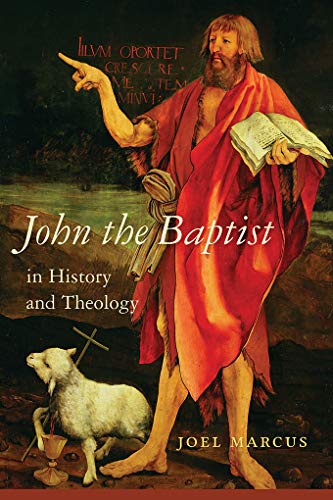
Το νέο βιβλίο του Joel Marcus για τον Ιωάννη τον Βαπτιστή / Joel Marcus' new book on John the Baptist

https://wp-media.patheos.com/blogs/sites/468/2019/05/JOhn-the-baptist-book-cover.jpgΔιαβάστε την παρουσίαση του νέου βιβλίου του Joel Marcus, John the Baptist in History and Theology (2019) από τον Barth Ehrman: 

Πέμπτη 28 Μαρτίου 2019

Στο τρέχον τεύχος του JECS / In the current issue of JECS

Journal of Early Christian Studies 27:1 (2019)

  • Carl Johan Berglund, "Literary Criticism in Early Christianity: How Heracleon and Valentinus Use One Passage to Interpret Another," 27-53 (abstract)
  • Pamela Mullins Reaves, "John the Baptist and the Jordan River: The Arrival of the Son of Man in the Testimony of Truth (NHC IX,3) and Parallels in the Paraphrase of Shem (NHC VII,1)," 55-83 (abstract)


Δευτέρα 1 Αυγούστου 2016

Στο τρέχον τεύχος του SCH / In the current issue of SCH

Studies in Church History 52 (2016)

Frances Andrews, "Doubting John?," 17-48 (abstract)

Κυριακή 12 Οκτωβρίου 2014

Μερικά ακόμη χριστιανικά απόκρυφα / Some more Christian Apocrypha

Ο Tony Burke ανάρτησε στο ιστολόγιό του τις περιλήψεις του περιεχομένου μερικών ακόμη αποκρύφων κειμένων που θα εκδοθούν σύντομα στον τόμο που επιμελείται μαζί με τον Brent Landau: 

Κυριακή 28 Σεπτεμβρίου 2014

Η απόκρυφη αφήγηση του βίου και του μαρτυρίου του Ιωάννη Βαπτιστή / The apocryphal narrative of the life and martyrdom of John the Baptist

Συνεχίζοντας την παρουσίαση των απόκρυφων κειμένων που θα συμπεριληφθούν στη νέα έκδοση αποκρύφων, ο Tony Burke δημοσιεύει περίληψη και δίνει κάποια ενδιαφέροντα στοιχεία για την απόκρυφη αφήγηση του βίου και του μαρτυρίου του Ιωάννη Βαπτιστή:

Κυριακή 26 Οκτωβρίου 2008

Οι Μανδαίοι και ο Ιωάννης ο Βαπτιστής

Στην ιστοσελίδα του ραδιοφωνικού προγράμματος Australian Radio National υπάρχει απομαγνητοφωνημένη (στα αγγλικά) η εκπομπή του προγράμματος Encounter με θέμα τους Μανδαίους και τον Ιωάννη τον Βαπτιστή. Στην εκπομπή παρουσιάζονται πολύ ενδιαφέροντα στοιχεία σχετικά με αυτήν τη γνωστική κατά τις εκτιμήσεις των ειδικών ομάδα. Αρχαιολογικές μαρτυρίες γι' αυτήν έχουμε από τον 6ο αι. κι εξής, αν και υπάρχει η υπόθεση ότι κάποια χειρόγραφά των Μανδαίων είναι αρχαιότερα. Σύμφωνα με τον Γερμανό καθηγητή, ειδικό σε θέματα Γνωστικισμού, Kurt Rudolph, οι Μανδαίοι πρέπει να εμφανίσθηκαν ως θρησκευτική ομάδα κατά τον 3ο αι. μ.Χ. Τα ίδια τα μανδαιϊκά κείμενα κάνουν λόγο για την παρουσία των Μανδαίων στην Παλαιστίνη του 1ου αι. μ.Χ. Όσον αφορά στον Ιωάννη τον Βαπτιστή, τον θεωρούν τον τελευταίο σε μία σειρά βιβλικών μορφών, που τιμούν, όπως π.χ. τον Σημ ή τον Σηθ. Σύμφωνα με τους Μανδαίους ο Ιωάννης κατά συνδέθηκε στενά με ομάδες μεταναστών από την περιοχή του Ιράν. Είναι εκείνος που αναβίωσε το βάπτισμα ως μέσο πνευματικού καθαρισμού. Δεν θεωρούν ότι είναι πρόδρομος του Ιησού Χριστού, γιατί γι' αυτούς πνευματικός ηγέτης και αντικείμενο λατρείας είναι ο Ιωάννης κι όχι ο Ιησούς.
Οι Μανδαίοι έχουν οργανωμένο ιερατείο και κεντρική λατρευτική τους πράξη είναι το βάπτισμα. Το νερό γι' αυτούς είναι ιδιαίτερα σημαντικό στοιχείο, καθώς αυτό, σύμφωνα με την κοσμοθεωρία τους, κυριαρχεί στο χώρο όπου ζουν τα όντα του φωτός.


Για να διαβάσετε περίσσότερα γι' αυτήν την ενδιαφέρουσα θρησκευτική ομάδα, πατήστε εδώ(για να διαβάσετε το απομαγνητοφωνημένο κείμενο, πρέπει να επιλέξετε στη σελίδα "Show transcript").