Theologische Rundschau 90/4 (2025)
Τρίτη 3 Φεβρουαρίου 2026


Δευτέρα 2 Φεβρουαρίου 2026
Η “βασιλική” πριν γίνει χριστιανική εκκλησία: ο ρωμαϊκός χώρος των δικαστηρίων και η Καινή Διαθήκη / Before the Christian Basilica: Roman Courts and the New Testament
Στις αφηγήσεις της Καινής Διαθήκης που περιέχουν σκηνές δημόσιας ακρόασης, απολογίας ή διαχείρισης του πλήθους, συνήθως εστιάζουμε στα πρόσωπα και στους λόγους τους—όχι στον χώρο μέσα στον οποίο λαμβάνει χώρα το γεγονός. Αυτό είναι εύλογο: τις περισσότερες φορές η ίδια η αφήγηση δεν περιγράφει αυτούς τους χώρους.
Μια πρόσφατη ανακάλυψη στην ιταλική πόλη Fano—η εύρεση μιας βασιλικής που ταυτίζεται με εκείνη που περιγράφει ο Βιτρούβιος—μας δίνει την ευκαιρία να ξανασκεφτούμε πώς ο δημόσιος χώρος διαμόρφωσε την εμπειρία και τη σημασία τέτοιων επεισοδίων. Κι αυτό, επειδή στον ρωμαϊκό κόσμο ο δημόσιος βίος, και ειδικότερα η απονομή της δικαιοσύνης, ήταν άρρηκτα δεμένος με συγκεκριμένες αρχιτεκτονικές δομές: το forum και τα διοικητικά συγκροτήματα που το πλαισιώνουν, αλλά και τη ρωμαϊκή basilica.
Η ανακάλυψη της basilica στη Fano (Fanum Fortunae)
Το 2022, στην Piazza Andrea Costa της ιταλικής πόλης Fano (της αρχαίας Fanum Fortunae), η αρχαιολογική έρευνα έφερε στο φως εντυπωσιακές μαρμάρινες κατασκευές και δάπεδα, ενδεικτικά ενός δημόσιου μνημειακού συγκροτήματος. Περαιτέρω εργασίες αποκάλυψαν ένα ορθογώνιο κτήριο διαστάσεων περίπου 50 × 35 μέτρων, με περιμετρική κιονοστοιχία.
Μετά την επίσημη ανακοίνωση της 19ης Ιανουαρίου 2026, η αρμόδια Soprintendenza (ABAP Ancona–Pesaro Urbino) παρουσίασε στις 20 Ιανουαρίου 2026 τα βασικά δεδομένα: πέντε κίονες σε opus vittatum (τεχνική με εναλλασσόμενες σειρές τούβλων και λίθου), διαμέτρου περίπου 1,5 μ., σε απόσταση περίπου 4 μ. ο ένας από τον άλλο—σε αντιστοιχία με την περιγραφή του Βιτρούβιου (De Architectura 5) για τις πλευρικές κιονοστοιχίες. Οι βάσεις των κιόνων επικαλύπτονταν από μαύρο επίχρισμα.
 |
| Βάση/τμήμα κίονα από την ανασκαφή της basilica στην Piazza Andrea Costa στη Fano (Φωτο: Ministero della Cultura, Ufficio Stampa e Comunicazione) |
Η οριστική επιβεβαίωση ήρθε στις 16 Ιανουαρίου 2026, όταν με συστηματική έρευνα εντοπίστηκε η γωνιακή
κολόνα του κτηρίου. Οι κίονες αυτού του κτηρίου, ύψους περίπου 15 μέτρων, στηρίζονταν σε φέροντες πεσσούς
και παραστάδες για την υποστήριξη ενός δεύτερου ορόφου. Βρέθηκαν επίσης τμήμα
του περιμετρικού τοίχου με μαύρο επίχρισμα, δύο τετράγωνες βάσεις (πιθανώς για
αγάλματα), και εκτεταμένες επιφάνειες του δαπέδου της αίθουσας
της βασιλικής.
Ας σημειωθεί ότι ήδη από το 2022 οι ανασκαφές στη via Vitruvio είχαν φέρει στο φως επιβλητικές οικοδομικές κατασκευές και μαρμάρινα δάπεδα που υποδήλωναν
την παρουσία δημόσιων κτιρίων υψηλού επιπέδου. Η ανακάλυψη της βασιλικής συμπληρώνει την εικόνα αυτού του δημόσιου χώρου. Με βάση τα ευρήματα που έχουν μέχρι τώρα στη διάθεσή τους οι αρχαιολόγοι είναι σε θέση να αποκαταστήσουν την αρχική της μορφή και τις διαστάσεις της και την έχουν ταυτοποιήσει με τη βασιλική που περιγράφει ο Βιτρούβιος στο προαναφερθέν έργο του. Πρόκειται για την πρώτη υλική απόδειξη της ύπαρξης του μοναδικού κτιρίου που ο
Βιτρούβιος αποδίδει ρητώς στον εαυτό του.
Ανοιχτά ερωτήματα και μελλοντικές έρευνες
Η ανακάλυψη δημιουργεί μία σειρά από νέα ερωτήματα. Πού ακριβώς βρισκόταν ο aedes Augusti (ο ναός του Αυγούστου) που αναφέρει ο Βιτρούβιος; Πώς ήταν οργανωμένοι οι χώροι του forum; Οι έρευνες συνεχίζονται στην περιοχή του μοναστηριού του San Daniele, όπου εικάζεται ότι βρισκόταν το tribunalium και ο ναός. Προς την via Montevecchio, εντοπίστηκαν ήδη αρχιτεκτονικά υπολείμματα που πιθανόν σχετίζονται με το ρωμαϊκό macellum. Εκτιμάται ότι τα νέα ευρήματα θα επιτρέψουν την ανακατασκευή των άνω τμημάτων του κτηρίου της βασιλικής και θα οδηγήσουν στην επανεξέταση παλαιότερων υποθέσεων, όπως εκείνης του Palladio κατά το 16ο αιώνα.
Η ανακάλυψη της βασιλικής του Βιτρούβιου είναι σημαντική όχι μόνο για τη ρωμαϊκή αρχαιολογία και την ιστορία της αρχιτεκτονικής αλλά και για την ιστορική μελέτη της εποχής της Καινής Διαθήκης. Μας βοηθά να κατανοήσουμε καλύτερα τους χώρους, όπου η ρωμαϊκή εξουσία εκδηλώνεται ως δημόσια διαδικασία.
Η βασιλική ως δημόσιο κτήριο
Μολονότι σήμερα η βασιλική να ταυτίζεται με συγκεκριμένο ρυθμό χριστιανικών ναών κι έχει αποκτήσει θρησκευτικό χαρακτήρα, στα ρωμαϊκά, όμως, χρόνια, ήταν ένα δημόσιο κοσμικό κτήριο συναλλαγών, διοίκησης και κυρίως δικαστικών διαδικασιών. Τα κτήρια, άλλωστε, του δημόσιου χώρου στη ρωμαϊκή αυτοκρατορία είναι τόποι εξουσίας και φορείς ιδεολογίας. Ας θυμηθούμε εδώ ότι για τον Βιτρούβιο ο αρχιτεκτονικός σχεδιασμός πρέπει να ακολουθεί μία συγκεκριμένη τάξη κι αρμονία (για παράδειγμα, τα κτήρια πρέπει να ακολουθούν τις αναλογίες του ανθρώπινου σώματος). Η αρχιτεκτονική του δημόσιου χώρου, λοιπόν, επιβεβαιώνει και επιβάλλει μία συγκεκριμένη ιδεολογία και ιεραρχία της εξουσίας.
Αυτός ο χώρος, όμως, είναι κι ο κόσμος στον οποίο κινούνται οι πρώτοι Χριστιανοί, οι οποίοι γίνονται αποδέκτες και κάποιες φορές θύματα της ιδεολογίας και της πολιτικής πραγματικότητας την οποία υπογραμμίζουν κτήρια, όπως η βασιλική του Βιτρούβιου. Θα πρέπει εδώ να θυμηθούμε, για παράδειγμα, ότι συχνά στις Πράξεις των Αποστόλων, διαβάζουμε για συλλήψεις και δίκες, κατηγορίες και απολογίες των αποστόλων, επαφές με τις αρχές και τη μεταφορά του ευαγγελίου από τον ιδιωτικό στο δημόσιο χώρο. Δε μπορούμε με βεβαιότητα πάντοτε να συνδέσουμε συγκεκριμένα περιστατικά των Πράξεων με αυτά τα δημόσια κτήρια που οι αρχαιολόγοι έχουν εντοπίσει. Ευρήματα, όμως, όπως αυτό στη Fano, επιτρέπουν να διαβαστούν με μεγαλύτερη ιστορική ακρίβεια σκηνές δημόσιας ακρόασης/αντιπαράθεσης που περιγράφονται στις πρώιμες χριστιανικές πηγές και καθιστούν απτό το υλικό και θεσμικό πλαίσιο αυτών των περιστατικών. Η έννοια της “κρίσης” και της “δικαιοσύνης” αποκτά λοιπόν και μια υλική/κοινωνική διάσταση: δεν είναι μόνο θεολογικό λεξιλόγιο, αλλά και εμπειρία ζωής μέσα σε συγκεκριμένους χώρους εξουσίας. Επομένως, η αρχαιολογία του χώρου δεν παρέχει απλά ένα αποδεικτικό συμπλήρωμα στον ερμηνευτή της Καινής Διαθήκης. Είναι ένα σημαντικό σημείο αφετηρίας της ερμηνείας και της κατανόησης του κειμένου μέσα στο ιστορικό, κοινωνικό και πολιτικό του πλαίσιο. Αν θέλουμε να διαβάσουμε αυτά τα κείμενα όπως τα διάβαζαν οι πρώτοι αναγνώστες, πρέπει να ανακατασκευάσουμε, κατά το δυνατόν, τον υλικό κόσμο μέσα στον οποίο εκτυλίχθηκαν τα γεγονότα που περιγράφουν.
Η βασιλική της Fano λειτουργεί, επομένως, όπως μία "γέφυρα ανάμεσα στο κείμενο και τον τόπο" (πρώτα μεταξύ του κειμένου του Βιτρούβιου και το συγκεκριμένο κτήριο και, δεύτερον, μεταξύ των αφηγήσεων όπως εκείνων των Πράξεων και της υλικής πραγματικότητας και του χώρου στις πόλεις του ελληνορωμαϊκού κόσμου). Ευρήματα, όπως αυτό, μας υπενθυμίζουν ότι η ιστορία των πρώτων χριστιανικών κοινοτήτων δεν εκτυλίσσεται σε κενό αλλά μέσα σε συγκεκριμένες υλικές συνάφειες του αστικού βίου που η αρχαιολογία μπορεί να ανασυνθέσει με αυξανόμενη ακρίβεια.
Πηγές
- Ministero della Cultura (Italia). «Scoperta Basilica di Vitruvio, Giuli: “A Fano il cuore della …”». Comunicato stampa, 19/1/2026
- Soprintendenza ABAP Ancona–Pesaro Urbino. «Fano (PU) – Piazza Andrea Costa. Emergono i resti della Basilica Vitruviana», 20/1/ 2026 ]
- Regione Marche. «Scoperta straordinaria a Fano: torna alla luce la Basilica di Vitruvio»1, 9/1/2026
- Smithsonian Magazine. «Archaeologists Say They’ve Finally Found a Long-Lost Basilica That Matches the Description the Architect Wrote 2,000 Years Ago». 22/1/2026
- Lauren K. McCormick, «Vitruvius and the Built World of the New Testament: First confirmed basilica of Vitruvius uncovered», Bible History Daily, Biblical Archaeology Society, 30/1/2026
-------------------------------------------------------
Ιn the New Testament narratives that contain scenes of public hearings, defenses, or crowd management, we typically focus on the individuals and their words rather than on the space in which the event takes place. This is because the narrative itself most often does not describe these spaces. A recent discovery in the Italian city of Fano—the finding of the first confirmed basilica of Vitruvius—gives us an opportunity to reconsider how these spaces shaped the meaning of these very texts. This is because in the Roman world, public life, and particularly the administration of justice, was inextricably bound to specific architectural structures: the forum and its administrative complexes, and especially the Roman basilica.
The discovery of the basilica at Fano (Fanum Fortunae)
In 2022, within the Piazza Andrea Costa in the Italian city of Fano (ancient Fanum Fortunae), the archaeological spade brought to light impressive marble architectural structures and floors. Further work revealed a rectangular building measuring approximately 50 x 35 meters with a perimeter colonnade. On January 20, 2026, the Italian Archaeological Service presented in a press conference (with the participation of Minister of Culture Alessandro Giuli) the extraordinary findings: five columns in opus vittatum (a technique with alternating rows of brick and stone), 1.5 meters in diameter, approximately 4 meters apart from one another—exactly as Vitruvius describes them in Book 5 of his work De Architectura for the lateral colonnades. The bases of the columns are covered with black plaster.
The definitive confirmation came on January 16, 2026, when through systematic investigation the corner column of the building was located. Its columns, approximately 15 meters high, rested on load-bearing piers and pilasters to support a second floor. Also found were a section of the perimeter wall with black plaster, two square bases (probably for statues), and extensive surfaces of the basilica hall's floor.
It should be noted that already in 2022, excavations on the via Vitruvio had brought to light imposing architectural structures and marble floors indicating the presence of high-level public buildings. The discovery of the basilica completes the picture of this public space. Based on the findings available to archaeologists so far, they are in a position to reconstruct its original form and dimensions and have identified it with the basilica that Vitruvius describes in his aforementioned work. This is the first material evidence of the existence of the only building that Vitruvius explicitly attributes to himself.
Open questions and future research
The discovery raises a series of new questions. Where exactly was the aedes Augusti, the temple of Augustus that Vitruvius mentions? How were the spaces of the complex organized? Excavations continue in the area of the monastery of San Daniele, where the tribunalium and temple may have been located. Toward the via Montevecchio, architectural remains have already been identified that probably belong to the Roman macellum. It is estimated that the new findings will allow the reconstruction of the upper sections of the building and the reexamination of earlier hypotheses, such as that of Palladio in the 16th century.
The discovery of Vitruvius's basilica matters not only for Roman archaeology and the history of architecture but also for the historical study of the New Testament period. It helps us better understand the spaces where Roman power manifests itself as a public process within buildings and public space.
The basilica as a public building
While today the basilica is identified with a specific style of Christian churches and has acquired a religious character, in Roman times it was a public secular building for judicial proceedings, administration, and politics. Moreover, the buildings of public space in the Roman Empire are sites of power and bearers of ideology. Let us recall here that for Vitruvius, architectural design must follow a specific order and harmony (for example, buildings must follow the proportions of the human body). The architecture of public space, therefore, confirms and imposes a specific ideology and hierarchy of power.
This space, however, is also the world in which the first Christians move, who become recipients of the ideology and political reality underscored by buildings such as Vitruvius's basilica. We should remember here, for example, that often in the Acts of the Apostles we read about arrests and trials, accusations and defenses of the apostles, contacts with authorities and the transfer of the gospel from private to public space. Without of course being able always to identify public buildings with certainty with specific incidents in Acts, findings such as that at Fano allow scenes of public hearing/confrontation described in early Christian sources to be read with greater historical accuracy. The concept of "judgment" and "justice" then acquires a material/social dimension as well: it is not only theological vocabulary, but also life experience within specific spaces of power. Therefore, the archaeology of space does not merely provide supporting evidence to the interpreter of the New Testament. It is an important point of departure for the interpretation and understanding of the text within its historical, social, and political context. If we want to read these texts as the first readers read them, we must reconstruct, as far as possible, the material world within which the events they describe unfolded.
The basilica at Fano thus functions as a "bridge between text and place" (first between Vitruvius's text and the specific building, and second, between narratives such as those of Acts and the material reality and space in the cities of the Greco-Roman world). Findings such as this remind us that the history of the early Christian communities does not unfold in a vacuum but within specific material contexts of urban life that archaeology can reconstruct with increasing accuracy.
Sources:
- Lauren K. McCormick, "Vitruvius and the Built World of the New Testament," Biblical Archaeology Society, January 30, 2026. https://www.biblicalarchaeology.org/daily/ancient-cultures/ancient-rome/vitruvius-and-built-world-of-new-testament/
- Soprintendenza Archeologia, Belle Arti e Paesaggio per le province di Ancona e Pesaro e Urbino, "Fano (PU) – Piazza Andrea Costa. Emergono i resti della Basilica Vitruviana," January 20, 2026. https://sabapancona.cultura.gov.it/fano-pu-piazza-andrea-costa-emergono-i-resti-della-basilica-vitruviana/
- Ministero della Cultura, "Scoperta Basilica di Vitruvio, Giuli: 'A Fano il cuore della più antica sapienza architettonica dell'Occidente'," January 19, 2026. https://cultura.gov.it/comunicato/28580
- Lauren K. McCormick, «Vitruvius and the Built World of the New Testament: First confirmed basilica of Vitruvius uncovered», Bible History Daily, Biblical Archaeology Society, 30/1/2026
Revue Biblique 132/4 (2025)
Revue Biblique 132/4 (2025)
- Émile Puech, "Le pithos inscrit de l'Ophel à Jérusalem," 481-494 (abstract)
- Tomer Greenberg - Yoel Elitzur, "Roots and Words that Appear in the Books of Samuel, Kings, and the Latter Prophets but Absent from the Heptateuch," 495-516 (abstract)
- Alfio Giuseppe Catalano, "Hos 6,1-2 in the Septuagint and Old Latin: Shorter Forms and Textual Fluidity as Evidence of a Developing Hebrew Vorlage?" 517-533 (abstract)
- Manuel Nägele, "Paul and Contemporaneous Philosophy: Nous as a Test Case," 534-557 (abstract)
- Régis Burnet, "Who Said Armageddon was Megiddo?" 558-577 (abstract)
- Ronny Reich, "The Asymmetrical Pottery Flask of the Early Roman (= Late Second Temple) Period in Judea," 578-604 (abstract)
- KOZLOWSKI, Jan M. Kozlowski, "'Foxes Have Holes...' (Matt 8:20 / Luke 9:58): A Trace of an Unknown Greek Author," 605-607
Κυριακή 1 Φεβρουαρίου 2026
Dead Sea Discoveries 33/1 (2026)
Dead Sea Discoveries 33/1 (2026)
Special Issue: Intersectional Investigations into the Complexity of Social Life in Early Judaism
Edited by Elisa Uusimäki and Hanna Tervanotko
Το τρέχον τεύχος του Dead Sea Discoveries αποτελεί μια σημαντική συμβολή στην κοινωνική ιστορία της πρώιμης ιουδαϊκής κοινωνίας. Οι επιμελήτριες του τεύχους, Elisa Uusimäki και Hanna Tervanotko, θέτουν ως κεντρικό άξονα την έννοια της διαθεματικότητας (intersectionality) και αναδεικνύουν την αναλυτική δυναμική του συγκεκριμένου μεθοδολογικού πρίσματος. Αντί να εξετάζουμε μεμονωμένα κάθε κατηγορία ταυτότητας —γένος, κοινωνική θέση, ηλικία, εθνότητα— η διαθεματική ανάλυση επιτρέπει να βλέπουμε πώς αυτές αλληλοεπιδρούν και πώς διαμορφώνουν σχέσεις ισχύος μέσα σε μια κοινωνία. Το πλαίσιο αυτό, που αρχικά αναπτύχθηκε στις σπουδές φύλου και στις κοινωνικές επιστήμες, εφαρμόζεται εδώ τόσο στα κείμενα της ερήμου της Ιουδαίας όσο και σε αρχαιολογικό υλικό από την Παλαιστίνη.
Τα άρθρα που φιλοξενούνται στο τεύχος αποτελούν επιμέρους μελέτες περίπτωσης, όπου το μεθοδολογικό αυτό πρίσμα εφαρμόζεται σε διαφορετικά παραδείγματα. Οι Millar, Comerford και Atkins επιχειρούν κάτι τολμηρό και πρωτοπόρο: αναδεικνύουν πώς η διαθεματική ανάλυση δεν αφορά μόνο τις ανθρώπινες ταυτότητες, αλλά μπορεί να εφαρμοστεί και στον μη ανθρώπινο κόσμο, καθώς τα ζώα αποτελούν μέρος του κοινωνικού ιστού. Οι αναφορές στα ζώα, για παράδειγμα, στο Χειρόγραφο της Δαμασκού και στον Τωβίτ, αποκαλύπτουν δυναμικές ισχύος που δεν γίνονται εξίσου ορατές αλλού. Ο Martens, στη συνέχεια, εξετάζει το ζήτημα της εκπαίδευσης στην κοινότητα του Qumran και αναθεωρεί προηγούμενες αντιλήψεις, θέτοντας ένα κρίσιμο διττό ερώτημα: τι σημαίνει «εκπαίδευση» σε αυτήν την κοινότητα και κατά πόσο και τα κορίτσια είχαν πρόσβαση σε αυτήν. Στο επόμενο άρθρο του τεύχους, η Palmer φωτίζει ένα μικρό αλλά ενδιαφέρον κείμενο: ένα απόσπασμα από το Χειρόγραφο της Δαμασκού που αφορά την τροφό και δείχνει πώς η ταυτότητα αυτής της γυναίκας —εάν είναι ελεύθερη ή δούλη, Ιουδαία ή ξένη— μπορεί να δημιουργεί καταστάσεις συγκρούσεων σε σχέση με τους κοινοτικούς κανόνες. Τέλος, ο Nam στρέφεται στην οικονομική διάσταση: εξετάζει τα αρχεία του Ketef Jericho και αναδεικνύει ότι οι πρόσφυγες της Ιουδαϊκής Ερήμου δεν είναι απλώς «θύματα» του πολέμου· είναι ενεργοί οικονομικοί δρώντες που διατηρούν αρχεία, εντάσσονται σε δίκτυα συναλλαγών και καλλιεργούν μνήμη, ακόμη και μέσα σε συνθήκες προσφυγιάς.
- 🔓Elisa Uusimäki & Hanna Tervanotko, "Intersecting Identities: Towards a Refined Understanding of Social Life in Early Judaism," 1–24
- 🔓Suzanna Millar, Charles Peter Comerford & Peter Joshua Atkins, "Blinding Birds, Bartered Bodies, and Bestial Betrothals: Exploring Interspecies Intersectionality in the Damascus Document and Book of Tobit," 25–51
- John W. Martens, "Was There Universal Education of Girls and Boys in the Qumran Communities?", 52–86 (abstract)
- Carmen Palmer, "The Wetnurse and Her Conflicting Identities in the Damascus Document and Beyond," 87–115 (abstract)
- Roger Sangburm Nam, "Judean Desert Refugees as Economic Actors: Agency and Memory from the Ketef Jericho Archives," 116–141 (abstract)
------------------------------------------------------------------
The current issue of Dead Sea Discoveries represents a significant contribution to the social history of early Jewish society. The issue's editors, Elisa Uusimäki and Hanna Tervanotko, foreground the concept of intersectionality and highlight the analytical power of this methodological lens. Rather than examining each category of identity in isolation —gender, social status, age, ethnicity— intersectional analysis allows us to see how these categories interact with one another and how they shape relations of power within a society. This framework, originally developed in gender studies and the social sciences, is applied here both to the texts from the Judean Desert and to archaeological material from Palestine.
The articles hosted in this issue constitute individual case studies, in which this methodological lens is applied to different examples. Millar, Comerford, and Atkins undertake something bold and pioneering: they demonstrate how intersectional analysis does not concern only human identities, but can be extended to the nonhuman world as well, since animals form part of the social fabric. References to animals, for instance, in the Damascus Document and in Tobit, reveal dynamics of power that are not equally visible elsewhere. Martens, in turn, examines the question of education in the Qumran community and revisits previous assumptions, posing a crucial twofold question: what does "education" mean in this community, and to what extent did girls also have access to it? In the next article, Palmer sheds light on a small but fascinating text: a passage from the Damascus Document concerning the wetnurse, showing how this woman's identity —whether she is free or enslaved, Jewish or foreign— can give rise to situations of conflict in relation to the community's regulations. Finally, Nam turns to the economic dimension: he examines the Ketef Jericho archives and demonstrates that the refugees of the Judean Desert are not simply "victims" of war; they are active economic agents who maintain records, participate in networks of exchange, and cultivate memory, even under conditions of displacement.
- 🔓Elisa Uusimäki & Hanna Tervanotko, "Intersecting Identities: Towards a Refined Understanding of Social Life in Early Judaism," 1–24
- 🔓Suzanna Millar, Charles Peter Comerford & Peter Joshua Atkins, "Blinding Birds, Bartered Bodies, and Bestial Betrothals: Exploring Interspecies Intersectionality in the Damascus Document and Book of Tobit," 25–51
- John W. Martens, "Was There Universal Education of Girls and Boys in the Qumran Communities?", 52–86 (abstract)
- Carmen Palmer, "The Wetnurse and Her Conflicting Identities in the Damascus Document and Beyond," 87–115 (abstract)
- Roger Sangburm Nam, "Judean Desert Refugees as Economic Actors: Agency and Memory from the Ketef Jericho Archives," 116–141 (abstract)
Πρώιμος Χριστιανισμός και αρχαίος Ιουδαϊσμός: οι δρόμοι που δεν χώρισαν εύκολα / Early Christianity and Ancient Judaism: The Paths That Didn’t Easily Part
Μία από τις πιο ζωηρές συζητήσεις στην καινοδιαθηκική έρευνα τις τελευταίες δεκαετίες αφορά το λεγόμενο «χωρισμό των δρόμων» Ιουδαϊσμού και Χριστιανισμού (parting of the ways). Το μοντέλο που πρότεινε ο James Dunn το 1991 — ότι οι δύο κοινότητες αρχικά ήταν «αδελφές» που προέρχονται από την ίδια ρίζα, τον Ισραήλ του 1ου αιώνα μ.Χ., αλλά ακολούθησαν αργότερα διακριτές πορείες — έγινε αποδεκτό ως ένα χρηστικό εργαλείο μελέτης, ιδίως στην αγγλόφωνη έρευνα. Με τα χρόνια, ωστόσο, η κριτική που ασκείται στο μοντέλο αυτό αυξάνεται. Η Judith Lieu, ο Tobias Nicklas και άλλοι καινοδιαθηκολόγοι έχουν επισημάνει ότι το δίπολο που προϋποθέτει αυτό το μοντέλο (Χριστιανισμός - Ιουδαϊσμός) αφήνει έξω την πολυμορφία, τις συναντήσεις και τις συγκρούσεις που καταγράφουν τα κείμενα. Επομένως, η επιλογή μίας συγκεκριμένης «στιγμής χωρισμού» είναι τουλάχιστον προβληματική.
Μέσα σε αυτό το πλαίσιο της γόνιμης κριτικής θα πρέπει να διαβαστεί και άρθρο του Markus Tiwald, καθηγητή Καινής Διαθήκης στο Πανεπιστήμιο της Βιέννης, που δημοσιεύθηκε στην ιστοσελίδα The Bible and Interpretation του Πανεπιστημίου της Αριζόνας. Το κείμενο, που αποτελεί εισαγωγή στο νέο του βιβλίο (Early Judaism and the Beginnings of Christianity: Common Roots and the Parting of the Ways, Kohlhammer, 2026 — διαθέσιμο σε open access), διατυπώνει με τρόπο συστηματικό και τεκμηριωμένο μία θέση που αρχίζει να κερδίζει ολοένα και περισσότερο έδαφος στην έρευνα: ότι, δηλαδή, αυτό που αποκαλούμε «πρώιμος/αρχέγονος Χριστιανισμός» δεν ήταν αρχικά παρά ένα ακόμη θρησκευτικό κίνημα μέσα στην σύνθετη ιστορική πραγματικότητα του Ιουδαϊσμού της εποχής του Δεύτερου Ναού.
Markus Tiwald, "The Beginnings of Christianity as an Integral Part of Early Judaism"
Η θέση του Tiwald
Ο Tiwald εκκινεί από τρεις παρατηρήσεις που τυγχάνουν πλέον ευρείας αποδοχής στην έρευνα. Πρώτον, η λεγόμενη «Σύνοδος της Ιάμνειας» δεν είναι ιστορικό γεγονός, και η birkat ha-minim (η προσευχή κατά των minim, των «αιρετικών»/«αποστατών») δεν τεκμηριώνεται με βεβαιότητα ως μηχανισμός αποκλεισμού των Χριστιανών από τη συναγωγή, όπως νομίζαμε. Δεύτερον, οι μεσσιανικές προσδοκίες και διεκδικήσεις ήταν πολύ πιο διαδεδομένες στον αρχαίο Ιουδαϊσμό απ’ ό,τι συχνά υποτίθεται—από τον Bar Kokhba και την αναγνώρισή του ως Μεσσία από τον ραββίνο Akiva, έως τους διάφορους προφήτες και χαρισματικούς επικεφαλής αποκαλυπτικών κινημάτων που αναφέρει ο Ιώσηπος. Τρίτον, η θεότητα του Ιησού δεν διατυπώθηκε ως δεσμευτικό δογματικό σχήμα παρά τον 4ο αιώνα, σε οικουμενικές συνόδους. Πριν από αυτές, οι τίτλοι «Υιός του Θεού» και «Μεσσίας» (οι οποίες για τους χριστιανούς δήλωναν τη θεότητα του Ιησού) ήταν ανοιχτές έννοιες που μπορούσαν να κατανοηθούν ποικιλοτρόπως, με μεταφορική ή κυριολεκτική σημασία, κι επομένως, δεν έθεταν αυτομάτως όσους τις χρησιμοποιούσαν για τον Ιησού εκτός του Ιουδαϊσμού.
Στη συνέχεια, ο Tiwald διατρέχει τις πηγές, αρχίζοντας από τον ιστορικό Ιησού και φτάνοντας στους Πατέρες του 5ου αιώνα. Κάθε σταθμός επαληθεύει την ίδια θέση: ο χωρισμός ήταν μία μακροχρόνια διαδικασία, έλαβε διάφορες μορφές, και συνήθως συνίστατο σε μία σειρά μικρότερων χωρισμών, διαφορετικών στη μορφή, στην ταχύτητα και την ένταση κατά τόπους. Οι «ιουδαΐζοντες» χριστιανοί που αναφέρονται στα κείμενα δεν εξέλειπαν πλήρως ακόμη και τον 5ο αιώνα — απαντούν στο έργο του Ωριγένη, του Κυρίλλου Αλεξανδρείας, του Ιωάννη Χρυσοστόμου και του Ιερώνυμου. Όλοι τους αντιμετωπίζουν ως μία πραγματικότητα κι όχι ως μία θεωρητική απειλή.
Ιδιαίτερο ενδιαφέρον στο άρθρο του Tiwald παρουσιάζει η συζήτηση του Παύλου και του κύκλου του Στεφάνου. Ο Tiwald επισημαίνει την αξιοποίηση του Ναού και της λατρείας του ως μεταφορικές εικόνες για τη χριστιανική εκκλησία και τη λατρεία της (η θεώρηση, για παράδειγμα, της εκκλησίας ως «ναού» ή η αντικατάσταση των θυσιών με τα «έργα αίνου»). Υποστηρίζει ότι δεν ήταν χριστιανική καινοτομία, αλλά μία τάση που παρατηρείται ήδη στην κοινότητα του Κουμράν και στον Φίλωνα. Ομοίως, η αποχή από τις διατάξεις περιτομής και καθαρότητας δεν ήταν αποκλειστικά θέση του Παύλου· ήδη ακραίοι αλληγοριστές στους οποίους ασκεί κριτική ο Φίλων ή οι συντάκτες της Επιστολής Αριστέα συνιστούν μάρτυρες τέτοιων τάσεων στο εσωτερικό του Ιουδαϊσμού.
Η περίπτωση της Αντιόχειας επί Ορόντου: ένα case study
Το άρθρο του Tiwald παρέχει ένα γενικό θεωρητικό πλαίσιο, πολύ σημαντικό για την κατανόηση των σχέσεων Χριστιανισμού-Ιουδαϊσμού στους πρώτους χριστιανικούς αιώνες. Θα ήταν χρήσιμο, ωστόσο, να δοκιμαστεί αυτό το μοντέλο σε συγκεκριμένα γεωγραφικά και πολιτιστικά οριζόμενα παραδείγματα. Μία τέτοια ενδιαφέρουσα περίπτωση είναι η Αντιόχεια επί Ορόντου. Δεν είναι μάλιστα τυχαίο ότι συχνά παρουσιάζεται ως το κατεξοχήν παράδειγμα του χωρισμού από εκείνους που ενστερνίζονται τη θεωρία του χωρισμού των δύο δρόμων. Η πόλη αποτελούσε τόπο συνάντησης και συμβίωσης μίας ιουδαϊκής κοινότητας — με ισοπολιτεία που διατηρήθηκε ακόμη και μετά την καταστροφή του Ναού — και μίας ανερχόμενης χριστιανικής κοινότητας ποικίλης προέλευσης: Ιουδαιοχριστιανοί της Παλαιστίνης, Σύριοι πρώην εθνικοί, Ιουδαίοι της Διασποράς που έγιναν χριστιανοί, πρώην εθνικοί από Κύπρο και Κυρήνη.
Αν διαβάσουμε τα κείμενα που συνδέονται με την Αντιόχεια ακολουθώντας τη μεθοδολογική πρόταση του Tiwald, προκύπτουν ενδιαφέροντα συμπεράσματα. Στις Πραξ 15, οι οδηγίες που δίνονται στους εξ εθνών χριστιανούς της Αντιόχειας ομοιάζουν στις αντίστοιχες συζητήσεις περί kashrut και τους κανόνες για τους gerim — εκείνους τους μη Ισραηλίτες, δηλαδή, που προσκολλήθηκαν στον Ισραήλ κατά την είσοδό του στη Γη της Επαγγελίας. Είναι δύσκολο να μιλήσουμε για «χωρισμό», όταν οι οδηγίες που δίνονται στην κοινότητα είναι οι ίδιες με εκείνες της ιουδαϊκής παράδοσης για τους ξένους που εισέρχονται στον Ισραήλ.
Το περιστατικό που περιγράφει ο Παύλος στο Γαλ. 2 — η ένταση μεταξύ Παύλου και Πέτρου στην Αντιόχεια — είναι ακόμη πιο αποκαλυπτικό. Η έμφαση εδώ δεν είναι στη διάσταση μεταξύ Ιουδαίων και χριστιανών αλλά στο ερώτημα στο εσωτερικό της χριστιανικής κοινότητας: ποιες ιουδαϊκές πρακτικές θα πρέπει να αποτελούν κοινό στοιχείο της χριστιανικής ταυτότητας. Ο τρόπος που ο Παύλος χρησιμοποιεί τους όρους «Ἰουδαϊσμός» και «ἰουδαΐζειν» δε δηλώνει ένα απόλυτο ταυτοτικό μέγεθος αλλά μάλλον μία σειρά πρακτικών που συμμορφώνονται με τις ιουδαϊκές παραδόσεις και μπορούν να έχουν διαβαθμίσεις. Αυτή η κατανόηση ταιριάζει απόλυτα στο πλαίσιο που θέτει ο Tiwald κι ιδιαίτερα στην παρατήρηση ότι τα έργα νόμου στα οποία αναφέρεται ο Παύλος αφορούν κυρίως τις διατάξεις του τελετουργικού και της καθαρότητας.
Πέρα από τον Tiwald: οι πολιτικοί και οικονομικοί παράγοντες
Η τοπική διάσταση της μελέτης των σχέσεων Ιουδαίων και Χριστιανών αναδεικνύει επίσης και μία σειρά άλλων μη θεολογικών παραγόντων στους οποίους δεν αναφέρεται ιδιαίτερα ο Tiwald στο άρθρο του. Είναι, δηλαδή, πιθανόν, ο χωρισμός των δρόμων να επηρεάζεται ή να επισπεύδεται από την περιρρέουσα πολιτική κατάσταση ή τις κατά τόπους πολιτισμικές ιδιαιτερότητες (στην περίπτωση της Αντιόχειας, για παράδειγμα, το περιστατικό με τον Ιουδαίο "εξωμότη" Αντίοχο ή το αντι-ιουδαϊκό κλίμα στην πόλη). Ο συνυπολογισμός και των πολιτικών/πολιτισμικών παραγόντων καθιστά σαφές ότι ο χωρισμός δεν ήταν αποκλειστικά θεολογική απόφαση αλλά και σχέση πολιτικής ισορροπίας και κοινωνικής επιβίωσης.
Κατ' ανάλογο τρόπο, η αναφορά του Ιγνάτιου Αντιοχείας στον «Χριστιανισμό» ως αυτόνομο μέγεθος χρήζει μίας περισσότερο σύνθετης ανάγνωσης από αυτή που συνήθως γίνεται. Αν και η γλώσσα του παραπέμπει σε σαφή διάκριση Ιουδαϊσμού-Χριστιανισμού, οι εικόνες που χρησιμοποιεί — θυσία, θυσιαστήριο, η σχέση ΠΔ-ευαγγελίου ως χριστολογική συνέχεια, όχι ρήξη — δείχνουν ότι η αναφορά του Ιγνάτιου δεν θα πρέπει να κατανοηθεί μέσα από το δίπολο εμείς - οι άλλοι, αλλά έχει ένα πιο σύνθετο περιεχόμενο.
Συμπερασματικά
Το άρθρο του Tiwald και φυσικά και το νέο του βιβλίο αποτελούν αξιόλογες συμβολές στη συζήτηση για το "χωρισμό των δρόμων", ιδιαίτερα στο γερμανόφωνο χώρο, όπου αυτό το μοντέλο δεν είναι ακόμη απόλυτα αποδεκτό. Η αφήγηση αυτού του χωρισμού, όπως προτάθηκε από τον Dunn κι άλλους, συνέβαλε αναμφίβολα στην εδραίωση ενός νέου παραδείγματος και στην απομάκρυνση από το παλαιότερο μοντέλο της "θεολογίας της αντικατάστασης". Ωστόσο, αυτό που πρέπει να είναι πάντα σαφές είναι ότι αυτή η διαδικασία δεν ήταν τόσο μονοσήμαντη όσο συχνά παρουσιάζεται. Το άρθρο του Tiwald σωστά επισημαίνει ότι δεν υπάρχει μία απόλυτη ιστορική στιγμή κατά την οποία έλαβε χώρα οριστικά και αμετάκλητα αυτός ο χωρισμός. Επιπλέον, είναι πλέον σημαντικό να αναρωτηθούμε ποιοι δείκτες διαφοροποίησης (κοινή τράπεζα/καθαρότητα/περιτομή/εορτές/Γραφή/θεσμοί/ρητορικός λόγος) οδήγησαν στη διαφοροποίηση και πώς αυτό επιτεύχθηκε κατά τόπους. Η μελέτη των πηγών καταδεικνύει ότι αυτή η διαδικασία δεν ήταν τόσο καθαρή παντού: μια κοινότητα μπορεί να διαφοροποιείται θεσμικά, αλλά να μοιράζεται πρακτικές· ή να οξύνει τη ρητορική της ενώ στην πράξη συνεχίζει να ζει σε «γκρίζες ζώνες» συνύπαρξης. Η ρητορική μπορεί να είναι στρατηγική—και ακριβώς γι’ αυτό είναι ιστορικό τεκμήριο, αλλά όχι “φωτογραφία” της καθημερινότητας.
Ενδεικτική βιβλιογραφία
- Becker, Adam H. and Reed, Annette Yoshiko, επιμ. The Ways That Never Parted: Jews and Christians in Late Antiquity and the Early Middle Ages. Tübingen: Mohr Siebeck, 2003.
- Boyarin, Daniel. Border Lines: The Partition of Judaeo-Christianity. Philadelphia: University of Pennsylvania Press, 2004.
- Dunn, James D. G. The Partings of the Ways: Between Christianity and Judaism and Their Significance for the Character of Christianity. 2nd ed. London: SCM Press, 2006.
- Fredriksen, Paula. When Christians Were Jews: The First Generation. New Haven, CT: Yale University Press, 2018.
- Kimelman, Reuven. “Birkat ha-Minim and the Lack of Evidence for an Anti-Christian Jewish Prayer in Late Antiquity.” Στο Jewish and Christian Self-Definition, τόμ. 2: Aspects of Judaism in the Graeco-Roman Period, επιμ. Sanders, E. P. με Baumgarten, Albert I. και Mendelson, Alan, 226–44. Philadelphia: Fortress Press, 1981.
- Lieu, Judith M.. Christian Identity in the Jewish and Graeco-Roman World. Oxford: Oxford University Press, 2004.
- Nicklas, Tobias. “Parting of the Ways? Probleme eines Konzepts.” Στο Juden – Heiden – Christen? Religiöse Inklusionen und Exklusionen im Römischen Kleinasien bis Decius, επιμ. Stefan Alkier και Hartmut Leppin, 21–41. WUNT I/400. Tübingen: Mohr Siebeck, 2018
- Carleton Paget, James. Jews, Christians and Jewish Christians in Antiquity. Tübingen: Mohr Siebeck, 2010.
- Zetterholm, Magnus. The Formation of Christianity in Antioch: A Social-Scientific Approach to the Separation between Judaism and Christianity. London: Routledge, 2003
-------------------------------------------------------
One of the most lively discussions in New Testament scholarship over the past few decades concerns the so-called "parting of the ways" between Judaism and Christianity. The model proposed by James Dunn in 1991 — that the two communities were originally "sisters" stemming from the same root, the Israel of the 1st century CE, but later followed distinct paths — was quickly accepted as a useful analytical tool, particularly in anglophone scholarship. Over the years, however, the criticism directed at this model has been growing. Judith Lieu, Tobias Nicklas, and other New Testament scholars have pointed out that the binary framework this model presupposes (Christianity vs. Judaism) leaves out the plurality, the encounters, and the conflicts that the texts actually record. Consequently, the selection of a specific "moment of parting" is, at the very least, problematic.
It is within this context of productive critique that we should read the recent article by Markus Tiwald, Professor of New Testament at the University of Vienna, published on the website The Bible and Interpretation of the University of Arizona. The piece, which serves as an introduction to his new book (Early Judaism and the Beginnings of Christianity: Common Roots and the Parting of the Ways, Kohlhammer, 2026 — available in open access), formulates in a systematic and well-documented way a position that is gaining ever more ground in scholarship: that what we call "early Christianity" was, initially, nothing other than one more religious movement within the complex historical reality of Judaism in the Second Temple period.
Markus Tiwald, "The Beginnings of Christianity as an Integral Part of Early Judaism"
Tiwald's Position
Tiwald begins from three observations that now enjoy broad acceptance in scholarship. First, the so-called "Council of Yavneh" is not a historical event, and the birkat ha-minim (the prayer against the minim, the "heretics"/"apostates") was not a mechanism for the exclusion of Christians from the synagogue, as was previously assumed. Second, the title "Messiah" ("christos") was far more common in ancient Judaism than had been maintained until now — from Bar Kokhba, who proclaimed himself Messiah with the support of Rabbi Akiva, to the various prophet-leaders of apocalyptic groups mentioned by Josephus. Third, the divinity of Jesus was not formulated as dogma until the 4th century, at ecumenical councils. Before these, the titles "Son of God" and "Messiah" (which for Christians denoted the divinity of Jesus) were open concepts that could be understood in various ways — figuratively or literally — and therefore did not automatically place those who used them with reference to Jesus outside of Judaism.
Tiwald then moves through the sources, starting from the historical Jesus and reaching the Church Fathers of the 5th century. Each stage confirms the same thesis: the parting was a long-term process, took various forms, and usually consisted of a series of smaller separations, different in form, speed, and intensity from place to place. The "Judaizing" Christians mentioned in the texts did not disappear fully even by the 5th century — they appear in the work of Origen, Cyril of Alexandria, John Chrysostom, and Jerome. All of them confront this as a living reality, not as a theoretical threat.
Of particular interest in Tiwald's article is the discussion of Paul and the circle of Stephen. Tiwald points out that the use of the Temple and its worship as metaphorical images for the Christian church and its worship (the understanding, for instance, of the church as a "temple," or the replacement of sacrifices with "works of praise") was not a Christian innovation, but a tendency already observable in the Qumran community and in Philo. Likewise, the abstention from the regulations on circumcision and purity was not exclusively Paul's position; already the radical allegorizers whom Philo criticizes, or the authors of the Letter of Aristeas, constitute witnesses to such tendencies within Judaism itself.
The Case of Antioch on the Orontes: A Case Study
Tiwald's article provides a general theoretical framework, very important for understanding the relations between Christianity and Judaism in the first Christian centuries. It would be useful, however, to test this model against specific geographically and culturally defined examples. One such interesting case is Antioch on the Orontes. It is no coincidence, in fact, that it is frequently presented as the paradigmatic example of the parting by those who embrace the theory of the two ways. The city constituted a place of encounter and coexistence between a Jewish community — with civic equality that was maintained even after the destruction of the Temple — and a rising Christian community of diverse origins: Jewish Christians from Palestine, Syrian former gentiles, Jews of the Diaspora who had become Christians, former gentiles from Cyprus and Cyrene.
If we read the texts connected with Antioch following Tiwald's methodological proposal, interesting conclusions emerge. In Acts 15, the instructions given to the gentile Christians of Antioch resemble the corresponding discussions about kashrut and the regulations for the gerim — the non-Israelites, that is, who attached themselves to Israel at the time of its entry into the Land of Promise. It is difficult to speak of a "parting," when the instructions given to the community are the same as those of the Jewish tradition for the foreigners who enter into Israel.
The incident described by Paul in Gal. 2 — the tension between Paul and Peter in Antioch — is even more revealing. The emphasis here is not on the division between Jews and Christians but on the question internal to the Christian community: which Jewish practices should constitute a common element of Christian identity. The way Paul uses the terms "Judaism" and "to Judaize" does not denote an absolute categorical identity but rather a series of practices conforming to Jewish traditions that can admit of degrees. This understanding fits perfectly with the framework set by Tiwald, and particularly with the observation that the "works of the law" to which Paul refers concern mainly the regulations of ritual and purity.
Beyond Tiwald: Political and Economic Factors
The local dimension of the study of Jewish-Christian relations also brings to light a series of other non-theological factors to which Tiwald does not refer particularly in his article. It is possible, that is, that the parting of the ways is influenced or accelerated by the surrounding political situation or by local cultural particularities (in the case of Antioch, for example, the incident with the Jewish "apostate" Antiochus, or the anti-Jewish climate in the city). Taking into account political and cultural factors as well makes it clear that the parting was not exclusively a theological decision but also a matter of political balance and social survival.
In an analogous way, Ignatius of Antioch's reference to "Christianity" as an autonomous entity requires a more complex reading than the one usually given. Although his language points to a clear distinction between Judaism and Christianity, the images he employs — sacrifice, altar, the relationship between the Old Testament and the gospel as christological continuity, not rupture — show that Ignatius's stance should not be understood through the binary of "us vs. them," but has a more complex content.
Conclusion
Tiwald's article and of course his new book constitute worthy contributions to the discussion about the "parting of the ways," particularly in the German-speaking world, where this model is not yet fully accepted. The narrative of this parting, as proposed by Dunn and others, undoubtedly contributed to the establishment of a new paradigm and to the move away from the older model of "supersessionist theology." However, what must always remain clear is that this process was not as straightforward as it is often presented. Tiwald's article correctly points out that there is no single historical moment at which this parting took place definitively and irreversibly. Furthermore, it is now important to ask which markers of differentiation (common table / purity / circumcision / feasts / Scripture / institutions / rhetorical discourse) led to differentiation, and how this was achieved locally. The study of the sources demonstrates that this process was not so clean-cut everywhere: a community can differentiate institutionally while sharing practices; or it can sharpen its rhetoric while in practice continuing to live in "grey zones" of coexistence. Rhetoric can be strategic — and precisely for that reason it is historical evidence, but not a "photograph" of everyday life.
Σάββατο 31 Ιανουαρίου 2026
In die Skriflig 60/3 (2026):FS Francois P. Viljoen (2)
Στο τεύχος 3 του In die Skriflig για το έτος 2026 έχουν προστεθεί τα εξής άρθρα για το κατά Ματθαίον και την Α΄ Πέτρου:
- Marius J. Nel, "Conceptual frames, rhetorical strategy and divine reciprocity in Matthew 7:1–5"
- Michael C. Mulder, "The ‘Yoke of the Torah’ as a source of joy in Judaism and Jesus’s use of the yoke metaphor in Matthew 11:29–30"
- Paul L. Kayumba, "Misreadings of ‘judge not’ in contemporary discourse"
- Douw G. Breed, "Alistair I. Wilson, "The taste and sight of the Kingdom: The people of God as physical witnesses to the Kingdom"
Παρασκευή 30 Ιανουαρίου 2026
AGNTS Journal: Μια εισαγωγή στη γερμανόφωνη έρευνα της Καινής Διαθήκης / AGNTS Journal: An Introduction to German-language New Testament Scholarship
Πρόσφατα κυκλοφόρησε ο πρώτος τόμος ενός νέου περιοδικού ανοικτής πρόσβασης με τον τίτλο Accessible German New Testament Scholarship (AGNTS), υπό την επιμέλεια των Wayne Coppins και Jacob Cerone. Το εγχείρημα αυτό έρχεται ως σκοπό να γνωρίσει στο μη γερμανόφωνο αναγνώστη τη γερμανόφωνη καινοδιαθηκική έρευνα. Ας σημειωθεί ότι, ενώ παλαιότερα η γερμανόφωνη έρευνα ήταν γλωσσικά προσβάσιμη στο μεγαλύτερο μέρος των καινοδιαθηκολόγων, αυτό δεν ισχύει πλέον με την επικράτηση της αγγλόφωνης έρευνας διεθνώς. Κατά συνέπεια, ενώ η γερμανική παράδοση στις καινοδιαθηκικές σπουδές είναι πλούσια και σημαντική, παραμένει δυσπρόσιτη για μεγάλο μέρος της διεθνούς ακαδημαϊκής κοινότητας λόγω της γλώσσας. Το AGNTS προσφέρει μεταφράσεις σημαντικών κειμένων από τον γερμανόφωνο χώρο, επιτρέποντας την ευρύτερη διάδοση και συζήτηση συμβολών στην έρευνα που διαφορετικά θα παρέμεναν άγνωστες στους περισσότερους.
Περιεχόμενα του πρώτου τόμου (2025)
Ο πρώτος τόμος αποτελεί μια συλλογή με ιδιαίτερο ενδιαφέρον, καθώς συνδυάζει κλασικά κείμενα με σύγχρονες μελέτες:
- William Wrede, "Self-Review of The Messianic Secret"
- William Wrede, "Letter to Adolf von Harnack on Jesus as Messiah and Paul as a New Beginning"
- Matthias Konradt, "The Commandment of Love for Enemies in Matt 5.43–48 and Its Early Jewish Context"
- Peter Stuhlmacher, "The Tübingen Biblical Theology of the New Testament – A Retrospective"
- Oda Wischmeyer, "Canon and Hermeneutics in Times of Deconstruction. What New Testament Scholarship Can Achieve Hermeneutically in the Present"
- Christoph Heilig, "Paul as Storyteller? Conclusion"
- Christine Jacobi, "Perfect Life Through Special Nourishment: Irenaeus, Adversus Haereses 5"
Πέμπτη 29 Ιανουαρίου 2026
Journal of the Bible and its Reception 12/2 (2025)
Journal of the Bible and its Reception 12/2 (2025)
- Brennan W. Breed - Davis Hankins, "What is Qohelet’s Problem?" 167-191 (abstract
- 🔓Rebekah Rochte Votral,, "Purposeful Play: The Reception of Daniel 5–6 in Ludus Danielis," 193-213 (OA)
- 🔓Stefan Krauter, "1 Tim 4:13: Public Lecture or Private Study?" 215-230 (OA)
- Erik A. Estrada, "Jean de Gaigny and the First Early Modern Discovery of Marius Victorinus’s Commentary on Galatians," 231-257 (abstract)
Η γραφή ως υλικό γεγονός: παπυρολογία και επιγραφική σε δημιουργικό διάλογο / Writing as Material Event: Papyrology and Epigraphy in Creative Dialogue
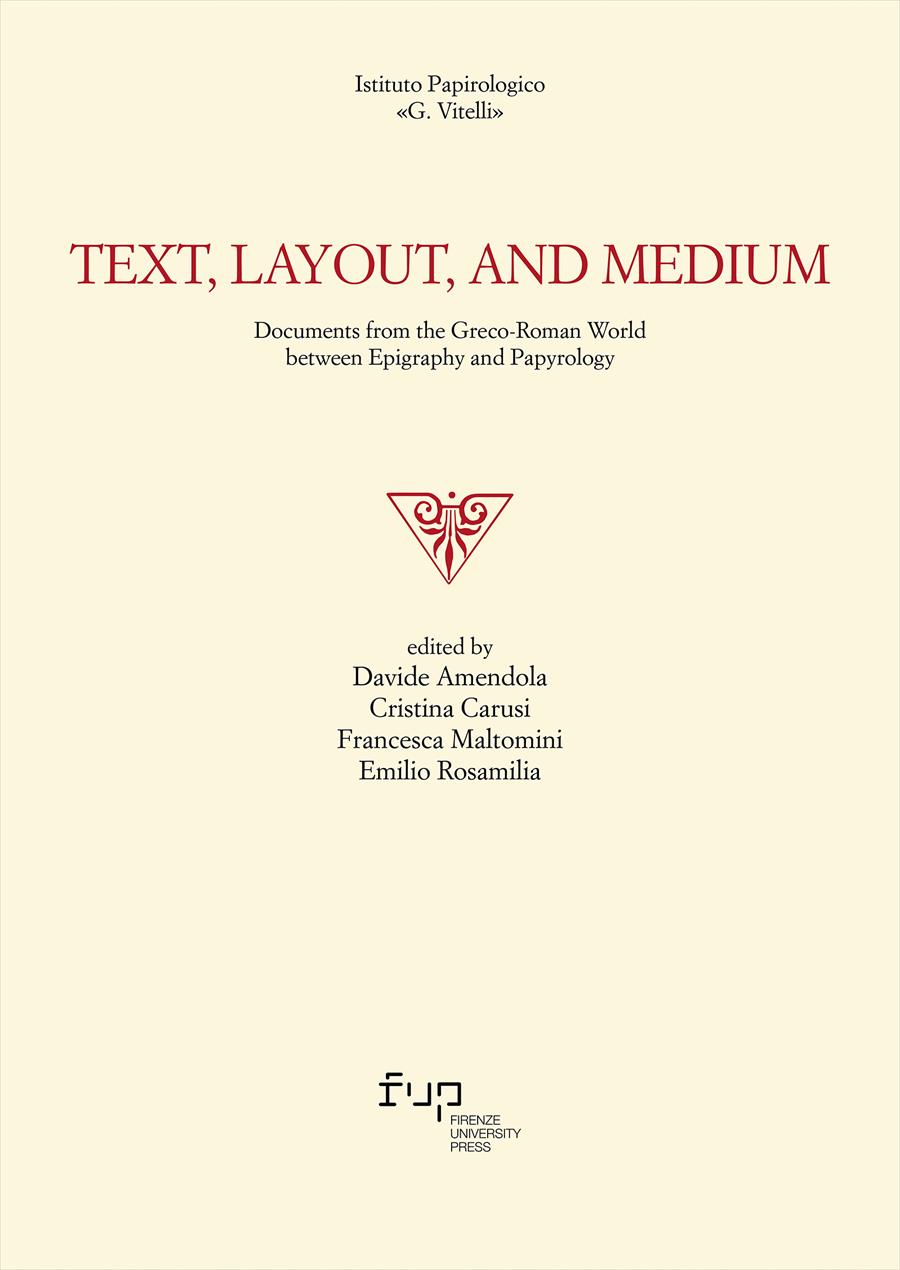
Στον τόμο έρχονται σε διάλογο δύο συγγενικές αλλά και διακριτές ερευνητικές περιοχές: η παπυρολογία και η επιγραφική. Αυτό που αναδεικνύεται είναι ότι η διάταξη και η μορφή του κειμένου δεν επηρεάζουν μόνο τον τρόπο ανάγνωσης, αλλά καθορίζουν και τον κοινωνικό του ρόλο. Το υλικό που το φέρει μπορεί, με τη σειρά του, να υποδηλώνει λειτουργία, κύρος ή και ιερότητα. Η σχέση κειμένου–μέσου–μορφής δεν είναι μονόδρομη, αλλά αμφίδρομη και σύνθετη.
Ξεχωρίζω, ανάμεσα στις εξαιρετικές μελέτες του τόμου, εκείνες του Nicola Reggiani για το Χ-Ρ (chi-rho) και το σταυρόγραμμα στους παπύρους (“Crossing Abbreviations, Monograms, and Symbols”), του Lucio Del Corso για την υλικότητα της γραφής και τις συμβάσεις της στην Αίγυπτο της ύστερης αρχαιότητας (“Epigraphic Habits and Writing Conventions in Late Antique Egypt”), καθώς και των Francesca Maltomini και Francesca Murano για τον επιτελεστικό χαρακτήρα της γραφής στα μαγικά κείμενα (“The Binding Layout? On Graphic Strategies in Greek Magical Texts”).
Για όσους εργάζονται με χειρόγραφα της Καινής Διαθήκης και παλαιοχριστιανικά κείμενα ή αξιοποιούν επιγραφές στη μελέτη της ΚΔ, το βιβλίο προσφέρει πολύτιμες προοπτικές. Οι μελέτες του τόμου καταδεικνύουν ότι το κείμενο είναι ένα υλικό γεγονός, με συγκεκριμένη λειτουργία σε χρόνο και τόπο—και ότι ο τρόπος που «στήνεται» πάνω στο μέσο γραφής αποτελεί μέρος της επικοινωνίας με το αναγνωστικό κοινό.
Με τη συνεξέταση κειμένου, διάταξης/μορφής και υλικού φορέα, ο τόμος προσφέρει μια μεθοδολογικά γόνιμη σύνθεση ανάμεσα σε παπυρολογία και επιγραφική και καθιστά σαφές ότι η υλικότητα του κειμένου δεν αποτελεί ένα δευτερεύον ζήτημα αλλά μέρος της ιστορικής του συγκρότησης. Το κείμενο κατανοείται ως καταγραφή σε συγκεκριμένο μέσο, με συμβάσεις διάταξης και ορίζοντες χρήσης που διαμορφώνουν την αναγνωστική εμπειρία και τη κοινωνική λειτουργία των κειμένων. Για την έρευνα της Καινής Διαθήκης, των παλαιοχριστιανικών κειμένων και των επιγραφικών μαρτυριών, η οπτική αυτή λειτουργεί ως κρίσιμο ερμηνευτικό συμπλήρωμα: η μορφή και διάταξη, τα σύμβολα και τα σημεία γραφής σημεία προσλαμβάνονται ως δεδομένα που καθορίζουν το νόημα, τη χρήση και την πρόσληψη του κειμένου.
Davide Amendola, Cristina Carusi, Francesca Maltomini, Emilio Rosamilia-(επιμ.), Text, Layout, and Medium: Documents from the Greco-Roman World between Epigraphy and Papyrology (Firenze University Press, 2024) [Open Access: CC BY 4.0]
------------------------------------------------------
Ancient texts are often approached as detached from their material dimension: immaterial and unchanging across time and space. In reality, however, texts always have a material aspect. They are inscribed on various media—papyrus, stone, ostraca, wood, walls—and the form and layout they take on these surfaces (columns, spaces, markers, symbols, abbreviations) are not neutral. They indicate their character and function and guide the reader in how to read and use them. This fundamental insight forms the basis of the edited volume Text, Layout, and Medium: Documents from the Greco-Roman World between Epigraphy and Papyrology (Firenze University Press, 2024): it demonstrates how medium, layout, and form are not elements irrelevant to the text, but part of the very process of communication between text and reader.
The volume brings into dialogue two related yet distinct fields of research: papyrology and epigraphy. What emerges is that the layout and form of a text do not merely affect how it is read, but also determine its social role. The material that bears it can, in turn, signal function, authority, or even sacredness. The relationship of text–medium–form is not unidirectional, but reciprocal and complex.
Among the volume's exceptional studies, I would highlight those by Nicola Reggiani on chi-rho and the staurogram in papyri ("Crossing Abbreviations, Monograms, and Symbols"), Lucio Del Corso on the materiality of writing and its conventions in Late Antique Egypt ("Epigraphic Habits and Writing Conventions in Late Antique Egypt"), and Francesca Maltomini and Francesca Murano on the performative character of writing in magical texts ("The Binding Layout? On Graphic Strategies in Greek Magical Texts").
For those working with New Testament manuscripts and early Christian texts, or utilizing inscriptions in NT studies, the book offers valuable perspectives. The volume's studies demonstrate that a text is a material event, with specific function in time and place—and that the way it is "set up" on its writing medium is part of the communication with its reading public.
By examining text, layout/form, and material carrier together, the volume offers a methodologically fruitful synthesis between papyrology and epigraphy and makes clear that the materiality of a text is not a secondary issue but part of its historical constitution. The text is understood as inscription on a specific medium, with conventions of layout and horizons of use that shape both the reading experience and the social function of texts. For research on the New Testament, early Christian texts, and epigraphic evidence, this perspective functions as a critical interpretive supplement: form and layout, symbols and graphic signs are approached as data that determine the meaning, use, and reception of the text.
Davide Amendola, Cristina Carusi, Francesca Maltomini, Emilio Rosamilia-(επιμ.), Text, Layout, and Medium: Documents from the Greco-Roman World between Epigraphy and Papyrology (Firenze University Press, 2024) [Open Access: CC BY 4.0]
Τετάρτη 28 Ιανουαρίου 2026
Interpretation 80/1 (2026)
Interpretation 80/1 (2026)
- Greg Carey, "'Arrogant and Blasphemous Words'? Reading Revelation against and within Authoritarian Rhetoric," 6-20 (abstract)
- Sharon L. Putt, "Jezebel or Jerusalem: Revelation, Ecclesiastical Purity, and the Christian Response(s)," 21-32 (abstract)
- Amy E. Meverden, "The Metonymic Power of Healing Leaves: Reading Revelation 22:2 with the Caryatid Relief," 33-46 (abstract)
- 🔓Thomas B. Slater, "'Confirmation Statements' and Cosmic Unity in John’s Apocalypse," 47-57 (OA)
Εγγραφή σε:
Αναρτήσεις (Atom)