Δευτέρα 11 Αυγούστου 2014

Ένα νέο υπόμνημα στο βιβλίο του Ζαχαρία / A new commentary on the book of Zechariah

coverΚυκλοφόρησε από τον εκδοτικό οίκο Peeters ένα νέο υπόμνημα στο βιβλίο του Ζαχαρία. Σύμφωνα με την περιγραφή του εκδοτικού οίκου ο συγγραφέας του A. Wolters εστιάζει το ενδιαφέρον του στην φιλολογική ανάλυση του κειμένου, στην ιστορία της ερμηνείας τους (τόσο στη ραββινική όσο και στην πατερική και στη νεότερη), στη διακειμενικότητα και, τέλος, στη χριστιανική θεολογική ερμηνεία του προφητικού βιβλίου. Στα ιδιαίτερα στοιχεία του νέου αυτού υπομνήματος είναι η πρόταση του Wolters ότι το βιβλίο χωρίζεται σε δύο κι όχι σε τρία μέρη όπως συνήθως υποστηρίζεται. 

A. Wolters, Zechariah (Historical Commentary on the Old Testament), Breepols, Leuven 2014
ISBN: 978-90-429-3070-4
LII-475 p.
74 ευρώ

Summary
The contribution of this commentary to the understanding of the book of Zechariah is mainly in four areas. The first is close attention to philological detail, with a special focus on textual criticism, lexical semantics, and literary wordplay. A second area of interest is in the history of interpretation of the book, and takes into account a wide range of exegetical material, from rabbinic and patristic times to the present. A third area of interest is in intertextuality. Many passages become fully intelligible only when they are understood as alluding to earlier Scripture. Finally, the commentary has an interest in Christian theological interpretation. The commentary is also remarkable in that it breaks with the traditional division of the book into two parts, and argues that it consists instead of three independent and quite different parts, each of which is attributable to the prophet after whom the book is named.

Το τρέχον τεύχος του JSCS / In the current issue of JSCS

Journal of Septuagint and Cognate Studies 47 (2014)

  • Barbara Schmitz, "κύριος συντρίβων πολέμους 'The Lord who shatters wars' (Exod 15:3LXX). The formative importance of the Song of the Sea (Exod 15:1-18LXX) for the Book of Judith," 5-16
  • Leonard J. Greenspoon / H.G.M. Williamson / Florian Wilk / Rodrigo Franklin de Sousa / Ronald L. Troxel, /  J. Ross Wagner, "Intepreting the Sealed Book," 17-47
  • "The word diaita in LXX Job," 48-58
  • Patrick Pouchelle, "One the use of pepaideumenos in Greek Sirach," 59-68
  • Anthony J. Forte, "Veteris Latinae Ecclesiastici: Apologia pro interprete latino," 69-92
  • Reinhart Ceulemans, "Le texte de la Septante, l'edition de Gottingen et La Bible d'Alexandrie," 93-110

Report

  • Benedicte Lemmelijn, "Reason to Celebrate: 25 Years of the Louvain Centre for Septuagint Studies and Textual Criticism," 111

Special Review

  • Abram Kielsmeier-Jones, "Bible Software for Septuagint Studies: A Comparison of Accordance 10, BibleWorks 9, and Logos 5," 112-127

Ένα νέο άρθρο στο τρέχον τεύχος του VE / A new article in the current issue of VE

Verbum et Ecclesia 35:1 (2014)

Llewellyn Howes, "Condemning or liberating the twelve tribes of Israel?: Judging the meaning of κρίνοντες in Q 22:28, 30"

Ένα νέο άρθρο στο τρέχον τεύχος του In die Skriflig / A new article in the current issue of In die Skriflig

In die Skriflig / In Luce Verbi 48:1 (2014)

Jacob J. Scholtz, "The kingdom of heaven and Matthew 10"

Κυριακή 10 Αυγούστου 2014

Ο τελετουργικός χορός στον αρχέγονο Χριστιανισμό / Ritual dance in early Christianity

Στη σελίδα Bible History Today της ηλεκτρονικής έκδοσης του περιοδικού BAR έχει αναρτηθεί το άρθρο του επίκ. καθηγ. του Πανεπιστημίου της Iowa Paul Dilley με θέμα τον τελετουργικό χορό στον αρχέγονο Χριστιανισμό. Για να το διαβάσετε, πατήστε στον παρακάτω τίτλο:

Ένα ενδιαφέρον άρθρο στο τρέχον τεύχος του Augustinianum / An interesting article in the current issue of Augustinianum

Augustinianum 54:1 (2014)

Ilaria L. Ramelli, "The Jesus movement's flight to Pella and the 'parting of the ways'," 35-51

Παπυρολογικά υπομνήματα Β΄ Κορινθίους / Papyrological commentaries: 2 Corinthians

Κυκλοφόρησε από τον εκδοτικό οίκο Vandenhoeck & Ruprecht ο τέταρτος τόμος στη σειρά Papyrologische Kommentare ο οποίος είναι αφορά στην ερμηνεία της Β΄ Κορινθίους με τη βοήθεια των παπυρολογικών ευρημάτων. Ιδιαίτερα ο συγγραφέας Peter Arzt-Grabner αξιοποιεί τις μαρτυρίες από παπύρους και όστρακα στην συζήτηση θεωριών σύνταξης της επιστολής, των επισκέψεων του Παύλου στην Κόρινθο, του ρόλου των κομιστών επιστολών στον αρχαίο κόσμο, των φυλακίσεων, των ασθενειών, των αρωμάτων, των συστατικών επιστολών, της λογείας από την οπτική των θιάσων, του διασυρμού και της συκοφαντίας στον αρχαίο κόσμο κ.ά. 

Peter Arzt-Grabner, 2. Korinther (Papyrologische Kommentare zum Neuen Testament), Vandenhoeck & Ruprecht, Göttingen 2014
583 pages
ISBN 978-3-525-51002-5
120,00 €

Ένα άρθρο βιβλικού ενδιαφέροντος στο τρέχον τεύχος του ThLZ/ An article of biblical interest in the current ThLZ

Theologische Literatur Zeitung 139 7/8 (2014)

Christof Landmesser, "Geschichte als Interpretation in der neutestamentlichen Wissenschaft : eine Skizze zu einer theologischen Aufgabe," 813-830

Το τρέχον τεύχος του ExpT / In the current issue of ExpT

Expository Times 125:12 (2014)

  • Hughson T. Ong, "Is ‘Spiritual Gift(s)’ a Linguistically Fallacious Term? A Lexical Study of Χάρισµα, Πνευµατικός, and Πνεῦµα," 583-592 (abstract)
  • David Neal Greenwood, "A Pagan Emperor’s Appropriation of Matthew’s Gospel," 593-598 (abstract)

Σάββατο 9 Αυγούστου 2014

Το τρέχον τεύχος του Liber Annuus / In the current issue of Liber Annuus

Liber Annuus 63 (2013)

  • Valerio Barbieri, "La linguistica testuale applicata alla "Vulgata" : le parti narrative di Gn 37-50," 9-44
  • Alberto Mello, "L'amico-nemico : il Sal 55 nel suo contesto canonico," 45-61
  • Jean P. Ondoua Omgba,"La facture syntaxico-poétique du Ps 86," 63-85
  • Alviero Niccacci, "La traiettoria della Sapienza dall'AT a Giovanni, al NT e sviluppi ulteriori," 87-115
  • Vincenzo Lopasso, "Ebed-Melec nella letteratura biblica e giudaica," 117-136
  • Alesssandro Coniglio, "'The tabernacle of David that is fallen' (Am 9:11) : an exegetical study of a moot expression," 137-156
  • Gregor Geiger, "Imperative and 'waw'-Imperative : a text-linguistic description of the distribution," 157-181
  • Rosario Pierri, "Codex B e Nestle-Aland XXVIII a confronto : il Vangelo di Marco," 183-196
  • Paul N.: Anderson,  "Mark, John, and answerability : interfluentiality and dialectic between the Second and Fourth Gospels," 197-245
  • Leslaw D. Chrupcala, "E il Signore si voltò : un tratto lucano dell'agire itinerante di Gesù," 247-274
  • Piotr Blajer, "The parable of the pounds or talents : one story in two different contexts," 275-292
  • Leonardo Giuliano, "Il participio nell'argumentatio di Col 1,24-4,1," 293-317
  • Elisa Chiorrini, :"'Si vanti il fratello umile' : e il ricco? Uno zeugma in Gc 1,9-10a," 319-338
  • Émile Puech, "Une stèle funéraire araméenne de Tayma," 339-342
  • Asher  Ovadiah / Yehudit Turnheim, "A wall painting in Herod's Theatre at Herodion : an image of 'Elysium'?," 343-349
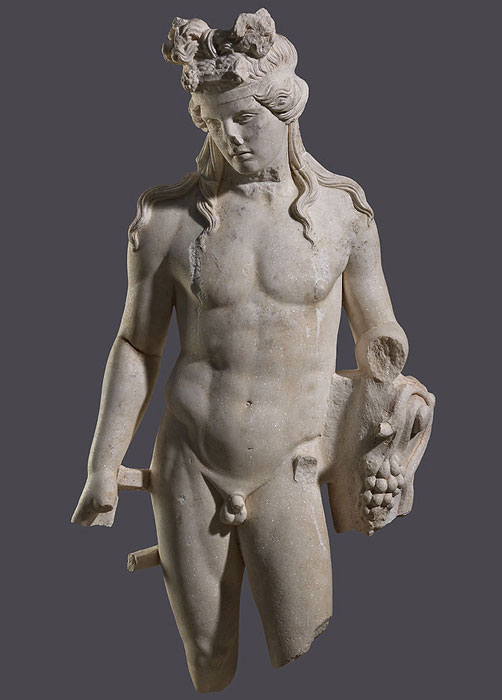
  • Asher Ovadiah, "A framentary wall painting in Herod's Theatre at Herodion : the drinking contest between Dionysos and Herakles," 351-359
      

Στο τρέχον τεύχος του CBQ / In the current issue of CBQ

Catholic Biblical Quarterly 76:3 (2014)

  • Andrew R. Davis, "Hidden treasure in Job 14:1," 421-435
  • Paul L. Redditt, "Prophecy and the monarchy in Haggai and Zechariah," 436-449
  • Francis M. Macatangay, "Election by allusion : Exodus themes in the book of Tobit," 450-463
  • Andrés García Serrano, "Anna's characterization in Luke 2:36-38 : a case of conceptual allusion?," 464-480
  • Alicia D. Myers, "'In the Father's bosom' : breastfeeding and identity formation in John's gospel," 481-497
  • Timothy M. Milinovich, "Memory and hope in the midst of chaos : reconsidering the structure of 1 Thessalonians," 498-518

Στο τρέχον τεύχος του SJOT / In the current issue of SJOT

Scandinavian Journal of Old Testament 28:2 (2014)
  • Jan Dietrich, "Friendship with God: Old Testament and Ancient Near Eastern Perspectives," 157-171 (abstract)
  • Anne Katrine de Hemmer Gudme, "'If I were hungry, I would not tell you' (Ps 50, 12): Perspectives on the Care and Feeding of the Gods in the Hebrew Bible," 172-184 (abstract)
  • Laura Feldt, "A Walk on the Wild Side with Yahweh: A Spatial Perspective on the Hebrew Deity in the National Epic," 185-211 (abstract)
  • John J. Collins, "The God of Joshua," 212-228 (abstract)
  • Carolyn J. Sharp, "Feminist Queries for Ruth and Joshua: Complex Characterization, Gapping, and the Possibility of Dissent," 229-252 (abstract)
  • Hermann Spieckermann, "Heart, Spirit, and Steadfast Love: Substantial Contributions of Torah and Psalter to Old Testament Theology," 253-265 (abstract)
  • Søren Holst, "Psalmists in Cramped and Open Spaces: A Cognitive Perspective on the Theology of Psalms," 266-279 (abstract)
  • Mette Bundvad,"Defending the Concept of Time in the Hebrew Bible," 280-297 (abstract)
  • Bernhard Lang, "Three Philosophers in Paradise: Kant, Tillich and Ricæur Interpret and Respond to Genesis 3," 298-314 (abstract)

RBL 8/8/3024

Jody A. Barnard, The Mysticism of Hebrews: Exploring the Role of Jewish Apocalyptic
Mysticism in the Epistle to the Hebrews
Reviewed by Carl Mosser

Jeremy Corley, Sirach
Reviewed by Oda Wischmeyer

Volkmar Fritz,  The Emergence of Israel in the Twelfth and Eleventh Centuries B.C.E.
Reviewed by Pekka Pitkanen

Florentino García Martínez; Hindy Najman and Eibert Tigchelaar, eds., Between Philology and Theology: Contributions to the Study of Ancient Jewish Interpretation
Reviewed by George J. Brooke

Alison M. Jack, The Bible and Literature
Reviewed by Bradford A. Anderson

Robin Jarrell, Fallen Angels and Fallen Women: The Mother of the Son of Man
Reviewed by Jack Collins

Matthew V. Johnson, James A. Noel, and Demetrius K. Williams, eds., Onesimus Our Brother: Reading Religion, Race, and Culture in Philemon
Reviewed by Abson Joseph

Jason T. LeCureux, The Thematic Unity of the Book of the Twelve
Reviewed by James M. Bos

Thomas R. Schreiner,  The King in His Beauty: A Biblical Theology of the Old and New Testaments
Reviewed by David M. Maas

Alan F. Segal, Sinning in the Hebrew Bible: How The Worst Stories Speak for Its Truth
Reviewed by Joseph Lam

Παρασκευή 8 Αυγούστου 2014

Στο τρέχον τεύχος του JAJ / In the current issue of JAJ

Journal of Ancient Judaism 4:3 (2014)

  • Joshua Berman, "Historicism and Its Limits," 297-305
  • Jeffrey Stackert, Bernard M. Levinson, "The Limitations of »Resonance«," 310-333
  • Courtney Friesen, "Extirpating the Dragon," 334-351
  • Clint Burnett, "Going Through Hell; TAPTAPOΣ in Greco-Roman Culture, Second Temple Judaism, and Philo of Alexandria," 352-378
  • Larry W. Hurtado, "»Ancient Jewish Monotheism« in the Hellenistic and Roman Periods," 379-400
  • Shira Lander, "Inventing Synagogue Conversion," 401-416


Οι γυναίκες ως επικίνδυνες αδελφές στην εβραϊκή Βίβλο / Women as dangerous sisters in Hebrew Bible

Στην γνωστή ιστοσελίδα The Bible and Interpretation αναρτήθηκε το πολύ ενδιαφέρον άρθρο της Amy Kalmanofsky (Jewish Theological Seminary) με θέμα γυναίκες στο ρόλο της αδελφής μέσα στην εβραϊκή Βίβλο. Η συγγραφέας εντοπίζει τις γυναικείες μορφές που λειτουργούν ως αδελφές μέσα στην Βίβλο (π.χ. Μιριάμ, Δείνα, Ρεβέκκα κ.ά.) και συζητά το ρόλο τους μέσα στην αφήγηση, κυρίως όταν αυτές εμφανίζονται να αμφισβητούν πατριαρχικές δομές και αξίες.

O Larry Hurtado για την αξία των διάφορων γραφών στα χειρόγραφα / Larry Hurtado on the valus of variants in manuscripts

Ο Larry Hurtado ανάρτησε στο ιστολόγιό του ένα σύντομο ενδιαφέρον κείμενο για την αξία που αποκτούν πλέον στην κριτική του κειμένου της Καινής Διαθήκης οι διαφορετικές γραφές των χειρογράφων, διότι μας δίνουν πληροφορίες για τις πρακτικές ανάγνωσης και γραφής των αρχαίων εκκλησιαστικών κοινοτήτων, ενώ υποχωρεί σιγά σιγά η έμφαση στον εντοπισμό της αρχικής ορθής γραφής. 

Τετάρτη 6 Αυγούστου 2014

Το νέο τεύχος του ASE / In the current issue of ASE

Annali di Storia dell' Esegesi 34:1 (2014)

Contents & abstracts

Early Judaism

  • Jeffrey M. Tripp, "A Revelation from Gabriel to Nathan? The Herodian Temple and the Ideology of the Davidic Covenant in the Hazon Gabriel," 7-27

Early Groups of Jesus Followers

  • Clare K. Rothschild, "'Have I Not Seen Jesus Our Lord?!' (1 Cor 9:1c): Faithlessness of Eyewitnesses in the Gospels of Mark and Paul," 29-51
  • Mara Rescio, "Demons and Prayer: Traces of Jesus’ Esoteric Teaching from Mark to Clement of Alexandria," 53-81
  • Carlo Carletti, "Origini cristiane ed epigrafia. Note di lettura a proposito di alcune iscrizioni (forse) «protocristiane»," 83-94

History of Biblical Interpretation

  • Tim Denecker, Gert Partoens, "De uoce et uerbo. Augustine’s exegesis of John 1:1–3 and 23 in sermons 288 and 293A auct. (Dolbeau 3)," 95-118

History of Christianity

  • Guglielmo Forni Rosa, "Una crisi della coscienza storica: 1896-1904," 119-149
  • Mauro Pesce, "La relazione tra il concetto di eresia e la storia del cristianesimo," 151-168
  • Elena Mazzini, L’antisemitismo cattolico e le sue trasformazioni. Un tentativo di sintesi a margine di due lavori"," 169-189

Historical Jesus: History of Research

  • Michela Catto, "Confucio in Europa e Gesù in Cina," 191-201
  • Santiago Guijarro / Mauro Pesce / Pierluigi Piovanelli /Claudio Gianotto, "Discussione del libro di Claudio Gianotto (a cura di), Ebrei credenti in Gesù. Le testimonianze degli autori antichi, Milano, Edizioni Paoline, 2012," 203-224
  • Pierre Maraval / Gilles Dorival / François Vouga / Emanuela Prinzivalli / Manlio Simonetti, "Discussione del libro di Emanuela Prinzivalli, Manlio Simonetti, La Teologia degli antichi cristiani (secoli I-V) (“Letteratura Cristiana Antica”, 26), Brescia, Morcelliana, 2012," 225-241

Ένα νέο βιβλίο για το ευαγγέλιο του Θωμά / A new book on the Gospel of Thomas

Από τον εκδοτικό οίκο Brill κυκλοφόρησε το ερμηνευτικό υπόμνημα και μετάφραση του Ευαγγέλιο του Θωμά. Ο συγγραφέας του νέου βιβλίου Simon Gathercole, του Πανεπιστημίου του Cambridge, έχει ήδη και παλαιότερα ασχοληθεί με το συγκεκριμένο εξωκανονικό βιβλίο (The Composition of the Gospel of Thomas: Original Language and Influences, Cambridge: Cambridge University Press 2012). Το νέο του πόνημα προσφέρει νέες προοπτικές στη μελέτη του συγκεκριμένου κειμένου. 

Simon Gathercole, The Gospel of Thomas (Texts and Editions for New Testament Study 11), Leiden, Brill 2014
ISBN: 9789004190412
700 σελίδες
€193,00


Για την συνέντευξη του ίδιου του Gathercole σχετικά με το νέο του βιβλίο πατήστε στον παρακάτω τίτλο: 


Eπιπλέον πρόσφατο τεύχος του JSNT είναι αφιερωμένο στις μελέτες των Gathercole και Goodacre σχετικά με το ευαγγέλιο του Θωμά: Journal for the Study of the New Testament 36:3 (2014)

Θησαυρός με νομίσματα της εποχής του Ιουδαϊκού Πολέμου στην Ιερουσαλήμ / A hoard of Great Revolt coins found in Jerusalem


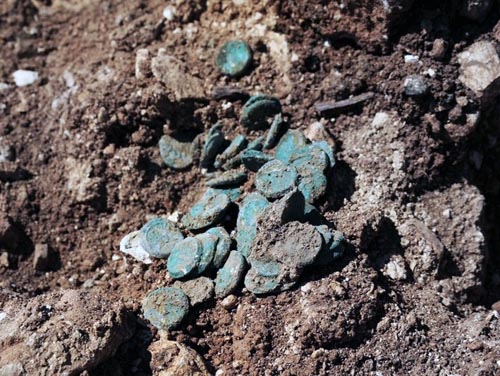
Money Hoard from time of Great Revolt against RomansΣύμφωνα με ανακοίνωση της Αρχαιολογικής Υπηρεσίας του Ισραήλ ανακαλύφθηκε άγνωστος μέχρι σήμερα οικισμός της εποχής της Ιουδαϊκής επανάστασης στα προάστια της Ιερουσαλήμ. Οι ανασκαφές σε οικία αυτού του οικισμού έφεραν στο φως ένα θησαυρό 114 χάλκινων νομισμάτων, όλα του ίδιου έτους και της ίδιας αξίας. Στη μία όψη φέρουν την επιγραφή "Για τη σωτηρία της Σιών" στα εβραϊκά και παράσταση θυμιατού, ενώ στην άλλη lulav και ethrog και την επιγραφή "έτος 4" (της επανάστασης), δηλ. 69/70 μ.Χ.

Ο ιδιοκτήτης τους τα έκρυψε σε μία γωνία ενός δωματίου της οικίας προφανώς με την ελπίδα ότι θα τα πάρει, όταν θα έχει περάσει ο κίνδυνος. Όμως από ό,τι φαίνεται δεν επέστρεψε ποτέ. Οι οικία, η οποία κατασκευάστηκε κατά τον 1ο αι. π.Χ. καταστράφηκε το 69/70 σύμφωνα με τα ευρήματα. Μέρος της ξανακατοικήθηκε ια μικρό χρονικό διάστημα στις αρχές του 2ου μ.Χ. λίγο πριν την επανάσταση του Bar Kochba. Oι αρχαιολόγοι εικάζουν ότι οι κάτοικοι του οικισμού συμμετείχαν ενεργά και στις δύο εξεγέρσεις εναντίον των Ρωμαίων με αποτέλεσμα ο οικισμός να καταστραφεί δυο φορές. 
Για περισσότερες λεπτομέρειες δέστε: 

Το τρέχον τεύχος του VT / In the current issue of VT

Vetus Testamentum 64:3 (2014)
  • Hand Debel, "Stones of Contention?!," (abstract)
  • John Burnight, "A New Interpretation and Translation of Job 5:5," (abstract)
  • Nissim Amzallag, "The Cosmopolitan Character of the Korahite Musical Congregation: Evidence from Psalm 87," 361-381 (abstract)
  • Joshua Berman, "What does the Ox Know in Isa 1:3a?," 382-388 (abstract)
  • Edward J. Bridge, "A Mother’s Influence: Mothers Naming Children in the Hebrew Bible," 389-400 (abstract)
  • Bonifatia Gesche, "Die älteste lateinische Übersetzung des Buches Esdras A—eine neue Entdeckung," 401-415 (abstract)
  • Jože Krašovec, "Justification of God in His Word in Ps 51:6 and Rom 3:4," 416-433 (abstract)
  • Judith Krawelitzki, "God the Almighty? Observations in the Psalms," 434-444 (abstract)
  • Michael P. Maier, "Festbankett oder Henkersmahl? Die zwei Gesichter von Jes 25:6-8," 445-464 (abstract)
  • Nathan Mastnjak, "Judah’s Covenant with Assyria in Isaiah 28," 465-483 (abstract)
  • Hermann-Josef Stipp, "Legenden der Jeremia-Exegese (I): Das eschatologische Schema im alexandrinischen Jeremiabuch," 485-501 (abstract)
  • Terrance Randall Wardlaw, "The Meaning of ברא in Genesis 1:1-2:3," 502-513 (abstract)
  • Gareth J. Wearne, "Habakkuk 3:10-11: In Defence of a Masoretic Unit Division," 515-518 (abstract)

Τρίτη 5 Αυγούστου 2014

24 χειρόγραφα προστίθενται στην ψηφιοποιημένη βιβλιοθήκη της British Library / 24 more digitized mss added to the British Library databank

Από το ιστολόγιο Medieval manuscripts blog της Βρετανικής Βιβλιοθήκης πληροφορούμαστε για τις εργασίες του προγράμματος ψηφιοποίησης των βυζαντινών χειρογράφων της που πραγματοποιείται με την οικονομική ενίσχυση του Ιδρύματος Σταύρος Νιάρχος. 24 νέα χειρόγραφα, μεταξύ των οποίων και πολλά της ΚΔ (κείμενο και κατένες) έχουν προστεθεί στην ψηφιακή βιβλιοθήκη.

Ένα σπάνιο νόμισμα της Judaea Capta στη Βηθσαϊδά / A rare Judaea capta coin discovered in Bethsaida


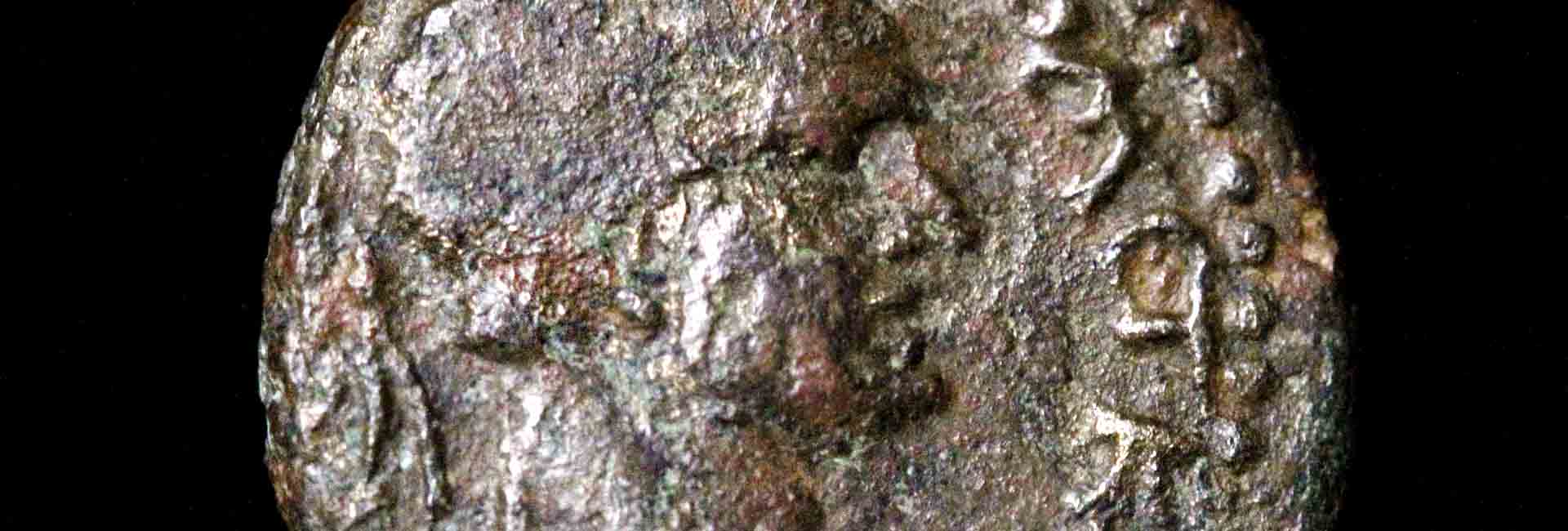
Η είδηση κυκλοφόρησε λίγες μέρες νωρίτερα και την αναδημοσιεύουμε εδώ για όσους μπορεί να μην ενημερώθηκαν. Κατά τις ανασκαφές στη Βηθσαϊδά ήρθε στο φως ένα σπάνιο νόμισμα της Judaea capta της εποχής του Δομιτιανού και με θέμα την άλωση της Ιερουσαλήμ το 70 μ.Χ. από τον Βεσπασιανό και τον Τίτο. 

Ένα νέο βιβλίο για την Εσθήρ / A new book on Esther

coverΚυκλοφόρησε από τον εκδοτικό οίκο Peeters ένα νέο βιβλίο στο οποίο συγκρίνεται ο χαρακτήρας της Εσθήρ, όπως παρουσιάζεται στην εβραϊκή και την ελληνική εκδοχή του ομώνυμου βιβλίου.

T. Miller,  Three Versions of Esther: Their Relationship to Anti-Semitic and Feminist Critique of the Story (Contributions to Biblical Exegesis & Theology, 74), Peeters, Leuven 2014
ISBN: 978-90-429-3042-1
XXVI-217 p.
64 ευρώ

Summary
Hebrew Esther tells the story of a woman who assumes responsibility to save her people from attempted genocide. Old Greek and Alpha Text Esther are examples of Jewish apologetic and polemic literature that addressed Greek and Latin perceptions of Jewish xenophobia and misanthropy. However, in spite of the fact that Hebrew Esther gives an account of a woman’s leading role in the prevention of the genocide of the Jews of Persia, and the fact that the authors of the Greek versions reinterpreted the Hebrew for the purpose of addressing anti-Semitic sentiment in the Greco-Roman world, the story of Esther is the object of significant anti-Semitic and feminist critique. In contrast to most past and current scholarship, this work uses a combination of critical methods to question both forms of critique, and contrasts Hebrew Esther’s character and actions with her character and actions portrayed in the two Greek versions.

Bible, Critical Theory, and Reception Seminar (16-17th September, 2014)

Ένα ενδιαφέρον σεμινάριο σχετικά με την πρόσληψη της Βίβλου θα λάβει χώρα στα μέσα Σεπτεμβρίου στο Bristol. 


Bible, Critical Theory, and Reception Seminar (16-17th September, 2014) 

Programme
The Star & Dove, 75-78 St Luke’s Road, Totterdown, Bristol, BS3 4RY

DAY ONE
10-10.40am Tiffany Webster, ‘Margaret Thatcher as God?! An Unexpected Reading of Genesis 11:1-9’

10.45-11.25am Mat Collins, ‘Abraham, Isaac, and Polar Bears: Reading Genesis 22 through the Lens of Lost’

Break

11.50-12.30pm Jonathan Downing, ‘“Take Me Away!”: Prince, the Bible, and the End of the World as Sexual Liberation’

12.30-1.45pm Lunch (S); Dinner (N)

1.50-2.30pm Hugh Pyper, ‘The Bible in Moominland: Tove Jansson and the Deceptive Biblical Author’

2.40-3.20pm James Crossley, ‘Rudolf Rocker, Jewish Anarchists, and the English “Radical Bible”’

Break

4-4.40pm Michael Sandford, ‘Reading the New Testament with a New Age Guru: Jesus and the “New Spirituality” of Eckhart Tolle’

4.50-5.30pm Sarah Hussell, ‘Good News for all? The Bible, Christianity and the Continuation of Domestic Abuse in 21st Century Britain’

DAY TWO
9.30-10.10am Jonathan Cahana, ‘Unnatural Theology: Gnosticism, Radical Feminism, and the Frankfurt School’

10.20-11.00am Jo Carruthers, ‘Paul’s “As not”: Entanglements with Agamben, Calvin, Milton and Theories of Affect’

Break

11.20-12noon Thomas E. Hunt, ‘A Christian Order of Books and the Silence of Zachariah in the Patristic Era’

12.05-12.45pm Fiona Black, ‘Block Books and Erotic Skins: The Song of Songs and the Embattled (Medieval) Reader’

12.45 onward Lunch (S); Dinner (N)

Στο τρέχον τεύχος του FSR / In the current issue of FSR

Feminist Studies in Religion 30:1 (2014)

Julia Watts Belser, "Sex in the Shadow of Rome: Sexual Violence and Theological Lament in Talmudic Disaster Tales," 5-24

Michelle Fletcher, "What Comes into a Woman and What Comes Out of a Woman: Feminist Textual Intervention and Mark 7:14-23," 25-41 (abstract)

Δευτέρα 4 Αυγούστου 2014

To τεύχος του 2009 του FilNeot στο διαδίκτυο / The 2009 issue of FilNeot online

Filologia neotestamentaria 22 (2009)

Έκθεση για την καθημερινή ζωή των νέων αρχαία και ρωμαϊκή Θεσσαλονίκη / Exhibition about everyday life in ancient and Roman Macedonia

«Νέος και με υγείαν αρίστην… Όψεις της ζωής των νέων στην αρχαία Μακεδονία»
Η καθημερινή ζωή των νέων στην αρχαία και ρωμαϊκή Θεσσαλονίκη αποτελεί το θέμα της έκθεσης που θα λειτουργήσει στο Μουσείο της Αρχαίας Αγοράς της Θεσσαλονίκης από 6 Σεπτεμβρίου έως 6 Νοεμβρίου 2014. Η έκθεση, όπου θα εκτεθούν 140 περίπου αντικείμενα από διάφορες πόλεις της Μακεδονίας, είναι οργανωμένη σε 8 θεματικές ενότητες οι οποίες καλύπτουν διάφορες πτυχές της ζωής των νέων και της πορείας τους από την εφηβεία στην ωριμότητα.  Περισσότερες πληροφορίες εδώ.

"A young man in excellent health ... Aspect of youth life in ancient Macedonia"
The everyday life of youth in Ancient and Roman Macedonia is the topic of the exhibition that will run at the Ancient Agora Museum of Thessaloniki from September 6 to November 6, 2014. The 140 artifacts of the exhibition from various parts of Macedonia are organized in 8 thematic units and cover various aspects of the life of ancient young Macedonians: the cultural context, sports, body and beauty, ephebes etc. 

Το τρέχον τεύχος του ExpT / In the current issue of ExpT

The Expository Times 125:10 (2014)

  • L. W. Hurtado, "Revelatory Experiences and Religious Innovation in Earliest Christianity," 469-482 (abstract)
  • Richard K. Moore, "N. T. Wright’s treatment of ‘Justification’ in The New Testament for Everyone," 483-486 (abstract)
  • N. T. Wright, "Translating δικαιοσύνη: A Response," 487-490 (abstract)

Κυριακή 3 Αυγούστου 2014

To τρέχον τεύχος του Théophilyon αφιερωμένο στον Ιούδα / The current issue of Théophilyon devoted on Judas

Théophilyon 19:1 (2014)

  • Dominique Cerbelaud, "De l’enfer au paradis : Judas dans la littérature francophone du XXe siècle" (abstract)
  • Jean-Marie Gueullette, "Judas, arrêté par la désespérance" (abstract)
  • Bernard Barc, "L'évangile de Judas réhabilite-t-il le disciple qui a livré Judas" (abstract)
  • Jacques Descreux, "« Serait-ce moi ? » Approche narrative du personnage de Judas en Marc, Matthieu et Luc-Actes" (abstract)

Στο τρέχον τεύχος του VigChr / In the current issue of VigChr

Vigiliae Christianae 68:3 (2014)


  • E.A. de Boer, "Tertullian on “Barnabas’ Letter to the Hebrews” in De pudicitia 20.1-5," 243-263 (abstract)
  • Richard Carrier, "The Prospect of a Christian Interpolation in Tacitus, Annals 15.44," 263-284 (abstract)

Δυο άρθρα βιβλικού ενδιαφέροντος στο τρέχον τεύχος του StTh / Two articles of biblical interest in the current issue of StTh

Studia Theologica 68:1 (2104)

John M. G. Barclay, "Pure grace? Paul's distinctive jewish theology of gift," 4-20 (abstract)

Mogens Müller, "The New Testament gospels as Biblical rewritings. On the question of referentiality," 21-40 (abstract)

Σάββατο 2 Αυγούστου 2014

Ένας συλλογικός τόμος για τα ψευδεπίγραφα της ΠΔ και την ΠΔ / A collective volume on the OT pseudepigrapha and the OT


Κυκλοφόρησε από τον εκδοτικό τόμο Peeters ένας συλλογικός τόμος με τις εισηγήσεις που διαβάστηκαν στο Colloquium Biblicum Lovaniense 2012:


coverE. Tigchelaar (ed.), Old Testament Pseudepigrapha and the Scriptures (BETL 270), Peeters, Leuven 2014
ISBN: 978-90-429-3128-2
95 ευρώ

Summary:
Old Testament Pseudepigrapha and the Scriptures contains the papers of the Colloquium Biblicum Lovaniense 2012, which focused on a series of contemporary questions in Pseudepigrapha research. The papers discuss the relationship of Old Testament Pseudepigrapha to scriptures, both in a technical sense (how did authors rewrite or interpret Scripture) and in a literary sense (how and why did authors expand or extend earlier scriptures). Many papers cover the phenomenon of pseudepigraphy, giving explanations ranging from pious forgery through various kinds of literary devices to authorial self-effacement. Some contributions discuss the historically fluid boundaries between canonical and pseudepigraphic texts, and the production and use of Old Testament pseudepigrapha in early Christianity.


Ένα συνέδριο για τον Αύγουστο / A conference on Augustus

Commemorating Augustus: a bimillennial re-evaluation
University of Leeds, UK, 18th–20th August 2014

The bimillennium of Augustus' death on 19th August 2014 commemorates the end of his life and the beginning of a rich posthumous reception history. Running over the bimillennium itself, the Commemorating Augustus conference will undertake a focused, comparative exploration of this history of responses, from AD 14 to 2014.

Already in his lifetime, Augustus was a man of many images. Since his death, he has served in one context as a model of ideal rule and another as a tyrant, while playing a key role in narratives about the emergence of Christianity, the foundation of Europe and the relationship between politics and the arts. His reception history is a vivid exemplum of historical relativism in action, demonstrating the scope of the source material to support utterly conflicting interpretations. Yet to date it has been studied only sporadically. The Commemorating Augustus conference aims to address the full range of Augustus' reception history, to trace its evolution, to explore its connections and disjunctions, to understand its impact on contemporary perspectives, and to put us in a better position to articulate what Augustus means to us in the 21st century.

Keynote speaker: Karl Galinsky (Austin, Texas).

Other invited speakers: Mary Harlow (Leicester), Ray Laurence (Kent), Valerie Hope (Open University), Alison Cooley (Warwick), Steven Green (UCL), Shaun Tougher (Cardiff), Martin Lindner (Göttingen).

Topics covered: Augustus' old age and death; worship and deification; Tiberius, Nero and the Flavians; Seneca, Tacitus and Suetonius; posthumous provincial responses; coinage and the visual arts; late antique responses; Byzantine politics and literature; early Christianity; medieval history and literature; European literature; European politics and power; Augustus in novels and on screen; Augustus between the wars; historiography and scholarship; monuments and architecture.

Further details: A full programme, abstracts and details of how to register are available at: http://augustus2014.com/conference/.

Registration closes on 1st August 2014, and a late fee will apply to bookings made after 17th July 2014. For any queries, pleased contact augustus2014@leeds.ac.uk.

The conference venue is Devonshire Hall, a self-contained University of Leeds residence in the style of an Oxbridge college.

The conference is generously supported by the Classical Association, the Society for the Promotion of Roman Studies and the Augustus Collection.

Programme & Abstracts
The conference at a glance

Monday 18th August – registration and check-in opens at 12 noon; conference opens at 14:00 and closes at 18:30; Dinner 19:00
Tuesday 19th August – conference opens at 09:00 and closes at 18:00; Conference Dinner 19:30
Wednesday 20th August - conference opens 09:00 and closes 17:30. There will be an opportunity for interested delegates to join an informal post-conference evening meal.

Programme mis à jour ici 
Abstracts 

Programme

Monday August 18th

12:00-14:00 Registration; sandwich lunch available from 13:00
14:00-14:30 Conference opening
14:30-16:00 1a) End of an era: the final days and death of Augustus 
Mary Harlow (Leicester) and Ray Laurence (Kent) – Augustus and Old Age
Alison Cooley (Warwick) – The last days of Augustus
Valerie Hope (Open University) – Grieving for Augustus: emotion and control in Roman imperial mourning ritual

1b) Text and persuasion
Daniel Sarefield (Fitchburg) – Book Burning After Augustus
Carey Fleiner (Winchester) – The Augustan shaping of imperial education and its legacy in ancient and medieval historians
Kathleen Lamp (Arizona) – Augustus in the Rhetorical Tradition

16:00-16:30 Refreshment break

16.30-18.30 2a) Becoming a god 
Rachel Thomas (Ohio) – Literary Time-Travel: Commemoration of Augustus in Virgil and Ovid
Susan Sorek (Open University) – He Who the Sun has Chosen: Augustus and the obelisks in Rome
Lya Serignolli (Sao Paulo) – Liber, Augustus, and Tiberius
Kelly Shannon (Virginia) – Temples and Memory: Augustus' Deification and Tiberius' Reputation in Tacitus' Annals

2b) Historiography and scholarship
Peter Wiseman (Exeter) – Missing the essentials: How we get Augustus wrong
Maggie L. Popkin (Case Western Reserve University Ohio) – The Parthian Arch of Augustus and its Legacy: Memory Manipulation in Imperial Rome and Modern Scholarship
Pawel Madejski (MCSU, Lublin) – Pax in the Augustan policy: between myths of historiography and the evidence
Marco Romani Mistretta (Harvard) – National Marxism: Gramsci's Augustan Rome and its Legacy in Italian Historiography

Tuesday August 19th

09:00-10:30 3a) The Tiberian response 
Penelope Davies (Austin, Texas) – Tiberius, Primus Supra Pares: Augustus Legacy And The Built City
Lovisa Brännstedt (Lund) – Femina Princeps? The response to Livia's adoption into the Julian family
Marius Gerhardt (Berlin) – Augustus in the age of Tiberius: the case of Velleius Paterculus

3b) Provincial perspectives
Greg Rowe (Victoria) – From Greece to Rome and Back Again: the Res Gestae in Provincial Context
Nayla Kabazi Muntasser (Austin, Texas) – Provincial Variations on Augustan Themes: representation, reception and local identity
Dario Calomino (British Museum) – Emperor or god? The commemoration of Augustus in the coinage of the Provinces

10:30-11:00 Refreshment break

11:00-13:00 4a) Neronians to Flavians 
Steven Green (UCL) – Seneca's Augustus: Fashioning a Protean Model for a Young Prince
Liz Gloyn (Royal Holloway University of London) – Fathers, be good to your daughters: Seneca, Augustus and familial ethics
Lauren Ginsberg (Cincinnati) – Remembering Nero's Augustan model in the Octavia
Victoria Gyori (KCL) – Flavian responses to Octavianic/Augustan coinage

4b) Monuments and architecture
Margaret L. Woodhull (Denver, Colorado) – Architecture and Female Agency in Post-Augustan Rome: Agrippina the Younger's Temple for Deified Claudius and the Demise of Imperial Women Building Rome
Thea Ravasi (Newcastle) – Imperial residences from Augustus to Hadrian: architectural planning and sculptural display
Andreina Maahsen-Milan (Bologna) – Heroes und Heldentum: Second and Third Reich War Memorials. The Mausoleum of Augustus as prototype, type and variation
Rubén García Rubio (Valladolid / Rome Tre) – The Forum of Augustus vs Yale University Art Gallery of Louis I. Kahn

13:00-14:00 Buffet lunch

14:00-16:00 5a) Late antiquity 
Shaun Tougher (Cardiff) – Julian Augustus on Augustus: a view from late antiquity
Jill Mitchell (Trinity Saint David) – Symmachus composes a panegyric for Augustus: an appreciation of Imperial panegyric in the late fourth century and its relationship to the oratory of the Augustan age
Frances Foster (Cambridge) – Praising Augustus through his Ancestors: Servius on Representations of Augustus in Virgil
Michael Sloan (Wake Forest) – Augustus: The Harbinger of Peace (Orosius' reception of Augustus in Historiae Adversus Paganos)

5b) Tacitus, Suetonius and Augustus
Alice Hu (Pennsylvania) – Tacitus' Philippics: Tiberius, Augustan precedent, and literary memory
Aske Damtoft Poulsen (Lund) – Conflicting reports? Three accounts of Augustus' involvement in the civil wars
Trevor Luke (Florida) – A Gift for the Princeps: Suetonius on Augustus Final Journey
Patrick Cook (Cambridge) – Embodying the Legacy of Augustus

16:00-16:30 Refreshment break

16:30-18:00 6a) Byzantine politics and literature 
Birgitta Hoffmann (Liverpool) – Belisarius' triumph and Justinian's Equestrian statue – Justinian as a new Augustus?
Kosta Simic (Brisbane) – The Byzantine Augustus: Examples from Chronicles – Homiletics and Hymnography
Elizabeth Fisher (George Washington University) – The “Essential” Augustus in the Excerpta of Constantine Porphyrogenitus

6b) The power of images
Matteo Cadario (Milan) – The image of Nero and Augustan legacy
Nandini Pandey (Loyola, Baltimore) – Augustus and the Ara Coeli Legend in Northern Renaissance Art
Nicole Berlin (Johns Hopkins) – Augustus as Propaganda: The Case of the Vatican Gallery of Maps

18:30 Pre-Dinner Drinks reception

19:30 Commemorative dinner

Wednesday August 20th

09:00-10:30 7a) Bridging the gap: towards the Middle Ages 
Joseph Geiger (Hebrew University, Jerusalem) – The First Emperor
Paulo Martins (Sao Paulo) – A new perspective on the post mortem image of Augustus
Jürgen Strothmann (Siegen) – Augustus and the new Roman emperor in the West. The case of the Carolingian views on Augustus

7b) Augustus in the novel
Martin Lindner (Göttingen) – In Search of a German Princeps: Günther Birkenfeld and his Augustus novels (1934-1962)
Ayelet Peer (Tel Aviv) – Letters to Augustus: John Williams' portrayal of the princeps in his novel Augustus
Juliette Harrisson (Newman University) – I, Claudius Augustus in text and on screen

10:30-11:00 Refreshment break

11:00-13:00 8a) Augustus between the wars 
Penelope Goodman (Leeds) – Beyond Italy: the 1938 bimillennium as a global phenomenon
Fabio Cavallero (Rome ‘La Sapienza') – Augustus and Mussolini: city planning and architecture. An effective use of power for the creation of a new cultural and communicative memory.
James Chlup (Manitoba) – The Proconsul and the Emperor: John Buchan's Augustus
Phyllis Brighouse (Liverpool) – The Influence of John Buchan's Calvinism on his reception of Augustus

8b) European literature
Giampiero Scafoglio (Naples) – Augustus in Dante's Thought and Works
Bobby Xinyue (UCL) – Augustus in Book 8 of Morisot's Fasti
Paul Hammond (Leeds) – Dryden's Virgilian Kings

13:00-14:00 Buffet lunch

14:00-16:00 9a) The 21st-century Augustus 
Anna Clareborn (Swedish Institute, Rome) – Augusto Reframed: Exhibiting Augustus in Bimillennial Rome
Chloe Bent (UCL) – Engaging with Augustus in the 21st Century: A biographical analysis of Rome's northern Campus Martius
Eleanor OKell (Leeds) – What does it mean to be an Augustus today? A comparative online perspective

9b) Augustus on screen
Melissa Beattie (Aberystwyth) and Amanda Potter(Open University)– Res Gestae per Televisionem Nuntio Divi Augusti: Octavian and Rome
Jess Anderson (Leeds) – Augustus' adventures beyond history: ahistorical screen treatments
Fiona Hobden (Liverpool) – Life through a lens: Augustus and the politics of the past in television documentaries today

15:30-16:15 Refreshment break

16:15-17:15 10) Karl Galinsky: Augustus: an assessment

Tο τρέχον τεύχος του RB / In the current issue of RB

Revue biblique 121:3 (2014)

Το τρέχον τεύχος του JSJ / In the current issue of JSJ

Journal for the Study of Judaism 45:3 (2014)
  • Hans Debel, "Anchoring Revelations in the Authority of Sinai: A Comparison of the Rewritings of “Scripture” in Jubilees and in the P stratum of Exodus," (abstract)
  • Yishai Kiel, "Penitential Theology in East Late Antiquity: Talmudic, Zoroastrian, and East Christian Reflections," (abstract)
  • Magnar Kartveit, "Samaritan Self-Consciousness in the First Half of the Second Century B.C.E. in Light of the Inscriptions from Mount Gerizim and Delos," (abstract)
  • Anna Krautbauer / Stephen Llewelyn / Blake Wassell, "A Gift of One Eunuch and Four Slave Boys: P.Cair.Zen. I 59076 and Historical Construction," 305-325 (abstract)
  • Fernando Bermejo-Rubio, "Was the Hypothetical Vorlage of the Testimonium Flavianum a “Neutral” Text? Challenging the Common Wisdom on Antiquitates Judaicae 18.63-64," 326-365 (abstract)
  • Peter-Ben Smit, "Reaching for the Tree of Life: The Role of Eating, Drinking, Fasting, and Symbolic Foodstuffs in 4 Ezra," 366-387 (abstract)

Παρασκευή 1 Αυγούστου 2014

Το τρέχον τεύχος του Apocrypha / In the current issue of Apocrypha

Apocrypha 24 (2013)
  • À la mémoire de François Bovon (1938-2013) - La redaction p. 7
  • Marie Anne POLO DE BEAULIEU, «Les apocryphes dans les recueils d’exempla : traces, réécritures et diffusion », 9-56 (abstract)
  • Stephen PELLE, «A Preliminary Study of the Historia de Melchisedech in the Latin West », 57-90 (abstract)
  • François BOVON et Bertrand BOUVIER, «Miracles additionnels de Thècle dans le manuscrit de Rome, Angelicus graecus 108», 91-110 (abstract
  • Valentina CALZOLARI, «La version arménienne du Martyre de Philippe grec : passages encratites et manuscrits inédits», 111-138 (abstract
  • Christiane FURRER et Christophe GUIGNARD, «Titre et prologue des Actes de Pilate. Nouvelle lecture à partir d’une reconstitution d’un état ancien du texte», 139-206 (abstract)
  • Florence JULLIEN, «La légende des Trente pièces d’argent de Judas et le roi Abgar»,  207-220 (abstract)
  • Pierluigi PIOVANELLI, THE GOSPEL OF THE SAVIOR (‘UNBEKANNTES BERLINER EVANGELIUM’) « Liminaire », 221-222 (abstract)
  • Charles W. HEDRICK, «Dating the Gospel of the Savior : Response to Peter Nagel and Pierluigi Piovanelli», 223-236 (abstract)
  • Paul DILLEY, «Christus Saltans as Dionysios and David : The Dance of the Savior in its Late-Antique Cultural Context», 237-253 (abstract)
  • Erik YINGLING, «Gather Unto Me O My Holy Members : Liturgical Dance, Coptic Theology, and a Reconstructed Lacuna in the Gospel of the Savior»,  255-279 (abstract)

Ένα νέο άρθρο στο τρέχον τεύχος του TC / A new article in the current issue of TC

TC: A Journal of Biblical Textual Criticism

Gareth Wearne, ‫ קרנים מידו לו‬and ‫:מימינו אשדת למו‬ Reading Habakkuk 3:4 and Deuteronomy 33:2 in Light of One Another

Πέμπτη 31 Ιουλίου 2014

Το τρέχον τεύχος του The Bible Translator / The current issue of The Bible Translator

The Bible Translator 65:2 (2014)
  • Andrew Bowden, "Count What All Joy? The Translation of πειρασμός in James 1.2 and 12," 113-124 (abstract)
  • Yongbom Lee, "Alternative Translation of 1 Corinthians 12.2: Unreal (Contra-Factual) Sense of ἂν ἤγεσθε ἀπαγόμενοι," 125-134 (abstract)
  • Stephen G. Louy, "The Septuagint Text of Ezra 9.2," 135-144 (abstract)
  • Valérie Kabergs, "Ἀντιτάσσομαι in Hosea 1.6 (LXX): Its Label of “Lexical Error” Reconsidered," 145-156 (abstract)
  • Max Rogland, "The Verbal Forms in Haggai 1.8-9," 157-164 (abstract)
  • Brittany Kim and Charlie Trimm , "Yahweh the Dragon: Exploring a Neglected Biblical Metaphor for the Divine Warrior and the Translation of ’Ap," 165-184 (absract)
  • Phil King, "Perspectives on Translating YHWH in Papua New Guinea," 185-204 (abstract)
  • Anicia del Corro, "Tinggian: What If There Is No Standard Dialect?," 205-221 (abstract)
  • Florian Voss, "The Fifth Edition of the UBS Greek New Testament," 222-230 (abstract)

Γυναίκες κι η ερμηνεία της Βίβλου / Women and Bible interpretation

΄Ενα πολύ ενδιαφέρον άρθρο της Joy A. Schroeder σχετικά με την παρουσία και το ρόλο γυναικών ερμηνευτών της Βίβλου έχει αναρτηθεί στη γνωστή ιστοσελίδα The Bible and Interpretation. Η συγγραφέα θίγει μια συχνά παραμελημένη πτυχή της γυναικείας παρουσίας στις βιβλικές σπουδές: όχι πλέον ως αντικείμενο μελέτης μέσα στα βιβλικά κείμενα αλλά το ερμηνεύον υποκείμενο του βιβλικού κειμένου. Ερώτηση: αλήθεια πώς είναι τα πράγματα στην ορθόδοξη ερμηνευτική παράδοση;


RBL 30/7/2014

Robert L. Cole, Psalms 1–2: Gateway to the Psalter
Reviewed by Richard S. Briggs

Avraham Faust, The Archaeology of Israelite Society in Iron Age II
Reviewed by William G. Dever

Gregory P. Fewster, Creation Language in Romans 8: A Study in Monosemy
Reviewed by Andrew W. Pitts

Steven Fine, Art, History and the Historiography of Judaism in Roman Antiquity
Reviewed by Yael Wilfand

Christian Frevel and Christophe Nihan, eds. Purity and the Forming of Religious Traditions in the Ancient Mediterranean World and Ancient Judaism
Reviewed by Jason M. Silverman 

Jey J. Kanagaraj, John  
Reviewed by Nijay Gupta

John S. Kloppenborg and Judith H. Newman, eds. Editing the Bible: Assessing the Task Past and Present
Reviewed by Scott Charlesworth

Cynthia Miller-Naudé and Ziony Zevit, eds. Diachrony in Biblical Hebrew
Reviewed by Stephen A. Kaufman

Yann Redalié, La deuxième épître aux Thessaloniciens
Reviewed by Abson Joseph

Carolyn J. Sharp, Wrestling the Word: The Hebrew Scriptures and the Christian Believer
Reviewed by Robert Wafawanaka

Δευτέρα 28 Ιουλίου 2014

Το τρέχον τεύχος του HeBAI / In the current issue of HeBAI

Hebrew Bible and Ancient Israel 3:1 (2014)
Το τρέχον τεύχος είναι αφιερωμένο στον Αβράαμ

Thomas Römer, "Introduction," 1–2

Israel Finkelstein/Thomas Römer, "Comments on the Historical Background  of the Abraham Narrative.
Between “Realia” and “Exegetica”," 3–23

Jean Louis Ska, "Abraham between History and Poetry," 24–42

Matthias Köckert, "Wie wurden Abraham- und Jakobüberlieferung  zu einer „Vätergeschichte“
verbunden?," 43–66

Irmtraud Fischer, "Wenn „Völker“ geboren werden, entsteht kein Volk  ohne Frauen. Eine
gender-faire Reflexion  der Sara-Figur im Kontext der Welt erzeugenden Erzählungen der Genesis," 67–86

Mark G. Brett, "The Priestly Dissemination of Abraham," 87–107

New Projects
Jan Dušek, "Mt. Gerizim Sanctuary, Its History and Enigma of Origin,"111–133

New Findings
Dominique Charpin, The Assyriologist and the Computer: The “Archibab” Project,"137–153

Το πρώτο τεύχος του JBR / The first issue of JBR

Journal of the Bible and its Reception 1:1 (2014)


Κυριακή 27 Ιουλίου 2014

Σάββατο 26 Ιουλίου 2014

Ψηφιοποιημένα χειρόγραφα στην Βρετανική Βιβλιοθήκη / Digitizedmanuscripts in the British Library

Ο κατάλογος των ψηφιοποιημένων χειρογράφων της Βρετανικής Βιβλιοθήκης:

Τονισμός, πνεύματα και μεταγραφή χειρογράφων / Accentuation and transcribing

Στο ιστολόγιο Evangelical Textual Criticism έχει αναρτηθεί ένα ενδιαφέρον κείμενο για τον τονισμό των κειμένων που μεταγράφονται ως μία χρήσιμη πρακτική για την αποφυγή λαθών.

Ένα νέο άρθρο στο VE / A new article in the current issue of VE

Verbum et Ecclesia 35:1 (2014)

Παρασκευή 25 Ιουλίου 2014

RBL 25/7/2014

T. Desmond Alexander, From Paradise to the Promised Land: An Introduction to the Pentateuch
Reviewed by Keith Bodner


Ronald J. Allen, Reading the New Testament for the First Time
Reviewed by Peter J. Judge


Daniel I. Block, By the River Chebar: Historical, Literary, and Theological Studies in the Book of Ezekiel
Reviewed by Ananda Geyser-Fouche


Dave Brunn, One Bible, Many Versions: Are All Translations Created Equal?
Reviewed by Patrick Schreiner


Richard J. Dillon, The Hymns of Saint Luke: Lyricism and Narrative Strategy in Luke 1–2
Reviewed by Robert O'Toole


Stephen E. Fowl, Ephesians: A Commentary
Reviewed by Thomas Slater


Susan Mathew, Women in the Greetings of Romans 16.1–16: A Study of Mutuality and Women’s Ministry in the Letter to the Romans
Reviewed by Kathy Ehrensperger


Frederick J. Murphy, Apocalypticism in the Bible and Its World: A Comprehensive Introduction
Reviewed by J. Todd Hibbard


David C. Tollerton, The Book of Job in Post-Holocaust Thought
Reviewed by Bradley Embry


Josef Wiesehöfer and Thomas Krüger, eds., Periodisierung und Epochenbewusstsein im Alten Testament und in seinem Umfeld
Reviewed by Thomas L. Thompson


Προφορικότητα και Καινή Διαθήκη / Orality and the New Testament

Κυκλοφόρησε στη σειρά A Guide for the Perplexed του εκδοτικού οίκου Bloomsburry T & T Clark ένα χρήσιμο εγχειρίδιο για την προφορική παράδοση και το ρόλο της στη διαμόρφωση της Καινής Διαθήκης:

Rafael Rodriguez, Oral Tradition and the New Testament. A Guide for the Perplexed, Bloomsbury, London κ.ά. 2014
ISBN: 978-0-567-62600-4

Book Summary
The last three decades have seen an explosion of biblical scholarship on the presence and consequences of the oral expression of tradition among Jesus’ followers, especially in the earliest decades of the Common Era. There is a wealth of scholarship focused on ‘orality’. This scholarship is, however, abstract and technical almost by definition, and to date no introductory discussion exists that can introduce a new generation of biblical students to the issues being discussed at higher levels of scholarship. Rafael Rodríguez address this gap. Rodriguez adopts a fourfold structure to cover the topic, beginning with basic essentials for further discussion of oral-tradition research and definitions of key terms (the ‘what’). He then moves on to discuss the key players in this area (the ‘who’) before examining the methods involved in oral-tradition research among New Testament scholars (the ‘how’). Finally Rodriguez provides examples of the ways in which oral-tradition research can bring texts into clearer focus (the ‘why’). The result is a comprehensive introduction to this key area in New Testament studies.

Contents
1. Introduction - 1

PART ONE
An Introductioon to biblical media crriticism - 13
2. The what of oral tradition and NT studies - 15
3. The who of oral tradition and NT studies - 33

PART TWO
A demonstration of biblical media criticism - 53
4. The how of oral tradition and NT studies - 55
5. The why of oral tradition and NT studies - 87

Notes - 119
Works cited - 147
Indices - 161


Πέμπτη 24 Ιουλίου 2014

Στο τρέχον τεύχος του DSD / In the current issue of DSD

Dead Sea Discoveries 21:2 (2014)


  • Jonathan Ben-Dov / Daniel Stökl Ben-Ezra, "4Q249 Midrash Moshe: A New Reading and Some Implications,". 131-149
  • Tucker S Ferda, "Naming the Messiah: A Contribution to the 4Q246 ‘Son of God’ Debate," 150-175
  • Dennis Duke / Matthew Goff, "The Astronomy of the Qumran Fragments 4Q208 and 4Q209," 176-210
  • Uri Mor, "Language Contact in Judea? Hebrew, Aramaic, and Punic," 211-233
  • Robert Tigchelaar, "A Partial Reedition of 4Q26a (4QLeviticuse): A New Fragment and a Reinterpretation," 234-239