Εμφάνιση αναρτήσεων με ετικέτα εκκλησιολογία. Εμφάνιση όλων των αναρτήσεων

Τρίτη 25 Απριλίου 2023

Το τρέχον τεύχος του Biblische Zeitschrift / The current issue of Biblische Zeitschrift

 Biblische Zeitschrift 67/1 (2023)

  • Georg Braulik, "Gottesbund und Gnade im Deuteronomium," 1-42 (abstract)
  • Daewook Kim, "Absalom’s Rebellion and David’s Flight (2 Sam 15): The Emergence of the Ideal King David," 43–63 (abstract)
  • Jan Dochhorn, "Das Gleichnis vom ungerechten Haushalter (Lk 16,1–8)," 64–85 (abstract)
  • Ulrich Busse, "Die Funktion von Lk 17,1–10 im Mittelteil des Evangeliums," 86–106 (abstract)
  • Markus Tiwald, "Die unverschämte Freiheit der Kinder Gottes – Jesuanische Impulse für eine Erneuerung der Kirche," 107–122 (abstract)
  • Michael A. Lyons, "Ezekiel 14,10–11: ‘The Beatings Will Continue until Morals Improve’?" 123–138 (abstract)

Σάββατο 6 Φεβρουαρίου 2021

Το τρέχον τεύχος του BTB / The current issue of BTB

Biblical Theology Bulletin 51/1 (2021)

  • Robert Gnuse, "Psalm 104: The Panorama of Life," 4-14 (abstract)
  • David J. Zucker, "Four Women in Samuel Confront Power—Part 1: Contemporary Views," 15-23 (abstract)
  • Philip Suciadi Chia, "The Word Ekklēsia in Matthew and Its Implication for Social Justice," 24-53 (abstract)
  • James A. Sanders, "Scripture and Ideology," 33-46 (abstract)

Δευτέρα 28 Δεκεμβρίου 2020

Στο τρέχον τεύχος του ZThK / In the current issue of ZThK

 Zeitschrift für Theologie und Kirche 117/4 (2020)

Michael Theobald, "Kirche im Neuen Testament," 377-408 (abstract)

Παρασκευή 18 Οκτωβρίου 2019

Το τρέχον τεύχος του RB / The current issue of RB

Revue Biblique 126:3 (2019)

  • Yoel Elitzur, "The Meaning of 'Gilgal'," 321-343 (abstract)
  • Yoo-ki Kim, "Responses to Polar Questions in Biblical Hebrew," 344-359 (abstract)
  • Jacqueline Richard, "1 Chroniques 25: Réalité et signification de la prophétie des chantres," 360-389 (abstract)
  • Philippe Saudraix, "Frères, huile et rosée (Ps 133)," 390-400 (abstract)
  • Jean-Claude Haelewyck, "«Sub Abiathar principe sacerdotum»: Réflexion sur la méthode en critique textuelle à partir de l'épisode des épis arrachés en Mc 2,23-28," 401-414 (abstract)
  • Hans Förster, "Philologische und historische Überlegungen zum 'Passa der Juden' im Johannesevangelium," 415-427 (abstract)
  • Anthony Giambrone, "Ἐκκλησία in Context:  The Narrative Shape of Ecclesiology in Acts," 428-450 (abstract)

Notes philologiques

  • Charles-Antoine Fogielman, "Ithiel and Ucal in Prov 30:1: Proper Names or Verbal Forms?" 451-456

Notes archéologiques

  • Shimon Gibson - Egon H.E. Lasson - Rafael Y. Lewis - James D. Tabor, "John the Baptist or Lazarus, the Patron Saint of Leprosy? A Response," 457-463


Δευτέρα 14 Οκτωβρίου 2019

Το τρέχον τεύχος του Sémiotique et Bible / The current issue of Sémiotique et Bible

Sémiotique et Bible 175/2019
  • Pascal Marin, "En catholicisme la formation des clercs à l'interprétation des Écritures. Étudier la théologie au sein d'une communauté formatrice" (abstract)
  • Jean Delorme - Jean-Yves Thériault, "L’aveugle-né qui devient voyant et les voyants qui deviennent aveugles (Jean 9)" (abstract)
  • Kyriakoula Papademetriou, "Quelle est la signification du mot ekklesia ? Apports émantico-dynamiques de l’étymologie grecque" (abstract)

Δευτέρα 30 Σεπτεμβρίου 2019

Στο τρέχον τεύχος του Bibliotheca Sacra / In the current issue of Bibliotheca Sacra

Bibliotheca Sacra 176/701 (2019)

  • Michael J. Anthony, "Toward a Biblical Theology of the Heart of God," 3-17
  • C. Hassell Bullock, "Covenant Renewal and the Formula of Grace in the Psalter," 18-34
  • Paul A. Himes, "Israel and Her Vocation : The Fourth Stage of Romans 11," 35-50
  • Jared M. August, "Paul's View of Abraham's Faith : Genesis 22:18 in Galatians 3," 51-61
  • Michael J. Svigel, "Can an Ecclesiology Be Biblical and Not Apostolic?" 62-80


Παρασκευή 12 Ιουλίου 2019

Στο τρέχον τεύχος του Liber Annuus / In the current issue of Liber Annuus

Liber Annuus 68 (2018)
  • Michelangelo Priotto, "L’itinerario geografico-teologico di Abramo. II: Dalle Querce di Mamre al sepolcro di Macpela (Gn 14,1–25,18)," 9-33 (abstract)
  • Maurizio Girolami, "Il figlio primogenito secondo Sal 89,27-28: genesi del testo e sua prima ricezione cristiana," 35-59 (abstract)
  • Alessandro Coniglio, Paolo Bovina, "«Per Salomone» (Sal 127,1): il Salmo 127 alla luce dei rapporti di intertestualità evocati dalla sua soprascritta," 61-99 (abstract)
  • Jakub Waszkowiak, "La ‘gioia di Resin e del figlio di Romelia’ (Is 8,6)," 101-109 (abstract)
  • Gregor Geiger, "Stimme in der Wüste – Rufer in der Wüste – Weg in der Wüste: Struktur und Interpretationsgeschichte von Jes 40,3," 111-128 (abstract)
  • Bernardo Estrada, "Matteo 7: Le opere di amore, la vera giustizia," 129-146 (abstract)
  • Matteo Munari, "Comprensione, accettazione o idoneità? La traduzione del verbo χωρέω in Mt 19,11-12," 147-159 (abstract)
  • Samuele Salvatori, "La funzione argomentativa dell’esordio di Gal 1,6-10," 161-183 (abstract)
  • Francesco Piazzolla, "John 21: a text between Christology and ecclesiology," 185-200 (abstract)
  • Elisa Chiorrini, "Colpevole o imputato? Il significato di πάντων ἔνοχος in Gc 2,10," 201-226 (abstract)
  • Shimon Dar, "Archaeological Evidence for the Settlement Enterprises of the Hasmonean House in the Districts of Ofaraim, Lod and Ramataim," 227-246 (abstract)
  • Talila Rudin , Oren Tal , Itamar Taxel , Amir Feldstein, "Two Burial Caves at Kefar Shemaryahu: More on Samaritan and Christian Interactions in the Byzantine-Period Central Coastal Plain," 269-302 (abstract)
  • Asher Ovadiah , Sonia Mucznik, "Aphrodite, Demeter, Hermes and Poseidon in the Decapolis," 361-375 (abstract)


Κυριακή 23 Ιουνίου 2019

Το τρέχον τεύχος του RB / The current issue of RB

Revue Biblique 126:2 (2019)

  • Étienne Nodet, "Édom, c'est l'Idumée! Le rejet littéraire d'Édom hors de Juda," 161-206 (abstract)
  • Erasmus Gass, "'Dies war das Erbteil des Stammes der Söhne Juda' (Jos 15,20): Sprachliche Brücken vom Numeri- zum Josuabuch," 207-234 (abstract)
  • Michał Marciak, "Idumea and the Idumeans in Josephus' Retelling of the Bible," 235-253 (abstract)
  • Antony Perrot, "«Il fit de la boue avec sa salive» (Jn 9,6): Nouvelle perspective sur un rituel énigmatique," 254-263 (abstract)
  • Marc Rastoin, "Paul 'apôtre' dans les Actes (Ac 14,4.14) et l'ambition ecclésiologique de Luc," 264-276 (abstract)
  • Israel Finkelstein / Assaf Kleiman, "The Archaeology of the Days of Baasha?" 277-296 (abstract)

Παρασκευή 10 Μαΐου 2019

Στο τρέχον τεύχος του RSR / In the current issue of RHR

Recherches de Science Religieuse 107:2 (2019)

Céline Rohmer, "De la tradition synodale à l’événement synodal ou comment la Bible interroge la pratique,"  207-224  (abstract)

Παρασκευή 3 Μαΐου 2019

Το τρέχον τεύχος του NTS / The current issue of NTS

New Testament Studies 65:3 (2019)

  • Harold W. Attridge, "Ambiguous Signs, an Anonymous Character, Unanswerable Riddles: The Role of the Unknown in Johannine Epistemology," 267-288 (abstract)
  • L. L. Welborn, "How ‘Democratic’ Was the Pauline Ekklēsia? An Assessment with Special Reference to the Christ Groups of Roman Corinth," 289-309 (abstract)
  • Eve-Marie Becker, "Das introspektive Ich des Paulus nach Phil 1–3: Ein Entwurf," 310-331 (abstract)
  • John Granger Cook, "μαλακοί and ἀρσενοκοῖται: In Defence of Tertullian's Translation," 332-352 (abstract)  
  • Brittany E. Wilson, "Imaging the Divine: Idolatry and God's Body in the Book of Acts," 353-370 (abstract)
  • Tucker S. Ferda, "Flesh from Heaven: The Text of John 6.52 and its Intertext," 371-387 (abstract)
  • Candida R. Moss, "A Note on the Death of Judas in Papias," 288-297 (abstract)
  • J. Thomas Hewitt, "Ancient Messiah Discourse and Paul's Expression ἄχρις οὗ ἔλθῃ τὸ σπέρμα in Galatians 3.19," 398-411 (abstract)
  • Ken M. Penner, "Select Ancient Names for Hebrew and Aramaic: A Case for Lexical Revision," 412-423 (abstract

Τετάρτη 6 Φεβρουαρίου 2019

Στο τρέχον τεύχος του RNTh / In the current issue of RNTh

Revue Nouvelle Théologique 141:1 (2019)
  • Jean-Pierre Sonnet, "Moby Dick et la Bible : naviguer sur l’abîme," 6-21 (abstract)
  • Gonzague de Longcamp, "L’Église, communauté de mémoire," 22-35 (abstract)

Δευτέρα 28 Νοεμβρίου 2016

David Horrell: Reconfiguring Early Christian ‘Faith’

Ecclesiology 12:3 (2016)

David G. Horrell, "Reconfiguring Early Christian ‘Faith’," 354-362
Teresa Morgan’s Roman Faith and Christian Faith provides a major new study of the lexicon of ‘faith’ (pistis/fides) in the early Roman Empire. This review essay provides a summary of the book’s contents as well as a critical assessment. The book begins with study of uses of pistis and fides in Greek and Roman sources, in domestic and personal relations, in military and religious contexts. It then moves to the Septuagint, before turning to the New Testament, which is considered in detail. The early Christian sources are unusual in the prominence and weight they give to pistis, but their usage nonetheless fits within the wider social and cultural matrix, in which pistis and fides primarily express the notion of trust and express the importance of trust and fidelity in a wide range of social and religious relationships. In these early Christian sources there is a heavy focus on divine-human pistis, but this creates networks of trusting and trustworthiness that are crucial to the formation and cohesion of early Christian communities. Some critical questions may be raised – for example, concerning Morgan’s heavy focus on divine-human pistis, and her arguments against the early emergence of a titular usage of pistis to denote the early Christian movement – but overall this is an important study which should reconfigure our sense of early Christian (and especially Pauline) pistis, which is less about ‘belief’, whether salvific or propositional, and more about relationships of trust, which are the foundation of community.

Κυριακή 10 Ιουλίου 2016

Ένα άρθρο βιβλικού ενδιαφέροντος στο τρέχον τεύχος του ZKTh/ An article of biblical interest in the current issue of ZKTh

Zeitschrift für katholische Theologie 137:3-4 (2016)

Boris Repschinski SJ, "Ekklesia als Kultgemeinde oder Volksversammlung? Zur Genese des Begriffs in Apostelgeschichte und Matthäusevangelium, " 346-365

Παρασκευή 27 Νοεμβρίου 2015

Το τρέχον τεύχος του JSNT / The current issue of the JSNT

Journal for the Study of the New Testament 38:2 (2015)

  • Vicky Balabanski, "Where is Philemon? The Case for a Logical Fallacy in the Correlation of the Data in Philemon and Colossians 1.1-2; 4.7-18," 131-150 (abstract)
  • G.K. Beale, "The Background of ἐκκλησία Revisited," 151-168 (abstract)
  • Andrew Thompson, "Parallel Composition and Rhetorical Effect in Luke 7 and 8," 169-190 (abstract)
  • Alicia D. Myers, "Gender, Rhetoric and Recognition: Characterizing Jesus and (Re)defining Masculinity in the Gospel of John," 191-218 (abstract)
  • Michael R. Whitenton, "The Moral Character Development of the Boy Jesus in the Infancy Gospel of Thomas,"  219-240 (abstract)
  • Andrew M. Bowden, "Sincerely James: Reconsidering Frederick Francis’s Proposed Health Wish Formula,"  241-257 (abstract)

Τρίτη 10 Μαρτίου 2015

Τα θαύματα στη συνοπτική παράδοση (IX): η σημασία τους στο κατά Ματθαίον / Miracles in the synoptic tradition: their significance in Matthew

Με μεγαλύτερη έμφαση από ό,τι στο κατά Μάρκον τα θαύματα του Ιησού στο κατά Ματθαίον επιβεβαιώνουν και υπομνηματίζουν τη διδασκαλία του. Διαφορετικά από ό,τι κάνει ο Μάρκος, ο Ματθαίος συγκεντρώνει το μεγαλύτερο μέρος των θαυμάτων σε μία ενότητα (Μτ 8-9). Η τοποθέτησή της αμέσως μετά την επί του Όρους Ομιλία δεν είναι τυχαία·ο Ιησούς που στα κεφ. 5-7 αναδεικνύεται ο Μεσσίας του Λόγου, στη συνέχεια με τα θαύματα αποδεικνύεται επίσης ο Μεσσίας των πράξεων. Επιπλέον τα summaria (4,23-25· 9,35) δημιουργούν την εντύπωση ότι οι δύο ενότητες (διδασκαλία και θαύματα) συγκροτούν μία μεγάλη ενότητα.
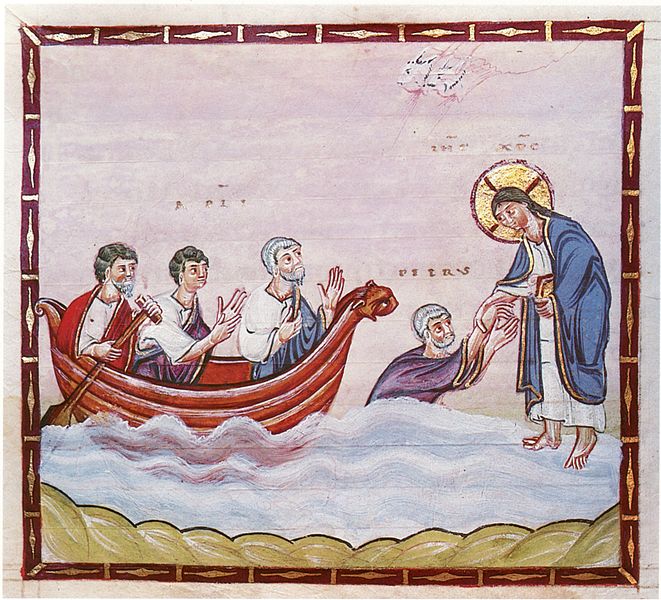
Jesus walking on waterΤο βαθύτερο νόημα της ενότητας των θαυμάτων δεν είναι κυρίως χριστολογικό, όπως υποστηριζόταν παλαιότερα στην έρευνα, αλλά εκκλησιολογικό. Μέσα από την επεξεργασία των θαυμάτων στο κατά Ματθαίον προβάλλεται κυρίως η μαθητεία και η Εκκλησία (αυτό, για παράδειγμα, υπονοείται στην εκδοχή του Ματθαίου για το θαύμα της κατάπαυσης της τρικυμίας, η οποία λειτουργεί ως παράδειγμα της κοινότητας που αντιμετωπίζει τις τρικυμίες της ζωής κι ο σωτήρας της είναι ο Ιησούς ή στο θαύμα του εκατόνταρχου, τύπο του ανοίγματος της κοινότητας του Ματθαίου προς τα έθνη ή στην αναφορά στην εξουσία που δίνεται στους ανθρώπους να συγχωρούν αμαρτίες στο 9,8). 
Οπωσδήποτε,  ο Ιησούς παραμένει το κέντρο στα θαύματα στο Μτ κι αυτά κατανοούνται ως έκφραση της αγάπης και του ελέους του Ιησού προς τους ανθρώπους. Στον Ματθαίο, λοιπόν, βρίσκουμε μία ιδιαίτερη έμφαση στη θεραπεία που χαρίζει ο Ιησούς σε όλα τα μέλη του Ισραήλ. Μάλιστα με την προσθήκη επιπλέον περιληπτικών αφηγήσεων θαυμάτων (summaria) ο Ματθαίος συνεχίζει να αφηγείται θαύματα μέχρι την ιστορία του Πάθους. Διαφορετικά από τον Μκ, όπου ο Ιησούς εμφανίζεται ως ο υιός του Θεού, ο Μτ τονίζει κυρίως τη δαυιδική του καταγωγή (βλ. χαρακτηριστικά για τη σύνδεσή του με τον Δαυίδ: Μτ 9,27· 15,22· 20,30-31· 21,15). Για τον Μτ όμως ο Ιησούς δεν είναι πολεμιστής απόγονος του Δαυίδ αλλά ο ειρηνικός βασιλιάς και χαρακτηριστικό της βασιλείας του είναι το έλεος όσων υποφέρουν  και θεραπεύει τους ασθενείς. 
Με παραθέσεις χωρίων από τον Ησαΐα ο Ματθαίος συνδέει τη θαυματουργική δράση του Ιησού με τον πάσχοντα δούλο του Κυρίου (8,17· 12,18-21). Με αυτόν όμως τον τρόπο μετριάζεται η όποια έμφαση στα θαύματα και προβάλλεται κυρίως η ευσπλαχνία και η ταπείνωση του Ιησού μέσα σε αυτά. 
Επιπλέον, στον Μτ υποχωρεί η προβολή του δαιμονικού στοιχείου κι απαλείφονται όσα στοιχεία θα μπορούσαν να παρεξηγηθούν ως μαγικές πρακτικές. Για παράδειγμα, συχνά ο Μτ μιλά για ασθένεια εκεί που ο Μκ μιλά για δαιμόνια κι ο Μτ αποσιωπά το θαύμα της θεραπείας του τυφλού με το σάλιο του Ιησού. 
Αυτές οι τάσεις στην αφήγηση του Μτ οδηγούν στις εξής υποθέσεις όσον αφορά στη σκοπιμότητα των θαυμάτων στον Μτ; α) για τους έξω αποτελούν τα θαύματα μία απάντηση στις όποιες κατηγορίες, που πιθανόν προέρχονται από το ιουδαϊκό περιβάλλον της κοινότητας του Μτ, ότι ο Ιησούς εξαπάτησε τον λαό με μαγικές πράξεις (βλ. αργότερα τις κατηγορίες του Κέλσου) και β) για την ίδια την κοινότητα ο μετριασμός της όποιας έμφασης στα θαύματα ίσως ήταν η απάντηση σε κάποιους χαρισματούχους που με τη δράση τους απειλούσαν την ενότητα της κοινότητας. 

Πέμπτη 29 Ιανουαρίου 2015

Δυο άρθρα βιβλικού ενδιαφέροντος στο τρέχον τεύχος του PRS / Two articles of biblical interest in the current issue of PRS

Perspectives in Religious Studies 41:3 (2014)

Steve Walton, "Calling the Church Names: Learning about Christian Identity from Acts," 223–241
The ecclesiology of Acts has long been a matter of debate. This article studies the six main names used by the Jesus-believers for their community(ies): “the brothers and sisters,” “the disciples,” “assembly,” “the believers,” “the way,” and “the holy ones.” The picture which emerges is of a community which sees itself as strongly in continuity with Israel, but Israel restored in the manner envisaged by the prophets, not least as in Isaiah 40 and Daniel 7. The titles present the communities as founded on faith in Jesus, and following Jesus’ way—and all this as the restored and renewed Israel.

David J. Downs, "Pauline Ecclesiology," 243–255
Given that the Pauline letters bear constant and impassioned witness to the apostle Paul’s establishment and continued formation of Christ-believing assemblies and (in the case of 1–2 Timothy, Titus, and perhaps Philemon) the leaders responsible for their care, it would not be much of an overstatement to call Paul the “father of ecclesiology.” This essay offers a broad overview of Pauline ecclesiology by examining ecclesiological language and imagery in Paul’s letters and the organization and practices of the Pauline churches.

Κυριακή 24 Αυγούστου 2014

Το τρέχον τεύχος του Ricerche Storico Bibliche / In the current issue of Ricerche Storico Bibliche

Ricerche Storico Bibliche 25:2 (2014)
  • Giuseppe Bellia, "Appunti per un'introduzione storico-teologica ai ministeri delle origini cristiane," 5-20
  • Jacques Schlosser, "I Dodici : origini, ruolo, scomparsa," 15-36
  • Giorgio Jossa, "Pietro e Giacomo; apostoli e presbiteri," 37-48
  • Augusto Barbi, "Le figure ministeriali fuori di Gerusalemme nel libro degli Atti," 49-76
  • Stefano Romanello, "Figure ministeriali nelle lettere paoline indisputate," 77-109
  • Yann Redalié, "I ministeri nelle epistole pastorali (1 e 2 Timoteo, Tito)," 111-119
  • Carlo dell'Osso, "L' organizzazione ecclesiale in Ignazio d'Antiochia," 121-141
  • Enrico Cattaneo, "La successione apostolica in Clemente Romano e Ireneo," 143-164
  • Enrico Norelli, "Presenza e persistenza dei ruoli carismatici : il caso delle assemblee sul montanismo nel II secolo," 165-195

Κυριακή 25 Αυγούστου 2013

Διεθνές συνέδριο για το Άγιο Πνεύμα / International Conference on Holy Spirit

H Eastern Europe Liaison Committee (EELC) της SNTS σε συνεργασία με τη Θεολογική Σχολή του Βελιγραδίου διοργανώνει το 6ο διεθνές συνέδριο με την ευλογία του επισκόπου Ειρηναίου του Novi Sad και της Backa, καθηγητή της Κ.Δ. στο Βελιγράδι στο διάστημα 25-31.8.2013.
Το θέμα της φετινής συνάντησης είναι το Άγιο Πνεύμα:

"The Holy Spirit and the Church According to the New Testament"

Για να διαβάσετε το πρόγραμμα, πατήστε εδώ.