Εμφάνιση αναρτήσεων με ετικέτα οικογένεια. Εμφάνιση όλων των αναρτήσεων

Τετάρτη 24 Αυγούστου 2022

Στο τρέχον τεύχος του KuD / In the current issue of KuD

 Kerygma und Dogma 68/2 (2022)

Silke Petersen, "Familie, Ehebruch, Ehescheidung und neue Beziehungen in der Jesusbewegung:  Überlegungen zur (Nicht-)Aktualität frühchristlicher Überlieferungen," 93-114 (abstract)

Κυριακή 17 Νοεμβρίου 2019

Στο τρέχον τεύχος του Theology Today / In the current issue of Theology Today

Theology Today 76:3 (2019)

  • Louis C. Jonker, "Family Genealogies and Religious Ideology: The Case of the Chronicler’s Introduction," 200-208 (abstract)
  • Jörg Frey, "'Family Values' in the Gospel Tradition," 209-216 (abstract)


Τετάρτη 9 Οκτωβρίου 2019

Η φροντίδα των ηλικιωμένων στα Σούσα / Taking care of elderly at Susa

Η νέα ανάρτηση στη σελίδα ANE Today έχει ως θέμα της τη φροντίδα των ηλικιωμένων από τα παιδιά τους, όπως αυτή προκύπτει από τα νομικά κείμενα στα ακκαδικά που βρέθηκαν στα αρχαία Σούσα (α΄ μ. 2ης χιλιετίας π.Χ.). Ο Hossein Badamchi παρουσιάζει κάποια από αυτά τα κείμενα κι εξηγεί την πρακτική διάσταση αυτής της φροντίδας που εξασφαλίζουν νομικά αυτά τα κείμενα:

Τρίτη 17 Σεπτεμβρίου 2019

Ο Larry Hurtado για τους πρώτους χριστιανούς και τη θέση τους στο ρωμαϊκό κόσμο / Larry Hurtado on Christians and their place in the Roman world

Ο Larry Hurtado, ομότιμος καθηγητής του Πανεπιστημίου του Edinburgh, συζητά στη συνέντευξη που έδωσε στη σειρά Talking Theology με θέμα τη θέση των χριστιανών στις τοπικές κοινωνίες των ελληνορωμαϊκού κόσμου, ποιες είναι οι σχέσεις που αναπτύσσουν μεταξύ τους και με το εθνικό περιβάλλον τους, γιατί αποκαλούν τον Ιησού Κύριο. Μία ενδιαφέρουσα ανάλυση από έναν ειδικό στο χώρο:

Δευτέρα 3 Ιουνίου 2019

Τα νόθα παιδιά του ρωμαϊκού κόσμου / The illegitimate children of the Roman world

Μία ερμηνευτική ομάδα της Νομικής Σχολής του Πανεπιστημίου της Βαρσοβίας λειτουργεί εδώ και λίγο καιρό μία βάση καταγραφής όλων των νόθων παιδιών που αναφέρονται σε πηγές του ελληνορωμαϊκού κόσμου. Η βάση δεδομένων είναι ακόμη στη διαδικασία κατασκευής και καθημερινά προστίθενται νέα στοιχεία:

Κυριακή 2 Ιουνίου 2019

Οι Ρωμαίοι και τα παιδιά τους / Romans and their Children

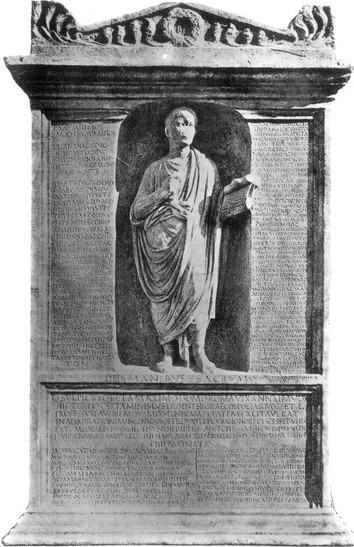
TOMB OF THE BOY Q. SULPICIUS MAXIMUS
Το ταφικό μνημείο του Q. Sulpicius Maximus
(Φωτο;  hellenicworld)
Η Mary Beard παίρνει αφορμή από το ταφικό μνημείου ενός 11χρονου παιδιού, του Quintus Sulpicius Maximus και περιγράφει τον τρόπο που οι Ρωμαίοι αντιμετώπιζαν τα παιδιά τους και την παιδική ηλικία: 

Δευτέρα 29 Απριλίου 2019

Στο τρέχον τεύχος του Classical Antiquity / In the current issue of Classical Antiquity

Classical Antiquity 38:1 (2019)

  • Emily Gowers, "Knight's Moves: The Son-in-law in Cicero and Tacitus," 2-35 (abstract)
  • Thomas Harrison, "Classical Greek Ethnography and the Slave Trade," 36-57 (abstract)
  • Holly Haynes, "Tyranny, Self, and Genre in Pliny's Letter 5.8," 58-90 (abstract)
  • Ismene Lada-Richards, "On Taking our Sources Seriously: Servius and the Theatrical Life of Vergil's Eclogues," 91-140 (abstract)
  • Lydia Spielberg, "Fairy Tales and Hard Truths in Tacitus's Histories 4.6–10," 141-183 (abstract)


Κυριακή 13 Ιανουαρίου 2019

Στο τρέχον τεύχος του BASP / In the current issue of BASP

Bulletin of the American Society of Papyrologists 55 (2018)

  • Brice C. Jones - Ross P. Ponder, "A New Christian Text Concerning the Lord Driving out Passions," 13-20 (abstract)
  • Chance Bonar, "P.CtYBR inv. 1233: Contract from Oxyrhynchus Issued by a Woman," 39-44 (abstract)
  • Jordi Crespo Saumell, "A Critical Assessment of the Anonymus Londiniensis Papyrus,"129-156 (abstract)
  • Pete Myers, "The Textual Affinities of Sinaiticus' Correctors in 2 Esdras: An Analysis of Proper Nouns," 157-193 (abstract)
  • Michael Zellman-Rohrer, "An Overlooked Magical Formulary (P.Oxy. 3.433)," 195-209 (abstract)
  • Paul Schubert, "Warrants: Some Further Considerations on their Typology," 253-274 (abstract)
  • Alain Delattre - Jitse Dijkstra - Jacques van der Vliet, "Christian Inscriptions from Egypt and Nubia 5 (2017)," 307-328 (abstract)

Παρασκευή 28 Δεκεμβρίου 2018

Oικογένεια και οι πρώτοι μαθητές του Ιησού / Family and early Jesus movement

Στην ιστοσελίδα The Bible and Interpretation ο Paul B. Duff (The George Washington University) δημοσιεύει ένα σύντομο κείμενο σχετικά με τον τρόπο που οι πρώτοι μαθητές του Ιησού αντιμετωπίζουν την οικογένεια και τις αξίες που συνδέονται με αυτήν:

Πέμπτη 5 Απριλίου 2018

Η σημασία των ευαγγελίων της παιδικής ηλικίας / The significance of the infancy gospels

Στη σελίδα The Ancient Jew Review o Christopher A. Frilingos παρουσιάζει το νέο του βιβλίο για τα απόκρυφα ευαγγέλια της παιδικής ηλικίας του Ιησού και συζητά τη σημασία τους για την αρχαία Εκκλησία:

Τετάρτη 20 Δεκεμβρίου 2017

Στο τρέχον τεύχος του ARGe/ In the current issue of ARGe

Archiv für Religionsgeschichte 18-19/1 (2017)

I. Sacra Privata: Domestic Religion in Greco-Roman Antiquity and Early Christianity

  • Markus Öhler / Norbert Zimmermann, "Domestic Religion in Greco-Roman Antiquity and Early Christianity," 3-6
  • David Frankfurter, "The Spaces of Domestic Religion in Late Antique Egypt," 7-24 (abstract)
  • Günther Schörner, "Location of Domestic Rituals in the Roman Empire: An Interprovincial Comparison," 25-36 (abstract)
  • Nicolas Amoroso, "The roles of Isis in Roman domestic cults: A study of the “Isis-Fortuna” bronze statuettes from the Vesuvian area 37," 37-74 (abstract)
  • Judith Lieu, "Household and Family in Diaspora Judaism," 75-90 (abstract)
  • Margaret Y. MacDonald, "Re-envisioning Ekklēsia Space: Evidence of the Flexible Use of Household Space for Religious Instruction and Practice in the Pastoral Epistles," 91-104 (abstract)
  • Andrew McGowan, "A Missing Sacrament? Foot-washing, Gender, and Space in Early Christianity," 105-122 (abstract)
  • Marco Frenschkowski, "Domestic religion, family life and the apocryphal Acts of the Apostles," 123-156 (abstract)
  • Ulrich Volp, "Sacra Privata, Family Duties, and the Dead: Insights from the Fathers and Cultural Anthropology," 171-186 (abstract)
  • Andreas Müller, "The Cult in the Cell," 187-200 (abstract)
  • Verena Fugger, "Shedding Light on Early Christian Domestic Cult: Characteristics and New Perspectives in the Context of Archaeological Findings," 201-236 (abstract)


II. Savior Gods in the Mediterranean World
  • Fritz Graf, "Theoi Soteres," 239-254 (abstract)
  • Theodora Suk / Fong Jim, "‘Salvation’ (Soteria) and Ancient Mystery Cults," 255-282 (abstract)


III. Varia
  • Nicolas Cacace, "King Osiris and Lord Sarapis," 285-306 (abstract)
  • Antón Alvar Nuño, "Morality, Emotions and Reason: New Perspectives in the Study of Roman Magic," 307-326 (abstract)

Σάββατο 30 Ιουλίου 2016

Φωτογραφία της ημέρας: Ρωμαϊκός γάμος / Photo of the day: Roman marriage

Σκηνή γαμήλιας τελετής. Λεπτομέρεια από σαρκοφάγο του 2ου αι. μ.Χ.
Βρετανικό Μουσείο.
Στην αρχαία Ρώμη υπήρχαν διάφοροι τύποι σύναψης γάμου κι ανάλογο τυπικό κατά περίπτωση. Οι δύο βασικοί τύποι γάμου ήταν: ο αρχαιότερος τύπος ήταν εκείνος σύμφωνα με τον οποίο η γυναίκα περνούσε στην κηδεμονία του συζύγου της (conventio in manu). Σε αυτήν την περίπτωση έχανε κάθε κληρονομικό δικαίωμα στην πατρική της οικογένεια. Yπήρχαν τρεις διαφορετικοί τύποι τέτοιου γάμου: confarreatio,  συνήθως ανάμεσα στις αριστοκρατικές οικογένειες, coemptio, όπου λάμβανε χώρα μία συμβολική αγοραπωλησία της νύφης μεταξύ των δύο οικογενειών και usus, όπου ένα ζευγάρι θεωρούνταν παντρεμένο μετά από ένα χρόνο συγκατοίκησης. Aπό τα χρόνια της Δημοκρατίας κι εξής επεκράτησε ωστόσο ο τύπος του ελεύθερου γάμου (sine manu), όπου η γυναίκα παρέμενε κάτω από την κηδεμονία του πατέρα της. Σε αυτήν την περίπτωση διατηρούσε τα κληρονομικά της δικαιώματα στην πατρική της οικογένεια και μπορούσε να πάρει πίσω την προίκα της σε περίπτωση διάλυσης του γάμου. Εκτός από αυτούς τους δύο τύπους γάμου που είχαν νομική αναγνώριση υπήρχαν και διάφοροι άλλοι τύποι γάμου, οι οποίοι ήταν ηθικά αποδεκτοί δεν είχαν όμως νομική αναγνώριση. Τα παιδιά τέτοιων γάμων έπαιρναν το κοινωνικό status της συζύγου κι ο πατέρας δεν είχε νομικά δικαιώματα σε αυτά. Τέτοιου είδους γάμοι ήταν οι γάμοι μεταξύ δούλων, αν βέβαια είχαν την άδεια του κυρίο τους. Σε αυτές τις περιπτώσεις ο κύριός τους διατηρούσε το δικαίωμα να πουλήσει τα παιδιά των δούλων του, αν ήθελε. 
Συνήθως οι κοπέλες παντρεύονταν από 12 έτη κι άνω, ενώ τα αγόρια από τα 14 κι άνω. Στις αριστοκρατικές οικογένειες πριν τον γάμο υπήρχε ένα μεγάλο διάστημα αρραβώνος ώστε οι δύο οικογένειες να γνωριστούν καλύτερα. Σε αυτό το διάστημα η μέλλουσα σύζυγος μπορούσε να ζήσει μαζί με τον μέλλοντα σύζυγό της στο σπίτι του. 
Η μέρα των γάμων επιλεγόταν με μεγάλη προσοχή ώστε να μην υπάρχουν κακοί οιωνοί που θα μπορούσαν με κάποιο τρόπο να βλάψουν την τύχη των νεονύμφων. 
Την παραμονή του γάμου η μελλόνυμφη θυσίαζε τα παιχνίδιά του στους lares της οικογένειας. Το νυφικό ένδυμα αποτελούνταν από ένα πέπλο σε κόκκινο χρώμα (flammeum) κι ένα λευκό ένδυμα το οποίο έδεναν με ζώνη που είχε ένα ιδιαίτερο τύπο κόμπου (nodus herculeus). Αυτόν έπρεπε να τον λύσει ο γαμπρός. Την συνόδευε μία γυναίκα που είχε παντρευτεί μόνο μία φορά στη ζωή της (pronuba). Πρώτα γίνονταν οι σχετικές θυσίες, στη συνέχεια υπογραφόταν το σύμφωνο του γάμου (tabulae nuptiales) και μετά η pronuba έπαιρνε τα χέρια του άνδρα και της γυναίκας και τα έβαζε το ένα μέσα στο άλλο (βλ. εικόνα). Αυτήν ήταν η πιο σημαντική στιγμή της γαμήλιας τελετής. Οι νεόνυμφοι έδιναν σιωπηλούς όρκους πίστης.
Ακολουθούσε το γαμήλιο γλέντι κι ο γαμπρός στο τέλος του προσποιούνταν ότι άρπαζε τη νύφη από την αγκαλιά της μητέρας. Ήταν μία συμβολική ανάμνηση της αρπαγής των γυναικών των Σαββίνων. Με πομπή της οποίας προηγούνταν τρία μικρά αγόρια η νύφη έφτανε στο σπίτι του γαμπρού. Το ένα από τα αγόρια είχε δάδα με φωτιά από την εστία του σπιτιού της νύφης και οι στάχτες του θεωρούνταν σημάδι τύχης και μοιράζονταν στους παρευρισκόμενους. Ο σύζυγος που περίμενε μέσα την ρωτούσε το όνομά της κι εκείνη απαντούσε: "Όπου εσύ είσαι Γάιος, εγώ θα είμαι Γαΐα". Στη συνέχεια την σήκωναν επάνω από το πλατύσκαλο του σπιτιού, το οποίο δεν έπρεπε να πατήσει, αφού ακόμη δεν ήταν μέλος της οικογένειας ούτε όμως και ξένη. Μέσα στο σπίτι ο γαμπρός τελούσε μία σύντομη θρησκευτική τελετή κι η pronuba κάθιζε τη νύφη στο γαμήλιο κρεβάτι. Την επόμενη μέρα η νύφη ντυμένη πλέον ως matrona θυσίαζε στους lares και τους penates της νέας της οικογένειας. 
Άραγε ποιους τύπους γάμου είχε ο Παύλος υπόψη του, όταν στην Α΄ Κορινθίους ζητά από τις χριστιανές και τους χριστιανούς να μη διαλύσουν το γάμο τους με τους εθνικούς συντρόφους τους κι ουσιαστικά τους αναγνωρίζει εντάσσοντάς τους μέσα σε ένα ευρύτερο σωτηριολογικό πλαίσιο;

Δευτέρα 25 Ιουλίου 2016

Το τρέχον τεύχος του ASE / The current issue of ASE

Annalli di storia dell' esegesi 33:1 (2016)

The Letter to the Hebrews
  • Simon C. Mimouni, "Ouverture introductive," 11-14
  • Pierre de Salis, "'Aux Hébreux', lettre ou épître?," 15-29
  • Steeve Bélanger, "L’Épître aux Hébreux dans le contexte spéculatif sur la figure de Melchisédéch durant la période du Second Temple de Jérusalem (IIe  siècle avant notre ère - Ier siècle de notre ère)," 31-77
  • Simon C. Mimouni, "Le «grand prêtre» Jésus «à la manière de Melchisédech» dans l’Épître aux Hébreux," 79-105

Early Christianity
  • Simon Butticaz, "Paul et la culture antique de l’honneur. Contexte et enjeux de la justification par la foi dans la Lettre aux Galates," 107-128
  • Bert Jan Lietaert Peerbolte & Leendert F. Groenendijk, "Family Discourse, Identity Formation, and the Education of Children in Earliest Christianity," 129-149
  • Cambry Pardee, "Peter’s Tarnished Image: Scribal Polishing in the Gospel of Luke (Ms. 0171)," 151-174

Religion in Modern Age
  • Cristiana Facchini, "Luigi Luzzatti e la teoria della tolleranza religiosa. Per una storia del consumo pubblico delle scienze delle religioni," 175-200
Discussion of Books
  • Luca Arcari, Daniele Tripaldi, Thomas Witulski, "Discussion of Thomas Witulski’s Works on Dating the Revelation," 201-236
  • Adriana Destro, Mauro Pesce, Claudio Gianotto, Luca Arcari, "Discussion of the Book of Adriana Destro – Mauro Pesce, Il racconto e la scrittura. Introduzione alla lettura dei vangeli, Roma, Carocci, 2014," 237-257
  • Simon C. Mimouni, Claudio Gianotto, Mauro Pesce, "Discussion of the Book of Simon C. Mimouni, Jacques le Juste, frère de Jésus de Nazareth. Histoire de la communauté nazoréenne/chrétienne de Jérusalem du Ier au IVe siècle, Paris, Bayard, 2015," 259-288


Τετάρτη 5 Αυγούστου 2015

CFP: Growing up Motherless in Antiquity

Growing up Motherless in Antiquity: A Conference on Mother Absence in the Ancient Mediterranean

Organizers:

Prof. Dr. Sabine R. Huebner, Universität Basel, Switzerland
Dr. David M. Ratzan, New York University

Location: Basel, Switzerland


Date: 26 – 28 May 2016

Deadline for the submission of abstracts: October 15, 2015

The last forty years have witnessed a vast reclamation project in ancient history, as scholars have worked to recover the lives of historically muted groups, particularly those of women and children. The result is an impressive body of work collecting the traces ancient women and children have left behind, as well as a sophisticated epistemology of the biases, gaps, and silences in the historical record. From this perspective, the absence of ancient mothers has represented an ineluctable reality and a methodological hurdle, but rarely a subject of study in its own right. Yet the evidence suggests that mother absence was not merely a secondary artifact of bias or artistic and historiographical conventions; it was also a primary condition of antiquity, one whose root causes, social articulations, and psychological effects have never been fully described or explored, even as it had a profound effect on ancient family life and the experience of childhood.
In approaching the causes, forms, and effects of ancient mother absence we now stand to benefit not only from the last four decades of research into the ancient and pre-modern family (including a growing bibliography on ancient mothers, e.g., the recent collection of Petersen and Salzman-Mitchell (eds.), Mothering and Motherhood in Ancient Greece and Rome [Univ. Texas Press, 2012]), but also from recent research into contemporary mother absence. The root cause of ancient mother absence, of course, was death, with the result that a significant proportion of ancient children grew up without their biological mothers. In the contemporary West, by contrast, mother absence is increasingly the product of the number of working and career mothers (now two-thirds to three-quarters of all mothers in Germany, Switzerland, France, and the U.S.), a social revolution that is rapidly transforming the practices, economics, ideals, and politics of mothering. Cameron Macdonald’s Shadow Mothers: Nannies, Au Pairs, and the Micropolitics of Mothering (Berkeley 2011), for example, investigates the ways in which mother-work has been commoditized, outsourced, and negotiated between mothers and “shadow mothers” over the last two decades. Macdonald’s account of the economics, class tensions, and strategic postures shaping the relationships between contemporary mothers and a quasi-professionalized class of surrogates is a thought-provoking read for anyone acquainted with the various “shadow mothers” of antiquity. This and similar research suggests that ancient historians should attempt to see the phenomenon of ancient mother absence as a continuum, ranging from its obvious manifestation in the total absence caused by maternal death, to the partial absences of various forms of maternal separation brought about by economic necessity, divorce, slavery, social conventions, and perhaps even choice on occasion. It also provides us with a potential framework to understand the ways in which different parties or groups cognized and responded to maternal absence, from the children who grew up without their mothers to varying degrees, to those who stepped in, were employed, or commanded to mother them, a patchwork cast of stepmothers, family members, wet nurses, and domestic slaves—and perhaps we may even extend this analysis to the absent mothers themselves, to the extent that we can recover or reconstruct their experiences.

We invite scholars to reconsider the absence of ancient mothers in terms of ancient mother absence (cf. Huebner & Ratzan (eds.), Growing Up Fatherless in Antiquity [Cambridge, 2009]) and seek papers on any aspect of ancient mother absence in the ancient Mediterranean, from any period, subfield, or methodological approach, including (but not limited to) the following themes:
·      The demography and sociology of ancient mother absence, including forms of mother absence not occasioned by death

·      The relationship of the cultural ideals of “good” and “bad” mothers to the realities of mother absence, and the cultural construction and deconstruction of mothers, including reflections and refractions of mother absence in various rejections of motherhood (e.g., cults of virginity or chastity, medical theories minimizing maternal contribution to conception, myths of male pregnancy and birth, etc.)

·      The anthropology, economics, ideology, status, and micropolitics of ancient mother-work and those who performed it (mothers, shadow mothers, stepmothers, etc.) and the effects or outcomes on children

·      The psychology, emotional life, identities, and strategies of absent mothers, the children who lived apart from or survived them, and those who filled the persistent familial gap (mothers, shadow mothers, stepmothers, etc.)

·      Visual or poetic representations of or engagements with mother absence and the discourse of mother absence in epitaphs, eulogies, personal correspondence, religion, cult, forensic rhetoric, politics, law, or medicine

Abstracts should be no more than 400 words (exclusive of title and biographical note), describing a 20-minute paper to be delivered in English. Please include the full title of your paper and a brief biographical note on your academic affiliation and previous research. Qualified junior researchers and recent PhD graduates are encouraged to apply. The deadline for full consideration is Oct. 15, 2015.

Please submit your abstract by email to: david.ratzan@nyu.edu or sabine.huebner@unibas.ch.