Εμφάνιση αναρτήσεων με ετικέτα open access. Εμφάνιση όλων των αναρτήσεων

Σάββατο 17 Ιανουαρίου 2026

Πέρα από τους “μεγάλους άνδρες”: ανδροκεντρισμός και βιογραφικό αφήγημα στην αρχαιότητα / Beyond the "Great Men": Androcentrism and Biographical Narrative in Antiquity

Στη σειρά Millennium-Studien του εκδοτικού οίκου De Gruyter κυκλοφόρησε πρόσφατα ένας συλλογικός τόμος που αξίζει της προσοχής όσων ενδιαφέρονται για τη βιογραφική αφήγηση στην αρχαία ελληνορωμαϊκή και πρωτοχριστιανική λογοτεχνία: 

Anna Ginestí Rosell & Felix John (επιμ.), Große Männer? Biographisches Erzählen in der griechischen und römischen, der frühjüdischen und der frühchristlichen Literatur (Millennium-Studien 117; Berlin/Boston: De Gruyter, 2026). DOI: 10.1515/9783112212295

Το βιβλίο είναι ελεύθερα διαθέσιμο σε Open Access.

Ο τόμος συγκεντρώνει μελέτες κλασικών φιλολόγων, ιστορικών και βιβλικών ερευνητών κι έχει ως στόχο να φέρει σε διάλογο τις παράλληλες αλλά συχνά απομονωμένες μεταξύ τους συζητήσεις για τη βιογραφία στον ελληνορωμαϊκό, τον αρχαίο ιουδαϊκό και τον πρωτοχριστιανικό κόσμο. Όπως επισημαίνουν οι επιμελητές στον πρόλογο, η ανδρική κυριαρχία αποτελεί σταθερό χαρακτηριστικό της αρχαίας βιογραφίας ανεξάρτητα από το λογοτεχνικό είδος ή την πολιτισμική προέλευση. Κατά συνέπεια, το ερωτηματικό στον τίτλο του τόμου («Μεγάλοι Άνδρες;») δεν είναι τυχαίο: ένας από τους στόχους του είναι να εξετάσει πού και πώς αυτή η κυριαρχία διαταράσσεται ή αμφισβητείται.

Η θεωρητική προσέγγιση του τόμου αντανακλά σύγχρονες εξελίξεις στις λογοτεχνικές σπουδές. Ιδιαίτερα σημαντική είναι η υπέρβαση της παλαιάς διάκρισης μεταξύ «μυθοπλασίας» και «ιστοριογραφίας» που επέτρεψε αφενός την αναβάθμιση της βιογραφίας ως φιλολογικό είδος (σε αντίθεση με την παλαιότερη υποτίμησή της), και αφετέρου την εφαρμογή αφηγηματολογικών εργαλείων που εξετάζουν τόσο το «πώς» όσο και το «τι» της αφήγησης, καθώς και τα πολιτισμικά πλαίσια που τη διαμορφώνουν.

Για όσους ασχολούνται με τις βιβλικές σπουδές ιδιαίτερο ενδιαφέρον παρουσιάζουν οι εξής μελέτες: 

Η μελέτη της Helen Bond για το κατά Μάρκον ως μία βιογραφία που ανατρέπει τις πολιτισμικές συμβάσεις/αξίες της εποχής του ("Mark’s Gospel: A Counter Cultural Bios"). Στη συνέχεια, στη μελέτη του Nils Neumann συγκρίνεται ο τρόπος που παρουσιάζεται ο Ιησούς στη συνοπτική παράδοση με τους βίους των κυνικών φιλοσόφων από τον Διογένη Λαέρτιο, εστιάζοντας στα κοινά εκείνα χαρακτηριστικά που συνθέτουν τον «ασεβή» χαρακτήρα αυτών των βιογραφιών ("Überzeugend respektlose Biographien: Jesus in der synoptischen Überlieferung und die Kyniker bei Diogenes Laertios"). Ο Felix John στη μελέτη του, εξετάζει τον τρόπο που περιγράφονται και αξιοποιούνται στην κεντρική αφήγηση των Πράξεων («Biographiewürdig? Nebenfiguren in der Apostelgeschichte»). Τέλος, η Silke Petersen  ανιχνεύει την εξέλιξη της βιογραφίας της Μαρίας, της μητέρας του Ιησού, από τα ευαγγέλια έως τις μεταγενέστερες παραδόσεις ("Vom Wachsen einer Biographie: Maria von Nazareth").

Ιδιαίτερο ενδιαφέρον παρουσιάζει επίσης η μελέτη της Anna Ginestí Rosell με τίτλο «Doch nicht nur Männer? 'Große Frauen' zwischen Herodot und Plutarch», που εξετάζει τις γυναικείες μορφές στην ελληνική ιστοριογραφία και βιογραφία. 

-----------------------------------------------------------

In the De Gruyter Millennium-Studien series, a new edited volume has recently been published that deserves the attention of those interested in biographical narrative in ancient Greco-Roman and early Christian literature:

Anna Ginestí Rosell & Felix John (eds.), Große Männer? Biographisches Erzählen in der griechischen und römischen, der frühjüdischen und der frühchristlichen Literatur (Millennium-Studien 117; Berlin/Boston: De Gruyter, 2026). DOI: 10.1515/9783112212295

The book is freely available in Open Access.

The volume brings together studies by classicists, historians, and biblical scholars, aiming to foster dialogue among the parallel but often isolated discussions of biography in the Greco-Roman, ancient Jewish, and early Christian worlds. As the editors note in their preface, male dominance is a constant feature of ancient biography regardless of literary genre or cultural origin. Consequently, the question mark in the volume's title ("Great Men?") is not accidental: one of its goals is to examine where and how this dominance is disrupted or contested.

The volume's theoretical approach reflects contemporary developments in literary studies. Particularly significant is the transcendence of the old distinction between "fiction" and "historiography," which has enabled both the elevation of biography as a literary genre (in contrast to its earlier devaluation) and the application of narratological tools that examine both the "how" and the "what" of narrative, as well as the cultural frameworks that shape it.

For those engaged in biblical studies, the following contributions are of particular interest:

Helen Bond's study of Mark's Gospel as a biography that subverts the cultural conventions/values of its time ("Mark's Gospel: A Counter Cultural Bios"). Next, Nils Neumann's study compares the way Jesus is presented in the Synoptic tradition with the lives of Cynic philosophers by Diogenes Laertius, focusing on the common characteristics that compose the "irreverent" character of these biographies ("Überzeugend respektlose Biographien: Jesus in der synoptischen Überlieferung und die Kyniker bei Diogenes Laertios"). Felix John's study examines how minor characters are described and utilized in the central narrative of Acts ("Biographiewürdig? Nebenfiguren in der Apostelgeschichte"). Finally, Silke Petersen traces the development of the biography of Mary, the mother of Jesus, from the Gospels to later traditions ("Vom Wachsen einer Biographie: Maria von Nazareth").

Also of particular interest is Anna Ginestí Rosell's study titled "Doch nicht nur Männer? 'Große Frauen' zwischen Herodot und Plutarch," which examines female figures in Greek historiography and biography.


Κυριακή 11 Ιανουαρίου 2026

ΟΑ: Κλέβοντας από τους θεούς: η ιεροσυλία στο ρωμαϊκό αυτοκρατορικό αφήγημα / ΟΑ: Stealing from the Gods: Temple Robbery in the Roman Imperial Narrative

Το open access βιβλίο της Isabel K. Köster, Stealing from the Gods: Temple Robbery in the Roman Imagination (University of Michigan Press, 2026), προσεγγίζει την ἱεροσυλία όχι απλώς ως ποινικό αδίκημα, αλλά ως λόγια και πολιτισμική κατηγορία με καθοριστική λειτουργία στο ρωμαϊκό αυτοκρατορικό αφήγημα.

Η συγγραφέας δείχνει ότι η ἱεροσυλία (sacrilegium, με τη βασική σημασία της αφαίρεσης ιερού πράγματος) λειτουργεί στη ρωμαϊκή γραμματεία ως ισχυρός μηχανισμός ηθικής κατηγοριοποίησης. Ο ιερόσυλος περιγράφεται ως μορφή ακραίας ηθικής απόκλισης: άπληστος, χωρίς μέτρο και αποκομμένος από τις αξίες της pietas. Μέσω αυτής της κατασκευής, η ευθύνη για την προσβολή του ιερού μετατοπίζεται από συλλογικές πρακτικές—όπως η αρπαγή ιερών αντικειμένων στο πλαίσιο της πολεμικής επέκτασης—σε μεμονωμένα πρόσωπα, επιτρέποντας στη Ρώμη να διατηρεί την αυτοεικόνα της ως κατ' εξοχήν ευσεβούς αυτοκρατορίας και εξουσίας.

Κεντρική θέση στο επιχείρημα του βιβλίου κατέχει η κατανόηση της ιερότητας όχι ως σταθερής ιδιότητας, αλλά ως έννοιας διαρκώς υπό διαπραγμάτευση, της οποίας το περιεχόμενο καθορίζεται από το εκάστοτε αφηγηματικό και ιδεολογικό πλαίσιο. Τα ίδια αντικείμενα μπορούν, ανάλογα με τα συμφραζόμενα, να παρουσιαστούν είτε ως απαραβίαστα αφιερώματα είτε ως θεμιτή λεία, αποκαλύπτοντας τη στενή διαπλοκή θρησκείας, ιδιοκτησίας και αυτοκρατορικής ισχύος στον ρωμαϊκό κόσμο.

Το βιβλίο προσφέρει μια ιδιαίτερα γόνιμη συμβολή στη μελέτη της αρχαίας θρησκείας και της πολιτικής του ιερού, δείχνοντας πώς αφηγήσεις περί ἱεροσυλίας λειτουργούν ως εργαλεία οριοθέτησης της ηθικής τάξης και νομιμοποίησης της αυτοκρατορικής εξουσίας.

Κρίσιμο στοιχείο της μελέτης είναι ότι η ἱεροσυλία δεν αντιμετωπίζεται ως αυτονόητη ή αντικειμενικά οριζόμενη πράξη, αλλά ως ρητορική κατασκευή, η οποία αποκτά νόημα μέσα σε συγκεκριμένα αφηγηματικά και ιδεολογικά πλαίσια. Οι ρωμαϊκές πηγές δεν περιγράφουν μόνο την προσβολή του ιερού· την παράγουν νοηματικά, ορίζοντας ποιος μπορεί να χαρακτηριστεί ἱερόσυλος, υπό ποιες συνθήκες και με ποιες ηθικές συνέπειες.

Με τον τρόπο αυτό, ο λόγος περί ἱεροσυλίας λειτουργεί κανονιστικά: συγκροτεί πρότυπα ορθής θρησκευτικής συμπεριφοράς, αποκλείει αποκλίνουσες πρακτικές και συμβάλλει στη νομιμοποίηση της αυτοκρατορικής εξουσίας ως προστάτιδας του ιερού.

Η θεματική αυτή ανοίγει και ένα γόνιμο συγκριτικό πεδίο με βιβλικά, αρχαία ιουδαϊκά και πρώιμα χριστιανικά κείμενα, όπου η γλώσσα της ἱεροσυλίας εμφανίζεται άλλοτε ως κατηγορία εναντίον «άλλων» και άλλοτε ως κριτική της ίδιας της εξουσίας. Ενδεικτικά, ο Παύλος χρησιμοποιεί ρητά το ρήμα «ἱερὰ συλᾶν» ως ηθική αιχμή (Ρωμ 2:22), ενώ στις Πράξεις ο όχλος της Εφέσου διαβεβαιώνει ότι οι σύντροφοι του Παύλου «οὔτε ἱερόσυλοι εἰσίν» (Πρξ 19:37), δείχνοντας πόσο φορτισμένη ήταν η κατηγορία στον δημόσιο λόγο. Παράλληλα, η εβραϊκή ιστοριογραφία προσφέρει κλασικές αφηγήσεις «αρπαγής του ιερού» από φορείς εξουσίας: η απόπειρα του Ἡλιοδώρου να αφαιρέσει χρήματα από τον ναό (2 Μακκ 3) λειτουργεί ως υπόδειγμα της βίας της κοσμικής ισχύος απέναντι στο ιερό, ενώ στον Ιώσηπο απαντούν επεισόδια όπου ρωμαϊκοί διοικητές κατηγορούνται ότι πήραν χρήματα από το ἱερόν. Χαρακτηριστικά παραδείγματα: Πόντιος Πιλάτος (Αρχαιολ. 18.55–62) και Γέσσιος Φλώρος (Ιουδ. Πόλ. 2.293–296). Έτσι, σε αυτά τα σώματα κειμένων η «ἱεροσυλία» δεν είναι μόνο ατομικό έγκλημα· μπορεί να λειτουργεί και ως ερμηνευτική κατηγορία πολιτικής κριτικής.

[Το βιβλίο διατίθεται ελεύθερα (open access) με άδεια CC BY-NC 4.0.]

-------------------------------------------------------

[ENGLISH TRANSLATION] 

Isabel K. Köster's open access book, Stealing from the Gods: Temple Robbery in the Roman Imagination (University of Michigan Press, 2026), approaches temple robbery not simply as a criminal offense, but as a discursive and cultural category with a defining function in the Roman imperial narrative.

The author demonstrates that, in Roman literature, temple robbery (sacrilegium, meaning the removal of sacred property) functions as a powerful mechanism of moral categorisation. The temple robber is depicted as an extremely deviant figure: greedy, immoderate and disconnected from the values of pietas. Through this construction, responsibility for the violation of the sacred is shifted from collective practices, such as the seizure of sacred objects in the context of military expansion, to isolated individuals. This allows Rome to maintain its self-image as a supremely pious empire and power.

Central to the book's argument is the idea that sacredness is not a fixed property, but a constantly negotiated concept whose meaning is determined by the prevailing narrative and ideological framework. Depending on the context, the same objects can be presented either as sacred dedications or as legitimate spoils, revealing the close entanglement of religion, property and imperial power in the Roman world.

This work makes a significant contribution to the study of ancient religion and the politics of the sacred by showing how narratives about temple robbery function as tools for establishing moral order and legitimising imperial power.

A critical element of the study is that temple robbery is not treated as an inherently evil act, but as a rhetorical construction that acquires meaning within specific narrative and ideological frameworks. Roman sources do not merely describe the violation of the sacred; they semantically produce it, defining who can be characterised as a temple robber, under what conditions, and with what moral consequences.

In this way, discourse about temple robbery functions normatively: it establishes standards of proper religious behaviour, excludes deviant practices, and contributes to the legitimisation of imperial power as protector of the sacred.

This theme also opens up fertile ground for comparison with biblical, Jewish and early Christian contexts, in which the language of temple robbery is sometimes used to accuse 'others' and sometimes to critique power itself. For example, Paul explicitly uses the verb 'ἱερὰ συλᾶν' (to rob temples) as a moral weapon (Rom. 2:22), while in Acts, the crowd in Ephesus asserts that Paul's companions 'are not temple robbers' (Acts 19:37), demonstrating the gravity of this accusation in public discourse. Similarly, Jewish historiography provides classic examples of the 'seizure of the sacred' by those in power. Heliodorus' attempt to steal money from the Temple in 2 Maccabees 3 is a prime example of the violence of secular power against the sacred. Conversely, Josephus recounts instances in which Roman governors are accused of stealing from the Temple. Characteristic examples include: Pontius Pilate (Ant. 18.55–62) and Gessius Florus (B.J. 2.293–296). Thus, in these bodies of texts, 'temple robbery' is not only an individual crime, but can also function as an interpretive category of political critique.

Πέμπτη 25 Αυγούστου 2022

Τρίτη 23 Αυγούστου 2022

Open Access: Material and Digital Reconstruction of Fragmentary Dead Sea Scrolls


Jonathan Ben-Dov, Asaf Gayer, και Eshbal Ratzon (επιμ.), Material and Digital Reconstruction of Fragmentary Dead Sea Scrolls:  The Case of 4Q418a. Studies on the Texts of the Desert of Judah, 136, Brill 2022

ISBN: 978-90-04-47305-8 

Πέμπτη 11 Αυγούστου 2022

Open Access: The Dead Sea Scrolls and the Nag Hammadi Codices


Dylan M. Burns - Matthew J. Goff (επιμ.),  The Dead Sea Scrolls and the Nag Hammadi Codices: Selected Papers from the Conference “The Dead Sea Scrolls and the Nag Hammadi Codices” in Berlin, 20–22 July 2018. Nag Hammadi and Manichaean Studies, 103. Leiden/Boston: Brill 2022

ISBN: 978-90-04-51756-1  

Τρίτη 2 Αυγούστου 2022

Open Access: Terror in the Bible


Monica Jyotsna Melanchthon - Robyn J. Whitaker (επιμ.), Terror in the Bible: Rhetoric, Gender, and Violence. IVBS 14. Atlanta: SBL Press 2021

Κυριακή 24 Ιουλίου 2022

Σάββατο 23 Ιουλίου 2022

Δευτέρα 25 Απριλίου 2022

Το κοινωνικό πλαίσιο της γραφής / The social context of writing

 Στο ιστολόγιο ANE Today o Philip Boyes εξηγεί πώς η γραφή είναι μία σύνθετη κοινωνική διεργασία η οποία για να κατανοηθεί πρέπει να ληφθούν υπόψη διάφοροι πολιτισμικοί και κοινωνικοί παράγοντες, αλλά και τα υλικά που χρησιμοποιούνται στη διαδικασία γραφής καθώς κι οι άνθρωποι που εμπλέκονται σε αυτήν. Ως παράδειγμα ο Boyes παρουσιάζει τις πινακίδες της αρχαίας Ουγαρίτ:

The Social Context of Writing in Ancient Ugarit


Μπορείτε να διαβάσετε το βιβλίο του Philip Boyes, Script and Society: The Social Context of Writing Practices in Late Bronze Age Ugarit εδώ.

Παρασκευή 11 Μαρτίου 2022

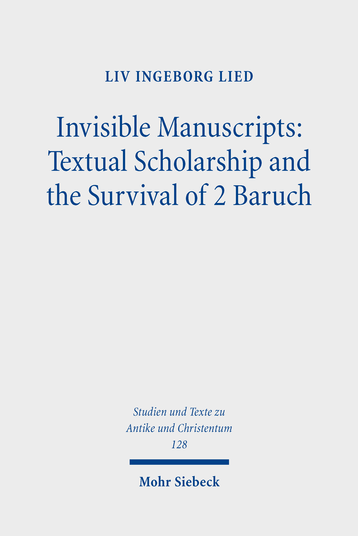
Open Access: Invisible Manuscripts

Liv Ingeborg Lied, Invisible Manuscripts: Textual Scholarship and the Survival of 2 Baruch, STAC 128,
Mohr Siebeck: Tübingen, 2021

XVIII + 320 σελ.

ISBN 978-3-16-160673-1

Πέμπτη 10 Μαρτίου 2022

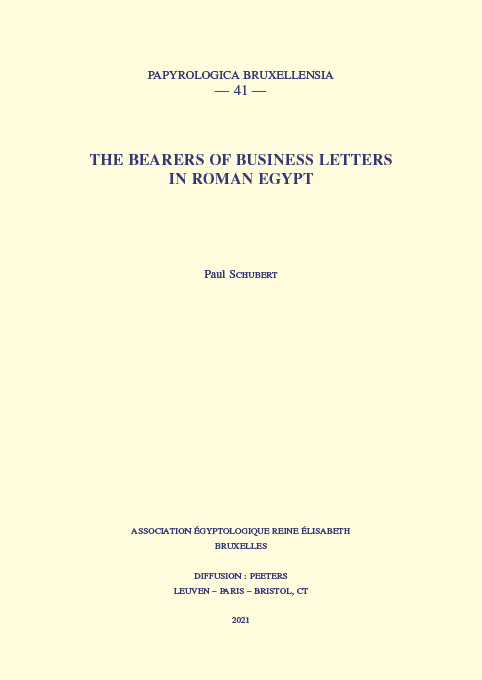
Open Access: The Bearers of Business Letters in Roman Egypt


Paul Schubert, The Bearers of Business Letters in Roman Egypt, Papyrologica Bruxellensia, 41 (Leuven: Peeters, 2021)

E-ISBN: 9789042947313

Σελίδες: VIII-64 p.

Τετάρτη 2 Φεβρουαρίου 2022

Τρίτη 1 Φεβρουαρίου 2022

Κυριακή 30 Ιανουαρίου 2022

Open Access: Chronicles and the Priestly Literature of the Hebrew Bible

 Jaeyoung Jeon and Louis C. Jonker (επιμ.), Chronicles and the Priestly Literature of the Hebrew BibleBeihefte zur Zeitschrift für die alttestamentliche Wissenschaft 528. Berlin: de Gruyter 2021

Funded by: Schweizerischer Nationalfonds (SNF)

Τετάρτη 10 Νοεμβρίου 2021

Τετάρτη 8 Σεπτεμβρίου 2021

Στοιχεία της αρχαίας θεωρίας της αφήγησης / Elements of Ancient Narrative Theory

 Από τον εκδοτικό οίκο de Gruyter διατίθεται ελεύθερος (open access) o τόμος 74 της σειράς μελετών Narratologia. Ο συγγραφέας του, Stefan Feddern (Christian Albrecht University Kiel), παρουσιάζει με συστηματικό τρόπο τα επιμέρους στοιχεία της αρχαίας αφήγησης:

Stefan Feddern, Elemente der antiken Erzähltheorie / The Elements of Ancient Narrative Theory. Narratologia 74. de Gruyter 2021


Τρίτη 19 Ιανουαρίου 2021

Open Access: Four Kingdom Motifs before and beyond the Book of Daniel

Andrew Perrin and Loren T. Stuckenbruck (επιμ.), Four Kingdom Motifs before and beyond the Book of Daniel. Themes in Biblical Narrative, 28. Leiden/Boston: Brill 2020

ISBN:     978-90-04-44328-0