- Hendriks Wim, «Lectio e Qua Caeterarum Ortus facillime explicetur», 3-40
- Naizer Eric R., «Discourse Prominence in Matthew 20,1-16: Stanley Porter's Verbal Aspect Theory applied», 41-54
- Victor Ulrich, «Textkritischer Kommentar zu ausgewählten Stellen des Matthäusevangeliums», 55-90
- Becker Eve-Marie, «Mk 1:1 and the Debate on a 'Markan Prologue'», 91-106
- Rius-Camps Josep - Read-Heimerdinger Jenny, «The Variant Readings of the Western Text of the Acts of the Apostles (XX) (Acts 14:1-27)», 107-132
- Baumert Norbert, «'Epi-gnosis' bei Paulus 'Eifer der Juden' - ohne 'Erkenntnis'? (Röm 10,2)», 133-148
- Reuter Rainer, «'Those of the Circumcision' (Gal 2:12) Meaning, Reference and Origin»,149-160
Δευτέρα 4 Αυγούστου 2014
To τεύχος του 2009 του FilNeot στο διαδίκτυο / The 2009 issue of FilNeot online
Filologia neotestamentaria 22 (2009)


Έκθεση για την καθημερινή ζωή των νέων αρχαία και ρωμαϊκή Θεσσαλονίκη / Exhibition about everyday life in ancient and Roman Macedonia
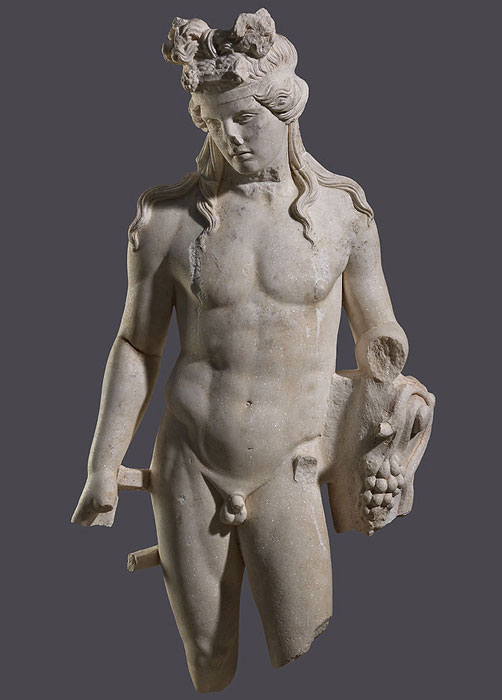 «Νέος και με υγείαν αρίστην… Όψεις της ζωής των νέων στην αρχαία Μακεδονία»
Η καθημερινή ζωή των νέων στην αρχαία και ρωμαϊκή Θεσσαλονίκη αποτελεί το θέμα της έκθεσης που θα λειτουργήσει στο Μουσείο της Αρχαίας Αγοράς της Θεσσαλονίκης από 6 Σεπτεμβρίου έως 6 Νοεμβρίου 2014. Η έκθεση, όπου θα εκτεθούν 140 περίπου αντικείμενα από διάφορες πόλεις της Μακεδονίας, είναι οργανωμένη σε 8 θεματικές ενότητες οι οποίες καλύπτουν διάφορες πτυχές της ζωής των νέων και της πορείας τους από την εφηβεία στην ωριμότητα. Περισσότερες πληροφορίες εδώ.
"A young man in excellent health ... Aspect of youth life in ancient Macedonia"
The everyday life of youth in Ancient and Roman Macedonia is the topic of the exhibition that will run at the Ancient Agora Museum of Thessaloniki from September 6 to November 6, 2014. The 140 artifacts of the exhibition from various parts of Macedonia are organized in 8 thematic units and cover various aspects of the life of ancient young Macedonians: the cultural context, sports, body and beauty, ephebes etc.
Κυριακή 3 Αυγούστου 2014
To τρέχον τεύχος του Théophilyon αφιερωμένο στον Ιούδα / The current issue of Théophilyon devoted on Judas
Théophilyon 19:1 (2014)
- Dominique Cerbelaud, "De l’enfer au paradis : Judas dans la littérature francophone du XXe siècle" (abstract)
- Jean-Marie Gueullette, "Judas, arrêté par la désespérance" (abstract)
- Bernard Barc, "L'évangile de Judas réhabilite-t-il le disciple qui a livré Judas" (abstract)
- Jacques Descreux, "« Serait-ce moi ? » Approche narrative du personnage de Judas en Marc, Matthieu et Luc-Actes" (abstract)
Δυο άρθρα βιβλικού ενδιαφέροντος στο τρέχον τεύχος του StTh / Two articles of biblical interest in the current issue of StTh
Σάββατο 2 Αυγούστου 2014
Ένας συλλογικός τόμος για τα ψευδεπίγραφα της ΠΔ και την ΠΔ / A collective volume on the OT pseudepigrapha and the OT
Κυκλοφόρησε από τον εκδοτικό τόμο Peeters ένας συλλογικός τόμος με τις εισηγήσεις που διαβάστηκαν στο Colloquium Biblicum Lovaniense 2012:
 E. Tigchelaar (ed.), Old Testament Pseudepigrapha and the Scriptures (BETL 270), Peeters, Leuven 2014
ISBN: 978-90-429-3128-2
95 ευρώ
Summary:
Old Testament Pseudepigrapha and the Scriptures contains the papers of the Colloquium Biblicum Lovaniense 2012, which focused on a series of contemporary questions in Pseudepigrapha research. The papers discuss the relationship of Old Testament Pseudepigrapha to scriptures, both in a technical sense (how did authors rewrite or interpret Scripture) and in a literary sense (how and why did authors expand or extend earlier scriptures). Many papers cover the phenomenon of pseudepigraphy, giving explanations ranging from pious forgery through various kinds of literary devices to authorial self-effacement. Some contributions discuss the historically fluid boundaries between canonical and pseudepigraphic texts, and the production and use of Old Testament pseudepigrapha in early Christianity.
Ένα συνέδριο για τον Αύγουστο / A conference on Augustus
Commemorating Augustus: a bimillennial re-evaluation
University of Leeds, UK, 18th–20th August 2014
University of Leeds, UK, 18th–20th August 2014
The bimillennium of Augustus' death on 19th August 2014 commemorates the end of his life and the beginning of a rich posthumous reception history. Running over the bimillennium itself, the Commemorating Augustus conference will undertake a focused, comparative exploration of this history of responses, from AD 14 to 2014.
Already in his lifetime, Augustus was a man of many images. Since his death, he has served in one context as a model of ideal rule and another as a tyrant, while playing a key role in narratives about the emergence of Christianity, the foundation of Europe and the relationship between politics and the arts. His reception history is a vivid exemplum of historical relativism in action, demonstrating the scope of the source material to support utterly conflicting interpretations. Yet to date it has been studied only sporadically. The Commemorating Augustus conference aims to address the full range of Augustus' reception history, to trace its evolution, to explore its connections and disjunctions, to understand its impact on contemporary perspectives, and to put us in a better position to articulate what Augustus means to us in the 21st century.
Keynote speaker: Karl Galinsky (Austin, Texas).
Other invited speakers: Mary Harlow (Leicester), Ray Laurence (Kent), Valerie Hope (Open University), Alison Cooley (Warwick), Steven Green (UCL), Shaun Tougher (Cardiff), Martin Lindner (Göttingen).
Topics covered: Augustus' old age and death; worship and deification; Tiberius, Nero and the Flavians; Seneca, Tacitus and Suetonius; posthumous provincial responses; coinage and the visual arts; late antique responses; Byzantine politics and literature; early Christianity; medieval history and literature; European literature; European politics and power; Augustus in novels and on screen; Augustus between the wars; historiography and scholarship; monuments and architecture.
Further details: A full programme, abstracts and details of how to register are available at: http://augustus2014.com/conference/.
Registration closes on 1st August 2014, and a late fee will apply to bookings made after 17th July 2014. For any queries, pleased contact augustus2014@leeds.ac.uk.
The conference venue is Devonshire Hall, a self-contained University of Leeds residence in the style of an Oxbridge college.
The conference is generously supported by the Classical Association, the Society for the Promotion of Roman Studies and the Augustus Collection.
Programme & Abstracts
The conference at a glance
Monday 18th August – registration and check-in opens at 12 noon; conference opens at 14:00 and closes at 18:30; Dinner 19:00
Tuesday 19th August – conference opens at 09:00 and closes at 18:00; Conference Dinner 19:30
Wednesday 20th August - conference opens 09:00 and closes 17:30. There will be an opportunity for interested delegates to join an informal post-conference evening meal.
Programme mis à jour ici
Abstracts
Programme
Monday August 18th
12:00-14:00 Registration; sandwich lunch available from 13:00
14:00-14:30 Conference opening
14:30-16:00 1a) End of an era: the final days and death of Augustus
Mary Harlow (Leicester) and Ray Laurence (Kent) – Augustus and Old Age
Alison Cooley (Warwick) – The last days of Augustus
Valerie Hope (Open University) – Grieving for Augustus: emotion and control in Roman imperial mourning ritual
1b) Text and persuasion
Daniel Sarefield (Fitchburg) – Book Burning After Augustus
Carey Fleiner (Winchester) – The Augustan shaping of imperial education and its legacy in ancient and medieval historians
Kathleen Lamp (Arizona) – Augustus in the Rhetorical Tradition
16:00-16:30 Refreshment break
16.30-18.30 2a) Becoming a god
Rachel Thomas (Ohio) – Literary Time-Travel: Commemoration of Augustus in Virgil and Ovid
Susan Sorek (Open University) – He Who the Sun has Chosen: Augustus and the obelisks in Rome
Lya Serignolli (Sao Paulo) – Liber, Augustus, and Tiberius
Kelly Shannon (Virginia) – Temples and Memory: Augustus' Deification and Tiberius' Reputation in Tacitus' Annals
2b) Historiography and scholarship
Peter Wiseman (Exeter) – Missing the essentials: How we get Augustus wrong
Maggie L. Popkin (Case Western Reserve University Ohio) – The Parthian Arch of Augustus and its Legacy: Memory Manipulation in Imperial Rome and Modern Scholarship
Pawel Madejski (MCSU, Lublin) – Pax in the Augustan policy: between myths of historiography and the evidence
Marco Romani Mistretta (Harvard) – National Marxism: Gramsci's Augustan Rome and its Legacy in Italian Historiography
Tuesday August 19th
09:00-10:30 3a) The Tiberian response
Penelope Davies (Austin, Texas) – Tiberius, Primus Supra Pares: Augustus Legacy And The Built City
Lovisa Brännstedt (Lund) – Femina Princeps? The response to Livia's adoption into the Julian family
Marius Gerhardt (Berlin) – Augustus in the age of Tiberius: the case of Velleius Paterculus
3b) Provincial perspectives
Greg Rowe (Victoria) – From Greece to Rome and Back Again: the Res Gestae in Provincial Context
Nayla Kabazi Muntasser (Austin, Texas) – Provincial Variations on Augustan Themes: representation, reception and local identity
Dario Calomino (British Museum) – Emperor or god? The commemoration of Augustus in the coinage of the Provinces
10:30-11:00 Refreshment break
11:00-13:00 4a) Neronians to Flavians
Steven Green (UCL) – Seneca's Augustus: Fashioning a Protean Model for a Young Prince
Liz Gloyn (Royal Holloway University of London) – Fathers, be good to your daughters: Seneca, Augustus and familial ethics
Lauren Ginsberg (Cincinnati) – Remembering Nero's Augustan model in the Octavia
Victoria Gyori (KCL) – Flavian responses to Octavianic/Augustan coinage
4b) Monuments and architecture
Margaret L. Woodhull (Denver, Colorado) – Architecture and Female Agency in Post-Augustan Rome: Agrippina the Younger's Temple for Deified Claudius and the Demise of Imperial Women Building Rome
Thea Ravasi (Newcastle) – Imperial residences from Augustus to Hadrian: architectural planning and sculptural display
Andreina Maahsen-Milan (Bologna) – Heroes und Heldentum: Second and Third Reich War Memorials. The Mausoleum of Augustus as prototype, type and variation
Rubén García Rubio (Valladolid / Rome Tre) – The Forum of Augustus vs Yale University Art Gallery of Louis I. Kahn
13:00-14:00 Buffet lunch
14:00-16:00 5a) Late antiquity
Shaun Tougher (Cardiff) – Julian Augustus on Augustus: a view from late antiquity
Jill Mitchell (Trinity Saint David) – Symmachus composes a panegyric for Augustus: an appreciation of Imperial panegyric in the late fourth century and its relationship to the oratory of the Augustan age
Frances Foster (Cambridge) – Praising Augustus through his Ancestors: Servius on Representations of Augustus in Virgil
Michael Sloan (Wake Forest) – Augustus: The Harbinger of Peace (Orosius' reception of Augustus in Historiae Adversus Paganos)
5b) Tacitus, Suetonius and Augustus
Alice Hu (Pennsylvania) – Tacitus' Philippics: Tiberius, Augustan precedent, and literary memory
Aske Damtoft Poulsen (Lund) – Conflicting reports? Three accounts of Augustus' involvement in the civil wars
Trevor Luke (Florida) – A Gift for the Princeps: Suetonius on Augustus Final Journey
Patrick Cook (Cambridge) – Embodying the Legacy of Augustus
16:00-16:30 Refreshment break
16:30-18:00 6a) Byzantine politics and literature
Birgitta Hoffmann (Liverpool) – Belisarius' triumph and Justinian's Equestrian statue – Justinian as a new Augustus?
Kosta Simic (Brisbane) – The Byzantine Augustus: Examples from Chronicles – Homiletics and Hymnography
Elizabeth Fisher (George Washington University) – The “Essential” Augustus in the Excerpta of Constantine Porphyrogenitus
6b) The power of images
Matteo Cadario (Milan) – The image of Nero and Augustan legacy
Nandini Pandey (Loyola, Baltimore) – Augustus and the Ara Coeli Legend in Northern Renaissance Art
Nicole Berlin (Johns Hopkins) – Augustus as Propaganda: The Case of the Vatican Gallery of Maps
18:30 Pre-Dinner Drinks reception
19:30 Commemorative dinner
Wednesday August 20th
09:00-10:30 7a) Bridging the gap: towards the Middle Ages
Joseph Geiger (Hebrew University, Jerusalem) – The First Emperor
Paulo Martins (Sao Paulo) – A new perspective on the post mortem image of Augustus
Jürgen Strothmann (Siegen) – Augustus and the new Roman emperor in the West. The case of the Carolingian views on Augustus
7b) Augustus in the novel
Martin Lindner (Göttingen) – In Search of a German Princeps: Günther Birkenfeld and his Augustus novels (1934-1962)
Ayelet Peer (Tel Aviv) – Letters to Augustus: John Williams' portrayal of the princeps in his novel Augustus
Juliette Harrisson (Newman University) – I, Claudius Augustus in text and on screen
10:30-11:00 Refreshment break
11:00-13:00 8a) Augustus between the wars
Penelope Goodman (Leeds) – Beyond Italy: the 1938 bimillennium as a global phenomenon
Fabio Cavallero (Rome ‘La Sapienza') – Augustus and Mussolini: city planning and architecture. An effective use of power for the creation of a new cultural and communicative memory.
James Chlup (Manitoba) – The Proconsul and the Emperor: John Buchan's Augustus
Phyllis Brighouse (Liverpool) – The Influence of John Buchan's Calvinism on his reception of Augustus
8b) European literature
Giampiero Scafoglio (Naples) – Augustus in Dante's Thought and Works
Bobby Xinyue (UCL) – Augustus in Book 8 of Morisot's Fasti
Paul Hammond (Leeds) – Dryden's Virgilian Kings
13:00-14:00 Buffet lunch
14:00-16:00 9a) The 21st-century Augustus
Anna Clareborn (Swedish Institute, Rome) – Augusto Reframed: Exhibiting Augustus in Bimillennial Rome
Chloe Bent (UCL) – Engaging with Augustus in the 21st Century: A biographical analysis of Rome's northern Campus Martius
Eleanor OKell (Leeds) – What does it mean to be an Augustus today? A comparative online perspective
9b) Augustus on screen
Melissa Beattie (Aberystwyth) and Amanda Potter(Open University)– Res Gestae per Televisionem Nuntio Divi Augusti: Octavian and Rome
Jess Anderson (Leeds) – Augustus' adventures beyond history: ahistorical screen treatments
Fiona Hobden (Liverpool) – Life through a lens: Augustus and the politics of the past in television documentaries today
15:30-16:15 Refreshment break
16:15-17:15 10) Karl Galinsky: Augustus: an assessment

Το τρέχον τεύχος του JSJ / In the current issue of JSJ
Journal for the Study of Judaism 45:3 (2014)
- Hans Debel, "Anchoring Revelations in the Authority of Sinai: A Comparison of the Rewritings of “Scripture” in Jubilees and in the P stratum of Exodus," (abstract)
- Yishai Kiel, "Penitential Theology in East Late Antiquity: Talmudic, Zoroastrian, and East Christian Reflections," (abstract)
- Magnar Kartveit, "Samaritan Self-Consciousness in the First Half of the Second Century B.C.E. in Light of the Inscriptions from Mount Gerizim and Delos," (abstract)
- Anna Krautbauer / Stephen Llewelyn / Blake Wassell, "A Gift of One Eunuch and Four Slave Boys: P.Cair.Zen. I 59076 and Historical Construction," 305-325 (abstract)
- Fernando Bermejo-Rubio, "Was the Hypothetical Vorlage of the Testimonium Flavianum a “Neutral” Text? Challenging the Common Wisdom on Antiquitates Judaicae 18.63-64," 326-365 (abstract)
- Peter-Ben Smit, "Reaching for the Tree of Life: The Role of Eating, Drinking, Fasting, and Symbolic Foodstuffs in 4 Ezra," 366-387 (abstract)
Εγγραφή σε:
Σχόλια (Atom)