- Michael E Stone, "The Armenian Embroidered Bible," 3–11 (abstract)
- David A Skelton, "Angels among us? The Watchers myth and angelology in Ephrem’s Commentary on Genesis and the Ethiopic tradition," 12–27 (abstract)
- Fiodar Litvinau, "A note on the Greek and Ethiopic text of 1 Enoch 5:8," 28–35 (abstract)
- A. D. Macdonald, "The seventy-two elders of Aristeas: An evaluation of speculation," 36–53 (abstract)
- Theodore A. Bergren, "5 Ezra 2:10–14: Its place in the book’s structure and in Christian supersessionism," 54–76 (abstract)
Παρασκευή 1 Νοεμβρίου 2019
Το τρέχον τεύχος του JSPs / The current issue of JSPs
Journal for the Study of Pseudepigrapha 29:1 (2019)


Στο τρέχον τεύχος του HTS / In the current issue of HTS
Hervormde Teologiese Studies 75:4 (2019)
- Wim J.C. Weren, "Herodias and Salome in Mark’s story about the beheading of John the Baptist"
- Ezichi Ituma, Enobong I. Solomon, Favour C. Uroko, "The cleansing of the leper in Mark 1:40–45 and the secrecy motif: An African ecclesial context"
- Omaka K. Ngele, Prince E. Peters, "A critical study of Acts 6:1–3 and its implications for political restructuring in Nigeria"
Τετάρτη 30 Οκτωβρίου 2019
Νέα εντυπωσιακά ευρήματα στην αρχαία Τενέα / New impressive finding in ancient Tenea
Οι εργασίες της αρχαιολογικής ομάδας που εργάζεται στην τοποθεσία της αρχαίας Τενέας έφεραν στο φως νέα εντυπωσιακά ευρήματα μεταξύ των οποίων κι ένα λουτρό της ρωμαϊκής περιόδου:
- "Ancient bath complex unearthed in Greece’s lost city of Tenea" (Tornos News, 22.10.2019)
- "New and impressive findings at ancient Greek city of Tenea" (Tornos News, 26.10.2019)
Βιβλιοκρισία του νέου βιβλίου της Laura Nasrallah / Review of Laura Nasrallah's new book
 Ο Bruce W. Longenecker παρουσιάζει το νέο βιβλίο της Laura Nasrallah, Archaeology and the Letters of Paul, Oxford University Press, 2019 στη σελίδα του Bryn Mawr Classical Review:
Laura Salah Nasrallah, Archaeology and the Letters of Paul. Oxford; New York: Oxford University Press, 2019
Η πορφύρα κι οι απομιμήσεις της / Purple colour and its imitations
Στο ρωμαϊκό κόσμο το πορφυρό χρώμα ήταν ένδειξη υψηλής κοινωνικής θέσης και πλούτου. Αυτό, μαζί με το γεγονός ότι η παρασκευή του από τα θαλάσσια σαλιγκάρια της οικογένειας Muricidae ήταν ιδιαίτερα απαιτητική, καθιστούσε τα πορφυρά ενδύματα εξαιρετικά ακριβά. Φαίνεται όμως πως η λύση και στην αρχαιότητα ήταν η παρασκευή της πορφυρής βαφής από φτηνότερα υλικά, όπως βεβαιώνουν μία σειρά από ευρήματα. Αυτές τις φτηνότερες απομιμήσεις της πορφύρας παρουσιάζει η Naama Sukenik στην ανάρτησή της στη σελίδα ANE Today:
Το σκάνδαλο του σταυρού / The scandal of the cross
Στην ηλεκτρονική έκδοση του περιοδικού Time ο Tom Holland συζητά το σκάνδαλο του σταυρού ως αποτρόπαιας θανατικής ποινής και τη μεταμόρφωσή του στο κατεξοχήν σύμβολο του Χριστιανισμού στα χρόνια του Βυζαντίου:
Στο τρέχον τεύχος του Biblical Annals / In the current issue of The Biblical Annals
The Biblical Annals 9:4 (2019)
- Henryk Józef Drawnel, "An Introductory Bibliography for the Study of the Dead Sea Scrolls," 629-654
- Nicholas Thomas Wright, "Resurrection and the Renewal of Creation," 655-670
- Janusz Kucicki, "Witnesses of the Resurrected Messiah," 671-696
- Jaap Doedens, "The Resurrection Sets the Agenda," 697-710
- Danuta Renu Shanzer, "Resurrections before the Resurrection in the Imaginaire of Late Antiquity," 711-738
Δευτέρα 28 Οκτωβρίου 2019
Ένα άρθρο βιβλικού ενδιαφέροντος στο τρέχον τεύχος του JFSR / An article of biblical interest in the current issue of JFSR
Journal of Feminist Studies in Religion 35:2 (2019)
In-Hee Park, "Women and Q: Metonymy of the Basileia of God," 41-54 (abstract)
In-Hee Park, "Women and Q: Metonymy of the Basileia of God," 41-54 (abstract)
Το λεξιλόγιο της μετάφρασης των Ο΄ και το ελληνιστικό του υπόβαθρο / The Vocabulary of the Septuagint and its Hellenistic Background
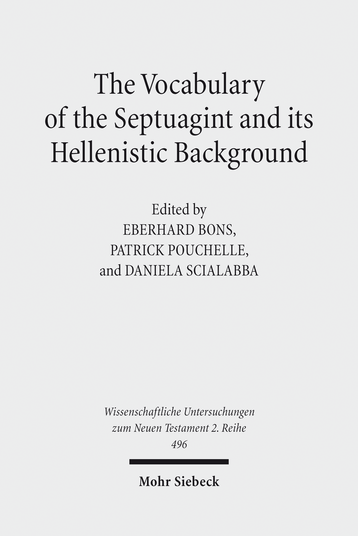 Από τον εκδοτικό οίκο Mohr Siebeck κυκλοφόρησε ένας συλλογικός τόμος με θέμα την ανάλυση του λεξιλογίου της μετάφρασης των Ο΄ και την αναζήτηση των ελληνιστικών καταβολών του. Ο τόμος φιλοξενεί μελέτες από ειδικούς, οι οποίες παρουσιάστηκαν σε επιστημονικές συναντήσεις κατά το 2013 και 2017 και αποτελούν μέρος του ερευνητικού προγράμματος Historical and Theological Dictionary of the Septuagint. Μέσα από την ανάλυση συγκεκριμένων παραδειγμάτων οι μελέτες του τόμου αποπειρώνται να απαντήσουν σε μία σειρά ερευνητικών ερωτημάτων: ποια ήταν η σημασία, η χρήση κι εξέλιξη λέξεων που απαντούν στη μετάφραση των Ο΄; Πού και πώς χρησιμοποιούνται αυτές οι λέξεις μέσα στη μετάφραση των Ο΄ κι ως ποιο σημείο αντιστοιχούν ως προς τη σημασία στις εβραϊκές ή αραμαϊκές λέξεις που αποδίδουν; Πώς μπορούν οι πάπυροι να βοηθήσουν στην καλύτερη κατανόηση αυτών των λέξεων;
E. Bons - P. Pouchelle - D. Scialabba, The Vocabulary of the Septuagint and its Hellenistic Background. WUNT II.496. Tübingen: Mohr Siebeck, 2019
157 σσ.
69,00 €
Περιεχόμενα
- Eberhard Bons/Patrick Pouchelle/Daniela Scialabba, "Introduction"
- Anna Passoni Dell'Acqua, "Le vocabulaire de la Septante à la lumière des papyrus Nesina Grütter: Die Blöße der Stadt-Frauen: Überlegungen zur Verwendung der Substantive αἰσχύνη und ἀσχημοσύνη und in der Septuaginta"
- Patrick Pouchelle, "La main de Cyrus ou la main de Dieu? Étude de l'expression ἀποστέλλω τὴν χεῖρα dans la Septantε"
- Justus Ghormley, "Coining Silver: The Translation of kæsæp in the Septuagint"
- Marieke Dhont, "Why is God not designated as an ἄρχων in the Septuagint?"
- Daniela Scialabba, "οὗτος δὲ οὐδὲν ἄτοπον ἔπραξεν (Luke 23:41). What Did the Good Thief Want to Say? A New Testament Citation and its Papyrological Background"
- David S. Hasselbrook, "Nuances of Meaning with Compound Words in the Septuagint: A Case Study of διαγογγύζω and εἰσακούω in Contexts of Grumbling"
- Eberhard Bons, "Die Übersetzung παρὰ τὰς διεξόδους τῶν ὑδάτων in Psalm 1,3 und ihr griechischer Hintergrund"
- Kyriakoula Papademetriou, "The Semantic Evolution of the Word παρρησία through its Pragmatic and Sociolinguistic Fields"
- Beatrice Perego, "Παράδεισος and Κῆπος: The Garden Terminology of the Septuagint"
- Miriam Carminati, "The Verb συναντιλαμβάνομαι: The History of a New Compound Created in the Hellenistic Epoch"
Εγγραφή σε:
Σχόλια (Atom)