Τετάρτη 13 Οκτωβρίου 2021

Το τρέχον τεύχος του JECH / The current issue of JECH

 Journal of Early Christian History 11/1 (2021)

Masculinity, Historiography and Uses of the Past

  • Blossom Stefaniw, "Masculinity, Historiography, and Uses of the Past: An Introduction," 1-14 (abstract)
  • Grace Emmett, "The Apostle Paul’s Maternal Masculinity," 15-37 (abstract)
  • Tyler Schwaller, "Picturing the Enslaved Christ: Philippians 2:6–8, Alexamenos, and a Mockery of Masculinity," 38-65 (abstract)
  • Blossom Stefaniw, "Masculinity as Flight: Vulnerability, Devotion, Submission and Sovereignty in the Teachings of Silvanus," 66-87 (abstract)
  • Jamie Wood, "Military Manuals, Masculinity, and the Making of Christian Soldiers in Late Antiquity," 88-128 (abstract)

Το τρέχον τεύχος του SJOT / The current issue of SJOT

 Scandinavian Journal of the Old Testament 35/2 (2021)

  • Melissa Sayyad Bach, "How Hard is it to Get into the Community Rule? Exploring Transmission in 1QS from the Perspective of the Modes of Religiosity," 159-186 (abstract)
  • Inchol Yang, "The Presence and Absence of Marduk and YHWH," 187-200 (abstract)
  • Neil O’Hara, "Man Cannot Serve Two Masters: The Characterisation of Gideon and Doublets in Judges 6," 201-206 (abstract)
  • Juan Chapa, "The “Jewish” LXX Papyri from Oxyrhynchus: Witnesses of Ways that did not Part?" 207-229 (abstract)
  • Ellena C. Lyell, "Cognitive Linguistics & Chromatic Language: Applying Modern Theories of Colour Perception to the Hebrew Bible," 230-241 (abstract)
  • Gregory Goswell, "The Glorification of the Temple in Haggai 2,1-9," 242-255 (abstract)
  • Graeme Auld, "Tracing the Writing of Kings with Nadav Na’aman and Klaus-Peter Adam," 256-273 (abstract)
  • Caio Peres, "A Lion Ate Grass like an Ox: Nebuchadnezzar and Empire Transformation in Daniel Four," 274-300 (abstract)
  • Bernhard Lang, "God and Time: An Essay on the Bible’s Cyclical View of History," 301-314 (abstract)

Ένα νέο άρθρο στο τρέχον τεύχος του Open Theology / A new article in the current issue of Open Theology

 Open Theology 7/1 (2021)

Achia Anzi, "Migration, Exile, and Homecoming in the Book of Ruth"


Ένα νέο άρθρο στο τρέχον τεύχος του Verbum et Ecclesia / A new article in the current issue of Verbum et Ecclesia

 Verbum et Ecclesia 42/1 (2021)

Hans-Georg Wuench, "The structure of Ezra-Nehemiah as a literary unit"


Κυριακή 3 Οκτωβρίου 2021

Open Access: Ένα βιβλίο για τα ζώα στην αρχαία Εγγύς Ανατολή / Open Access: A book on animals in ancient Near East


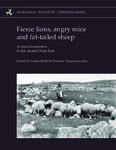
L. Recht - C. Tsouparopoulou,  (2021). Fierce lions, angry mice and fat-tailed sheep: Animal encounters in the ancient Near EastMcDonald Institute for Archaeological Research 2021

Το τρέχον τεύχος του ROOTS / The current issue of ROOTS

 Romanian Orthodox Old Testament Studies 4/2 (2020)

Η Εύα σύντροφος ή βοηθός; / Eve, a partner or a helper?

 Στην ιστοσελίδα TheTorah.com ο Gary Rendsburg (Rutgers University) συζητά τη σημασία της φράσης עֵזֶר כְּנֶגְדֹּו ʿezer ke-negdo (Γένεσις 2:18) που περιγράφει το ρόλο της Εύας δίπλα στον Αδάμ. Αξιοποιώντας τις θέσεις του Zeʾev Ben-Ḥayyim (1907‒2013), καθηγητή των εβραϊκών στο Hebrew University, ο Rendsburg υποστηρίζει ότι η φράση, που απαντά μόνο στην αρχή της Γενέσεως, δε σημαίνει τον βοηθό, όπως αποδίδεται στις αρχαίες και νεότερες μεταφράσεις, αλλά του ισότιμου συντρόφου:

Woman: Helpmate No Longer

Το τρέχον τεύχος του JSJ / The current issue of JSJ

 Journal for the Study of Judaism 52/4-5 (2021)

  • Lydia Lee, "On the Vorlage, Tendenz, and Scribal Negligence of AT Esth 1:10–15," 469–499 (abstract)
  • Benjamin G. Wright III, "Ἰσοδυναμέω and Translation into Greek in Sirach," 500–521 (abstract)
  • J. E. (Eelco) Glas, "Reading Josephus’ “Prophetic” Inspiration in the Cave of Jotapata (J.W. 3.351–354) in a Roman Context," 522–556 (abstract)
  • Menahem Kister, "Deeds, Reward, and Divine Mercy: Jewish Views and Pauline Passages," 557–600 (abstract)

Σάββατο 2 Οκτωβρίου 2021

Το τρέχον τεύχος του Early Christianity / The current issue of Early Christianity

 Early Christianity 21/3 (2021)

Das Markusevangelium im Brennpunkt der Forschung

  • Jörg Frey, "Das Markusevangelium im Brennpunkt der Forschung," 287-296 
  • Cilliers Breytenbach, "Mark's Tense Future," 297-321 (abstract)
  • Jan Rüggemeier, "Mark's Narrative Christology Following the Cognitive Turn," 322-345 (abstract)
  • Markus Lau, "Ein politischer Markus?" 346-368 (abstract)
  • Elizabeth E. Shively, "The Eclipse of the Markan Narrative," 369-387 (abstract)
  • Morten Hørning Jensen, "The Temple “before the Temple” in the Gospel of Mark: How the Temple is a Focus in Mark 1-10," 388-420 (abstract)

Παρασκευή 1 Οκτωβρίου 2021

Στο τρέχον τεύχος του Theologische Beiträge / In the current issue of Theologische Beiträge

 Theologische Beiträge 21/4 (2021)

N. T. Wright (Übersetzt von Daniel N. Herrmann), "Die Bibel und christliche Mission," 239–249
The article argues that the Christian Bible hinges on Jesus. It looks forwards from his complex achievement to the ultimate establishment of his universal lordship, and to the tasks for which, in anticipation of that end, he commissions his followers and equips them by his Spirit. It looks back to the biblical narratives of creation and covenant, of Adam and Abraham, of Moses, David and the prophets, seeing there the deep roots both of Jesus‘ own work, present and future, and of the church‘s tasks in the interim. The Bible thus constitutes the God-given narrative within which the church discerns its vocation and orders its life. The first Christians did not suppose that their fresh readings of Israel‘s scriptures were identical to those on offer among their Jewishcontemporaries, though there are similarities and analogies. But they claimed that once they saw the events concerning Jesus as the goal towards which the scriptures had been tending they saw not only a deep coherence in the Bible itself but a fresh vision of how those same scriptures, with their tantalising glimpses of a glorious ultimate future, were to be fulfilled. The events concerning Jesus form a coherent whole, despite modern tendencies to break them up, whether into scattered fragments of early Christian reflection or into the two large (and to modern eyes somewhat contradictory) themes of ‘kingdom‘ and ‘cross‘. For clarity‘s sake the article separates the different strands of kingdom, cross, resurrection, ascension, second coming and the gift of the Spirit, concluding with an all-embracing reflection on the underlying theology of Temple and Creation.

E. J. David Kramer, "Mission in der Endzeit. N. T. Wrights Eschatologie und missionarische Ekklesiologie," 250–266
By interpreting the end times as commencing in the New Testament period, N. T. Wright locates the church’s mission within an eschatological framework. This article traces the contours of both the past and future dimensions of Wright’s eschatology and recognizes its linchpin in Jesus’ crucifixion and new-creation-inaugurating resurrection. A portrayal of Wright’s eschatologically conditioned missionary ecclesiology follows, focusing on his understanding of the gospel as the proclamation of Jesus’ lordship, his vision for the church’s mission, and his political theology. Finally, the author suggests that Wright’s work is conducive to a missionally focused biblical theology which challenges the church to live in anticipation of the new creation.

Florian Förg, "„Versiegle nicht die Worte der Weissagung“. (Apc 21,10): Apokalyptische Texte verstehen und predigen.," 267–279
Apocalyptic texts expect the visible kingdom of God to come and thus divide time into two eons. Besides, they distinguish between an earthly and a transcendent reality. Being pseudonymous in authorship, they share a global, sometimes cosmic horizon and expect a ruler who is coming down from God’s heavenly realm. – The exegete should put effort in studying how the text reuses earlier scriptures, motifs, and symbols, and try to understand the historical context as much as possible. – The main focus in preaching apocalyptic texts should be to convey hope to the listeners.

Reiner Braun, "Warum der Bibliolog viel Raum verdient, wenn es um die Vermittlung von Bibeltexten geht. ," 280–290
Among the didactic methods of biblestudy, the bibliodrama (German: "Bibliolog") is of special importance because it is oriented towards biblical and Jewish forms and stands for a unity of form and content. This is shown in particular by the parallelism membrorum. The bibliodrama is particularly close to the "core business" of the church and may become a unique selling point, opening up future perspectives for the church.