 |
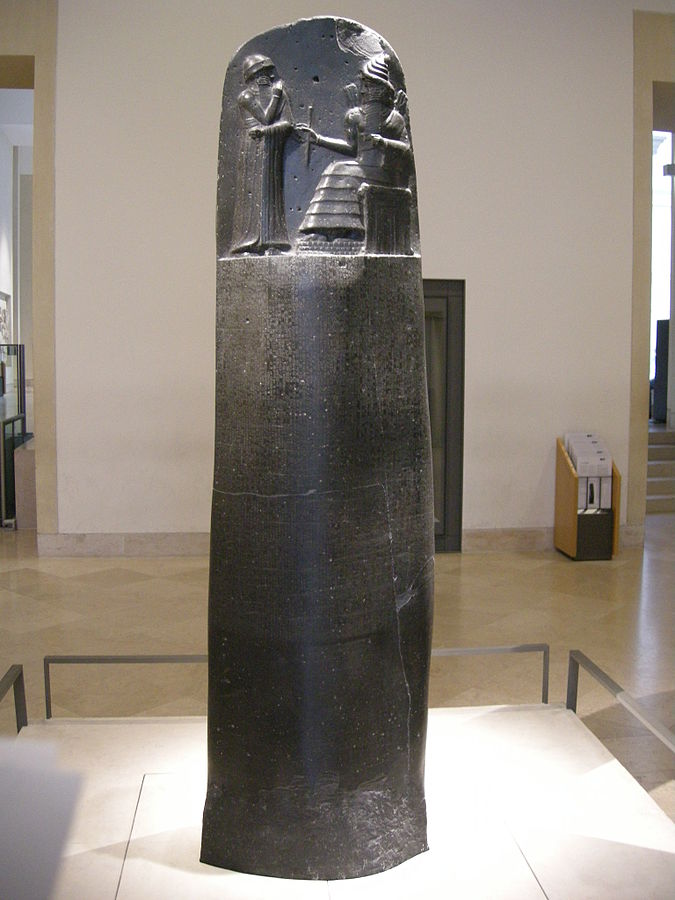
| Στήλη του Hammurabi - Μουσείο Λούβρου (Φωτο: wikimedia) |
Τετάρτη 17 Φεβρουαρίου 2021
O Χαμουραμπί κι ο Μωσαϊκός Νόμος / Hammurabi and the Mosaic Law


Η "Θεωρία των Πηγών" κι ο αντισημιτισμός / "Documentary Theory" and antisemetism
 |
| Julius Wellhausen (1844–1918) (Φωτο: Wikimedia) |
Πόσο η γνωστή "Θεωρία των Πηγών" του Julius Wellhausen επηρεάζεται από τον αντισημιτισμό που κυριαρχεί στη Γερμανία του Bismarck κατά τα τέλη του 19ου αι.; Ο Alan T. Levenson (University of Oklahoma) στη σελίδα TheTorah.com υποστηρίζει ότι βασικές θέσεις του Wellhausen οι οποίες απορρέουν από τη θεωρία του, όπως η σταδιακή παρακμή της ισραηλιτικής θρησκείας κι η σύνδεσή της με έναν στείρο νομικισμό καθώς και η απόρριψη των έργων του Νόμου από τον Ιησού. Το κείμενο του Levenson καταδεικνύει για μια ακόμη φορά πώς η ιστορία της βιβλικής έρευνας δε μπορεί να αποδεσμευθεί από το ιστορικό και πολιτισμικό συγκείμενο αλλά και τις προσωπικές ιστορίες των ερευνητών που τη σημαδεύουν:
Was the Documentary Hypothesis Tainted by Wellhausen’s Antisemitism?
Στο τρέχον τεύχος του HTS / In the current issue of HTS
Hervormde Teologiese Studies 77/4 (2021)
Mark Wilson, "Hindrance as a motivation in divine guidance: The example of Paul"
Δευτέρα 15 Φεβρουαρίου 2021
Στο τρέχον τεύχος του RHPR / In the current issue of RHPR
Revue d'Histoire et de Philosophie religieuses 100/4 (2020)
Κυριακή 14 Φεβρουαρίου 2021
Open access: ένας νέος συλλογικός τόμος για τους Κανόνες του Ευσεβίου / Open access: a new volume on Eusebius' Canon Tables
Στο τρέχον τεύχος του Electrum / In the current issue of Electrum
Electrum 27 (2020)
- Paulina Komar, "Aegean Enigma: The Rise and Fall of Vineyards during Antiquity," 33-43
- Tomasz Grabowski, "The Activity of Ptolemy II’s Fleet in the Aegean Sea," 131-148
- Hadrien Bru, "Les Pisidiens à Rhodes aux époques hellénistique et romaine," 149-171
- Marcin N. Pawlak, "Theophanes, Potamon and Mytilene’s Freedom," 173-188
Το τρέχον τεύχος του Textus / The current issue of Textus
Textus 30 (2021)
- John Screnock, "Translating and Transcending Textual Criticism," 1–5
- Izaak J. de Hulster - Tuukka Kauhanen, "Abel and Dan (2 Sam 20:18–19) in Textual Criticism, Tradition History, and Archaeology," 7–27 (abstract)
- Vladimir Olivero, "A Genealogy of Lust: The Use of Hesiod’s Theogony in the LXX Translation of the Book of Proverbs," 28–42
- Alison Salvesen, "Textual Criticism, Translation Studies, and Symmachus’s Version in the Book of Job," 43–63
- Stefan Schorch, "The Value of the Samaritan Versions for the Textual History of the Samaritan Pentateuch," 64–85 (abstract)
- Pablo A. Torijano, "Textual Criticism and Its Impact on the Study of Israel’s Religion and Hebrew Grammar: Some Examples in 1–2 Kings," 86-104 (abstract)
Το τρέχον τεύχος του CBQ / The current issue of CBQ
Catholic Biblical Quarterly 82/1 (2021)
- Blažej Štrba, "Sight or Skin? Revisiting Deuteronomy 34:7c," 1-17 (abstract)
- Stephen J. Smith, "The Shape and Message of Psalms 73–78," 18-37 (abstract)
- David G. Horrell, "Religion, Ethnicity, and Way of Life: Exploring Categories of Identity," 38-55 (abstract)
- Christopher A. Decaen,"An Embedded Chiastic Order in Matthew?" 56-74 (abstract)
- Nicholas A. Elder, "Scribes and Demons: Literacy and Authority in a Capernaum Synagogue (Mark 1:21–28)," 75-94 (abstract)
- Mark B. Giszczak, "The Rhetoric and Social Practice of Excommunication in 2 Thessalonians 3: 6–15," 95-114 (abstract)
Τρίτη 9 Φεβρουαρίου 2021
Το τρέχον τεύχος του DWJ / The current issue of DWJ
Distant World Journal 5 (2020)
- Catharina Baumgartner, Patrizia Heindl, Marie-Hélène Lindner, Julia Preisigke-Borsian, Sarah Schlüter, "Einleitung Ideologie und Organisation," 1-6
- Daniela Martins, " 'Interconnecting circles of power': An approach to a study of the regional administration in Egypt during the reign of Thutmose III," 7-22
- Sarah Schlüter, "Social Theories and Old Assyrian Kaneš: Overview, Comments, Developments," 22-37
- Christoffer Theis, "Creatures with Seven Heads in the Revelation of John A History of the Motif in the Ancient Near East," 38-58
Άρθρα βιβλικού ενδιαφέροντος στα τελευταία τεύχη του PRSt / Articles of biblical interest in the last issues of PRSt
Perspectives in Religious Studies 47/3 (2020)
Ivan Bankhead, "The Dual Impairments of the “Paralytic” of the Synoptic Gospels," 267–82
The “paralytic” who was lowered through a roof into Jesus’ presence is commonly seen as having been an adult, lame, and cognitively unimpaired. From a review of key contemporary medical writings and a critical and rational reading of the three Synoptic accounts of the incident, other NT narratives and two recent portrayals of the paralytic, this paper constructs a case for his having been envisioned originally as profoundly impaired mentally as well as physically. It shows how this reading can resolve several otherwise problematic issues within the accounts and concludes by suggesting that vicarious faith may prove efficacious for persons with profound intellectual disabilities today.
Rodney K. Duke, "The Idiom of 'Weeping and Gnashing of Teeth' in the Gospels: A Funerary Formula," 283–98
Τhis article examines the idiom of weeping and gnashing of teeth that occurs in Matthew and Luke. This idiom does not support a popular conclusion that the recipients of judgment existed in a continued state of anguish. After identifying some common presuppositions that readers often impose on the interpretation of this and other NT eschatological, judgment texts, the article turns to a fresh look at the idiom in context. I examine the two actions of weeping and gnashing of teeth as a single idiom, not separately. The idiom occurs in an independent clause with set formulaic wording. That formula does not express an action of those receiving judgment. They are dead. Drawing on Ugaritic parallels, the author concludes that idiom was likely a funerary expression in the mouth of mourners and functions in the Gospels as a literary motif for death.
Carey C. Newman, "Paul on God and Glory," 299–316
--------------------------------------------------------------------------------------------------------------------
Perspectives in Religious Studies 47/4 (2020)
Mark McEntire, "Competing Visions of the Wilderness in Numbers 10–21," 367–83
Numbers 10–21 is a combination of three wilderness traditions that can be adequately separated by procedures common to the Neo-Documentary Hypothesis. The test of applying a source-critical evaluation is threefold here. First, do the three separate accounts each exhibit a high degree of narrative coherence? Second, can asking a question related to the larger biblical narrative yield a distinctive answer from each narrative? This question will be: How does the wilderness story understand the place to which the Israelites are travelling? Finally, can the answers to this question shed light on how the accounts were used to create single narrative?
Nijay Gupta, "Reconstructing Junia’s Imprisonment: Examining a Neglected Pauline Comment in Romans 16:7," 385–97
The person called “Junia” in Romans 16:7 has been the subject of extensive research, discussion, and debate for several decades, but especially for the last twenty years. Most of that scholarship has focused on Junia’s sex and whether or not Paul was referring to Junia as an apostle. One of the unfortunate and unintended consequences of the narrow focus on Junia’s sex and apostleship is the academic neglect of Paul’s mention of Junia’s imprisonment 3 (συναιχμαλώτους μου). This article seeks to fill that lacuna by imagining or reconstructing the situation and circumstances of the incarceration of which Paul mentions. Very little Pauline scholarship has considered the circumstances of Paul’s prison companions. Even less has there been consideration of the challenges faced by women who were detained. In the hopes that such an imaginative exercise would contribute to a better understanding of the experience of women in early Christianity, we will consider several factors including: crimes leading to imprisonment, the conditions of imprisonment, the experience of women in particular in Roman confinement, and the (potential) survival and after effects of female prisoners.
Carey C. Newman, "Paul on Christ and Glory, " 399–413
Εγγραφή σε:
Σχόλια (Atom)