Πέμπτη 3 Σεπτεμβρίου 2020

Στο τρέχον τεύχος του ASE / In the current issue of ASE

 Annali di storia dell' esegesi 37/1 (2020)

Die Rezeptionsgechichte des Jona-Buches in christlicher Literatur

  • Manuel Vogel, "Menschensohn und Jonazeichen: Exegetische und theologische Beobachtungen zu Mt 12,28-42 / Lk 11,29-32," 13-28
  • Katharina Bracht, "Die Rezeption des Jona-Buches bei Hieronymus von Stridon: Der Jona-Kommentar als heteronomer Text," 29-52
  • Boško Erić, "Prophet Jonah and the Ninevites in the Madrashe on Virginity by Ephrem the Syrian," 53-72
  • Rodoljub Kubat, "Reception of the Book of Jonah in the Exegesis of Theodore of Mopsuestia," 73-88
  • Dragan Radic, "The Reception of the Book of Jonah by Theodoret of Cyrus," 89-100
  • Ivaylo Naydenov, "Jona im orthodoxen Gottesdienst," 101-108
  • Eva-Maria Gummelt, "Reception History and its Value—a German Lutheran View," 109-120
  • Cosmin Pricop, "Bibel-Rezeption durch liturgische Texte: Das Beispiel des orthodoxen Verlobungsgottesdienstes," 121-136
  • Moschos Goutzioudis, "The Narrative of Jesus’ Baptism and its Reception in the Worship of the Church," 137-150
  • Darko Krstić, "Stephan Nemanja, Ruler and Seer. The Reception of Apocalyptic Visions in Purpose of the Theological Articulation of “translatio imperii” in the Hagiography of Saint Symeon by Stephan II Nemanjic (the First-Crowned)," 151-164
  • Vladan Tatalović, "The Reception of Jesus’ First Sign in Serbian Medieval Fresco Painting," 165-170

Early Christianity

  • Jan Bremmer, "Early Christians in Corinth (A.D. 50–200): Religious Insiders or Outsiders?" 181-202

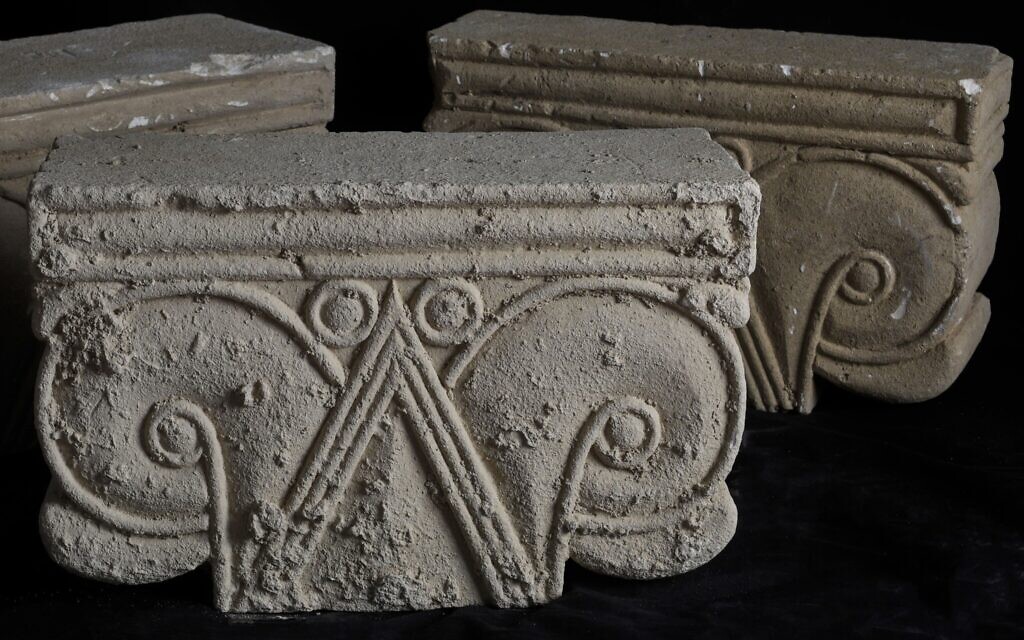
Ένα εντυπωσιακό παλάτι από την εποχή του Πρώτου Ναού / An impressive palace of First Temple period

Column heads dating back to First Temple era (Shai Halevi, Israel Antiquities Authority)
Κιονόκρανα πολυτελούς κτιρίου της εποχής του Πρώτου Ναού 
(Φωτο: Shai Halevi, Israel Antiquities Authority)

 Σύμφωνα με δημοσίευμα των Τhe Times of Israel αρχαιολόγοι εντόπισαν ίχνη μίας πολυτελούς οικίας στην περιοχή Armon Hanatziv της Ιερουσαλήμ. Συγκεκριμένα πρόκειται για τρία κιονόκρανα από ασβεστόλιθο τα οποία προέρχονται από πολυτελές οικοδόμημα το οποίο χρονολογείται στην εποχή του Πρώτου Ναού, στην περίοδο μεταξύ της βασιλείας του Εζεκία και του Ιωσία. Μαζί με το παλάτι που βρέθηκε στην Ramat Rachel  και το διοικητικό κτίριο στην Arnona  βεβαιώνουν την επέκταση της πόλης της Ιερουσαλήμ έξω από τα τείχη της πόλης στην περίοδο μετά την επίθεση των Ασσυρίων. Ο ιδιοκτήτης του κτιρίου παραμένει άγνωστος: 

At popular Jerusalem promenade, archaeologists find a First Temple-era palace

Ιουδαϊκές μεταφράσεις της Βίβλου / Jewish Bible translations

 Ο Leonard J. Greenspoon (Creighton University) κάνει μια σύντομη αλλά εξαιρετικά ενδιαφέρουσα ανασκόπηση των ιουδαϊκών μεταφράσεων της Βίβλου κατά τα νεότερα χρόνια με έμφαση στον 19ο αι.:

Jewish Bible Translations and Translators

Οι επιδημίες στην αρχαία Μεσοποταμία / Epidemics in ancient Mesopotamia

 Οι επιδημίες δεν είναι ένα φαινόμενο που ταλαιπωρεί το σύγχρονο άνθρωπο, αλλά, όπως προκύπτει από τις αρχαίες πηγές, ήταν το ίδιο απειλητικές και στην αρχαιότητα. Η Annie Attia παρουσιάζει και σχολιάζει μία σειρά αρχαίων μαρτυριών για τις επιδημίες στην αρχαία Μεσοποταμία:

Epidemics in Mesopotamia

Τετάρτη 2 Σεπτεμβρίου 2020

Η αποκρυπτογράφηση της Στήλης της Ροζέττας / Deciphering the Rosetta Stone

 Η στήλη της Ροζέττας, η οποία χρονολογείται στο 2ο αι. π.Χ. (στα χρόνια της βασιλείας του Πτολεμαίου Ε΄, του Επιφανούς) αποτελεί αναμφισβήτητα ένα σημαντικό μνημείο του οποίου η αποκρυπτογράφηση συνέβαλε στην κατανόηση του συστήματος των ιερογλυφικών. Η αποκρυπτογράφησή της, όμως, φαίνεται πως ήταν αντικείμενο συναγωνισμού μεταξύ του Jean-François Champollion, Γάλλου ιστορικού και γλωσσολόγου, ο οποίος τελικά διάβασε την επιγραφή, και του Thomas Young, ενός Βρετανού γιατρού. Μία νέα μελέτη, των Jed Buchwald και Diane Greco Josefowicz, η οποία σύντομα θα κυκλοφορήσει από τις εκδόσεις του Πανεπιστημίου Princeton (Τhe Riddle of the Rosetta: How an English Polymath and a French Polyglot Discovered the Meaning of Egyptian Hieroglyphs) θα παρουσιάσει μεταξύ άλλων τις ανέκδοτες σημειώσεις του Young φωτίζοντας έτσι κάποιες πτυχές της ιστορίας κατανόησης της γραφής της αρχαίας Αιγύπτου:

Discovery of scholar's notes shine light on race to decipher Rosetta Stone

Τα πρόσωπα των Ρωμαίων αυτοκρατόρων / The faces of Roman emperors

 Ο Daniel Voshart αξιοποίησε τις πληροφορίες στις αρχαίες πηγές καθώς και τις διάφορες απεικονίσεις των Ρωμαίων αυτοκρατόρων και με τη βοήθεια της ψηφιακής τεχνολογίας προτείνει ρεαλιστικές αποκαταστάσεις των προσώπων τους. Το αποτέλεσμα είναι εντυπωσιακό:

Photoreal Roman Emperor Project

Αρχαιολογικές ανακαλύψεις στο Ισραήλ κατά το 2020 / 2020 archaeological discoveries in Israel

 Μπορεί βέβαια η πανδημία να άλλαξε πολύ τις συνθήκες έρευνας, όμως παρόλες τις αντιξοότητες η αρχαιολογική έρευνα συνεχίσθηκε και το 2020. Διαβάστε το άρθρο του Lawrence Schiffman στο περιοδικό Ami σχετικά με τις σημαντικότερες αρχαιολογικές ανακαλύψεις στο Ισραήλ κατά το 2020:

2020 Discoveries

Στο τρέχον τεύχος του Studies in Late Antiquity / In the current issue of Studies in Late Antiquity

 Studies in Late Antiquity 4/3 (2020)


Στο τρέχον τεύχος του Tyndale Bulletin / In the current issue of Tyndale Bulletin

Tyndale Bulletin 71/1 (2020)

  • Elijah Hixson, "Three Lost Miniatures in Codex Sinopensis (Paris, Bibliothèque nationale de France, supplément grec 1286; Gregory-Aland O/023)," 1-18

Codex Sinopensis (Paris, Bibliothèque nationale de France, supplément grec 1286; Gregory-Aland O/023) is one of the earliest examples of an illuminated gospel book. This article examines instances of transferred paint in the codex along with textual and paratextual features to identify three lost miniatures that once adorned the pages of Codex Sinopensis. Thus, our knowledge of one of the earliest cycles of miniatures in a gospel book can be extended with the addition of the three identifiable but now-lost miniatures: The Miracle of the Coin from the Mouth of the Fish (Matthew 17:24–18:4), the Parable of the Labourers in the Vineyard (Matthew 19:25–20:9), and Christ’s Entrance into Jerusalem (Matthew 21:5-12).

  • Kim Phillips, "Is the Masora Circule, too, among the Scribal Habits?" 19-42

Research into masoretic biblical manuscripts (MSS) is heavily reliant on our ability to reunite fragments once belonging to the same codex, now separated one from the other in the Genizah morass, and to identify the scribes behind codices whose colophons have been lost. This task is made especially difficult by the fact that the oriental square hand in which these codices were written is highly stereotypical. Consequently, the paleographer must rely on paratextual features: non-textual features that accompany the biblical text itself, which form a kind of fingerprint for each MS or scribe. This article argues that the masora circule (the small circule used in these MSS to link the masoretic notes to the biblical text itself) functions as part of this unique fingerprint.

  • Gregory R. Lanier, "The Critical Edition of the Greek OT and NT: Stability, Change, and Implications," 43-64

Though their respective practitioners compare notes infrequently, the fields of NT and Septuagint textual criticism share resemblances in their overall trajectory. Namely, late nineteenth- and early twentieth-century critical editions have given way to decades-long international efforts to produce major critical editions that incorporate a staggeringly larger amount of manuscript data. But how much has the critical text itself changed? This article explores the magnitude of change over the past decades of work on the Greek NT and OT, offering observations about what the tremendous stability in the reconstructed text might tell us about the field(s) in general and the quality of ancient manuscripts.

  • Alan Millard, "On Some Alleged Anachronisms in the Books of Samuel," 65-74

In considering the age and historical reliability of the Books of Samuel, the detection of anachronisms can play a major part. A number that have been alleged are examined in this essay, and no good grounds are found for accepting them.

  • Benjamin J.M. Johnson, "Making a First Impression: The Characterisation of David and His Opening Words in 1 Samuel 17:25-31," 75-94

David is perhaps the most complex character in all of Scripture. He has been understood in many and various ways, from a backstabbing, ruthless warlord to a pious and poetic shepherd-king. One place we ought to probe when asking the question of David’s character is his first speech. It has been noted that in the Hebrew Bible first words are particularly important moments of characterisation. In the case of David, his first words look initially to emphasise his scheming and ambition. However, the present essay will take a closer look at David’s first words and argue that they present a more complex character than may first appear.

  • Seth D. Postell, "Potiphar’s Wife in David’s Looking Glass: Reading 2 Samuel 11–12 as a Reflection Story of Genesis 39," 95-114

Though the parallels between Joseph and David have been well noted, the numerous literary links between Joseph’s exemplary behaviour with Potiphar’s wife on the one hand and David’s disgraceful behaviour with Bathsheba on the other has gone by largely unnoticed. In this article, we analyse 2 Samuel 11–12 as a reflection story of Genesis 39, noting the numerous parallels and striking contrasts. Given the many allusions to Joseph in 1 Samuel, the reader expects to see only Joseph’s reflection in David’s mirror in 2 Samuel 11–12, but finds Potiphar’s wife looking back at David as well.

  • Steffen G. Jenkins, "A Quotation in Psalm 109 as Defence Exhibit A," 115-136

Psalm 109 contains an infamous imprecation, which roughly half of modern commentators identify as a quotation of an enemy curse. On the other hand, most who detect a quotation believe it to be aimed against the enemy anyway, in an act of poetic justice. This article assesses the debate and offers fresh grounds for a more recent proposal. The quotation includes not only curse, but an accusation, justifying the curse against David. David quotes his accuser’s case, to protest that it is the fabrication of enemies who have suborned perjury. Finally, he prays that this plot against him would fail.

  • Katharine J. Dell, "A Wise Man Reflecting on Wisdom: Qoheleth/Ecclesiastes," 137-152

This paper looks at Qoheleth’s ambivalent attitude towards wisdom and being wise. At times wisdom is his presupposition, his strength, and his benchmark for judging everything; at other times he sees its limitations and relativity in the light of divine unpredictability and human death. This is not contradictory; rather, Qoheleth weighs up proverbs and provides an interpretation of them, fulfilling the description of him in 12:9. Whilst some see the Epilogist as critical of the wise, using Qoheleth’s own words to discredit the wisdom movement, I maintain that this is not the case; rather, the Epilogue reinforces Qoheleth’s approach to the wisdom task.

Τρίτη 1 Σεπτεμβρίου 2020

Ένα αρχαίο χριστιανικό κύπελλο / An ancient Christian chalice

 
Αποκατάσταση των γραφημάτων του κυπέλλου 

Ανασκαφές στον αρχαιολογικό χώρο του φρουρίου της Vindolanda (Northumberland, M. Βρετανία) έφεραν στο φως ένα σπάνιο εύρημα από την τελευταία φάση χρήσης του φρουρίου. Πρόκειται για ένα κύπελλο με χαραγμένα χριστιανικά σύμβολα, όπως χριστόγραμμα, ιχθύς, σταυρός, άγγελοι, γράμματα στα λατινικά και αγγλικά κά. Το θραυσμένο σήμερα αγγείο βρέθηκε στο χώρο μίας αρχαίας χριστιανική βασιλικής του 5ου/6ου αι. και θεωρείται το αρχαιότερο εύρημα με χριστιανικά γραφήματα στη Μ. Βρετανία (σύμφωνα με τα δημοσιεύματα χρονολογείται στον 5ο αι. μ.Χ.). Μπορεί βέβαια το συγκεκριμένο εύρημα χρονολογικά να βρίσκεται εκτός των ορίων του ιστολογίου μου, αλλά αναρτώ την είδηση, γιατί αποτελεί μία ενδιαφέρουσα μαρτυρία για την ιστορία του αρχαίου Χριστιανισμού σε μία τόσο απομακρυσμένη περιοχή της ρωμαϊκής αυτοκρατορίας:

Hadrian’s Wall dig reveals oldest Christian graffiti on chalice (The Guardian)

Unique Christian Artefact Uncovered at Vindolanda (Vindolanda Charitable Trust)