Ο James D. Tabor στο ιστολόγιό του TaborBlog επανέρχεται στο θέμα του αρχαιότερου σύμφωνα με κάποια δημοσιεύματα σπαράγματος του κατά Μάρκον και δίνει κάποιες ενδιαφέρουσες πληροφορίες για την ιστορία δημοσιοποίησής του:
Κυριακή 25 Ιανουαρίου 2015


Σάββατο 24 Ιανουαρίου 2015
Λκ 19,1-10 / Lk 19:1-10
Το αυριανό ευαγγελικό ανάγνωσμα είναι η γνωστή αφήγηση της συνάντησης του Ιησού με τον αρχιτελώνη Ζακχαίο. Ανήκει στο λεγόμενο ιδιαίτερο υλικό του Λουκά και διακόπτει τη ροή της αφήγησης σχετικά με την πορεία του Ιησού προς τα Ιεροσόλυμα, την οποία ο ευαγγελιστής δανείζεται από τον Μάρκο.
Στην ιστορία της ερμηνείας η περικοπή ερμηνεύεται παραδοσιακά ως η έκφραση της χάριτος και της σωτηρίας που παρέχει ο Θεός απλόχερα σε όλους τους ανθρώπους. Μία μικρή μερίδα, ωστόσο, θεωρεί ότι η βαρύτητα εδώ βρίσκεται στο ίδιο το πρόσωπο του Ζακχαίου και στην αξιοποίηση από μέρους του της ευκαιρίας που του προσφέρεται με την άφιξη του Ιησού. Αφήνοντας κατά μέρος την δογματική συζήτηση που κρύβεται πίσω από τον σχολαστικό τονισμό της μίας ή της άλλης ερμηνευτικής θέσης (σωτηρία διά της χάριτος - σωτηρίας μέσω των έργων) στη συνέχεια θα δώσουμε μερικά στοιχεία από την ενδοκειμενική ανάγνωση του κειμένου, η οποία αναδεικνύει ιδιαίτερες θεολογικές πτυχές της συγκεκριμένης περικοπής. Με τον όρο ενδοκειμενικότητα εδώ εννοούμε τη συγχρονική ανάγνωση του κειμένου κατά την οποία αναζητούμε τους πιθανούς δεσμούς (φραστικούς και ιδεολογικούς) μεταξύ διαφορετικών σημείων του ίδιου κειμένου με σκοπό να κατανοήσουμε πώς τα επιμέρους αυτά τμήματα του κειμένου συγκροτούν το κείμενο / έργο στο σύνολό του καθώς και ποιο είναι το νόημα του καθενός από αυτά τα μέρη.
Μία τέτοια ανάγνωση δεν ακυρώνει τη διαχρονική ανάλυση του κειμένου. Αντίθετα θα πρέπει να θεωρηθούν ως αλληλοσυμπληρούμενες. Για παράδειγμα, η παρατήρηση ότι εδώ συνδυάζονται πιθανόν δύο διαφορετικές ιστορίες, αυτή του Ζακχαίου (στ. 2-6. 8) κι εκείνη της αντιπαράθεσης του Ιησού με όσους τον κατηγορούσαν για τη συναναστροφή του με τους τελώνες κι άλλους αμαρτωλούς (στ. 7.9-10), συμπληρώνει τα όσα προκύπτουν από τη συγχρονική ανάγνωση της περικοπής σχετικά με το κέντρο βάρους και το νόημά της.
Οι εξής ενδοκειμενικές συνδέσεις φαίνονται σημαντικές:
- η ιστορία του Ζακχαίου συνδέεται άμεσα με τα όσα λέει ο Ιησούς στο Λκ 18, όπου και πάλι η συνάφεια είναι εκείνη της αντιπαράθεσης του Ιησού με όσους τον κατακρίνουν για τις σχέσεις του με τους τελώνες και τους αμαρτωλούς. Οι αντίπαλοι του Ιησού (εκεί δεν είναι όλοι οι παρευρισκόμενοι αλλά οι Φαρισαίοι κι οι γραμματείς) στο 15,2 "διεγόγγυζον" όπως κι εδώ (στ. 7· βλ, επίσης την ιστορία του Λευί στο 5,27-32, όπου χρησιμοποιείται παρόμοια έκφραση). Και το θέμα εκεί είναι πάλι οι "αμαρτωλοί". Στο Λκ 15 ο Ιησούς, ωστόσο, χαρακτηρίζει όλους αυτούς τους αμαρτωλούς ως "χαμένους" (και λέει τις τρεις γνωστές παραβολές για χαμένα πράγματα, μία δραχμή, ένα πρόβατο κι ένα γιο) τα οποία όμως στο τέλος βρίσκονται (15,4-6.8-9.24.32). Κι εδώ, στον στ. 10, ο Ιησούς έρχεται να βρει το "ἀπολωλός" (βλ. επίσης ότι ο Ζακχαίος δεν προλαβαίνει να πει ή να κάνει κάτι κι ο Ιησούς αναλαμβάνει την πρωτοβουλία να έρθει στο σπίτι του).
- η λέξη "σήμερον", η οποία χρησιμοποιείται στην περικοπή δύο φορές. Πρόκειται για τη δεύτερη φορά που συναντούμε στο Λκ τη λέξη. Η πρώτη ήταν στο κήρυγμα του Ιησού στη Ναζαρέτ (4,21), όπου ο Ιησούς χρησιμοποιεί για να δηλώσει ότι στο πρόσωπό του εκπληρώνεται η προφητεία του Ησαΐα την οποία προηγουμένως διάβασε. Αυτό το κήρυγμα έχει προγραμματική θέση μέσα στο κατά Λουκάν ευαγγέλιο (δηλ. προετοιμάζει και περιέχει συμπυκνωμένα βασικά θέματα της μετέπειτα αφήγησης). Από τον τρόπο που χρησιμοποιείται, λοιπόν, στην περικοπή του Ζακχαίου η λέξη ξανά (και μάλιστα στην πρώτη περίπτωση μαζί με το ρ. "δεῖ", το οποίο ο Λκ χρησιμοποιεί για δηλώσει ότι εκπληρώνονται οι προφητείες) υποδηλώνεται ότι η αποδοχή του αμαρτωλού Ζακχαίου είναι εκπλήρωση της αποστολής του Ιησού στον κόσμο και της προφητείας για τη λύτρωση όσων την έχουν ανάγκη. Η σωτηριολογική ανάγνωση της λ. "σήμερον" επιβεβαιώνεται και με τα όσα λέει ο Ιησούς στο στ. 10 (ἦλθεν γὰρ ὁ υἱὸς τοῦ ἀνθρώπου ζητῆσαι καὶ σῶσαι τὸ ἀπωλολός).
- το θέμα της συναναστροφής του Ιησού με τους τελώνες απαντά σε διάφορα σημεία του Λκ (στα κεφ. 5 και 15). Εξίσου χαρακτηριστικό στο Λκ είναι το θέμα της σωτηρίας, η οποία προσφέρεται σε όλους αδιάκριτα και ιδιαίτερα στους αμαρτωλούς. Η περικοπή του Ζακχαίου συνδέεται άμεσα και με την παραβολή του Τελώνη και του Φαρισαίου (18,9-14). Για την ακρίβεια, η ιστορία του Ζακχαίου ερμηνεύει με τη μορφή της αφήγησης την παραβολή. Ένας ενδιαφέρον σύνδεσμος είναι τα ρήματα "ἀνέβη" και "κατέβη", τα οποία και στις δύο περιπτώσεις χρησιμοποιούνται σε σχέση με τον τελώνη και συνδέονται άμεσα και με την πνευματική/ψυχική τους κατάσταση. Ο Φαρισαίος της παραβολής ανεβαίνει στο Ναό να συναντήσει τον Θεό και να δηλώσει τη μετάνοιά του και κατεβαίνει δικαιωμένος. Ο Ζακχαίος ανεβαίνει στο δένδρο για να δει τον Ιησού και κατεβαίνει με τη σειρά του δικαιωμένος, αφού ο Ιησούς έρχεται στο σπίτι του.
- ο τρόπος που εκδηλώνει ο Ζακχαίος τη μετάνοιά του θυμίζει τον τρόπο που ο Ιωάννης ο Βαπτιστής στο Λκ προτρέπει τους στρατιώτες και τους τελώνες στο 3,11 εξ. Κι ο Ζακχαίος φέρει καρπούς μετανοίας, είναι επομένως έτοιμος να δεχτεί την βασιλεία του Θεού που έρχεται στο πρόσωπο του Ιησού.
- Ο Ιησούς χαρακτηρίζει τον Ζακχαίο ως "υἱὸ Ἀβραάμ". Εκτός από την ιστορική διάσταση (ο Ζακχαίος φέρει ιουδαϊκό όνομα, τον εξελληνισμένο τύπο του εβρ. Ζακκάι που θα πει αυτός που είναι καθαρός, αθώος) η αναφορά στον Αβραάμ έχει κι ένα βαθύτερο σωτηριολογικό περιεχόμενο. Ήδη στα 1,54-55.73-74 η σωτηρία συνδέεται άμεσα με την υπόσχεση που δόθηκε στον Αβραάμ κι η ιστορία του Ζακχαίου είναι μία πτυχή της εκπλήρωσης αυτής της υπόσχεσης. Ότι η προφητεία εκπληρώνεται στο πρόσωπο του Ιησού είναι μία έμμεση αλλά σαφής μαρτυρία για την ταυτότητά του (βλ. ιδιαίτερα 7,22).
Λαμβάνοντας υπόψη τα παραπάνω φαίνεται ότι ο σκοπός του ευαγγελιστή δεν ήταν να αφηγηθεί απλά την ιστορία ενός αμαρτωλού που συνάντησε τον Ιησού (δεν έχει δηλ. καθαρά βιογραφικό χαρακτήρα), αλλά να υπογραμμίσει μέσα από ένα παράδειγμα, του Ζακχαίου, αυτό που λέγεται στον τελευταίο στίχο της περικοπής για τη σωτηρία του αμαρτωλού. Μέσα από τον συνδυασμό των δύο διαφορετικών ιστοριών και με τις ενδοκειμενικές συνδέσεις που αναφέρθηκαν παραπάνω υπογραμμίζεται ένα σημαντικό θέμα του Λκ, εκείνο της γενναιόδωρης προσφοράς της σωτηρίας προς όλους όσους την επιζητούν. Ο τελευταίος στίχος καθιστά σαφές ότι το κέντρο της ιστορίας δεν είναι ο Ζακχαίος αλλά ο ίδιος ο Ιησούς κι η σωτηρία κι η άφεση που χαρίζει στον Ζακχαίο είναι δική του πρωτοβουλία και δωρεά.
CFP Workshop: Quo Vadis Biblical Archaeology? (Jerusalem June 17-19, 2015)
The 50th anniversary of the German-Israeli diplomatic relations in 2015 provides an unique opportunity to reflect the German and German-Israeli Biblical Archaeology in Israel. Where are we coming from? Where are we now? And where are we heading?
The German Protestant Institute of Archaeology and the Hebrew University are hosting an interdisciplinary German-Israeli conference dedicated to graduate students working on various subjects in several disciplines that are connected to Ancient Near East – including Ancient History, Archaeology, Prehistory, Anthropology, Theology (Old and New Testament Studies), Jewish, Islamic or general religious studies and Social Science.
The aim is not only an interdisciplinary exchange of scientific knowledge between different fields, but also to increase and encourage contact and discussion between young German and Israeli researchers working on different regional specific aspects. The conference is designed to enable young scholars to present and discuss their work with colleagues on a high academic level without pressure.
We are looking forward to your proposals for the following themes (300 word abstract):
- German-Israeli Joint Ventures in the Past, Present and Future
- Sites after excavation – Restoration, Conservation and Presentation
- With Bible and Trowel? Biblical Archaeology today and future perspectives
- Archaeology and its Methods in Dialogue with other Sciences
The conference will be held in the Old City of Jerusalem in the middle-age refectory adjacent to Church of the Redeemer and will last for three days. The official language will be English.
Presentations should take 20 minutes. Additionally to the presentations, workshops are planned to allow a more intense discussion between scholars working in similar or adjacent fields (e.g. about common problems, new methods that could be applied, similar research questions).
This workshop is free of charge, but we kindly request your registration in advance.
The workshop is a “Preconference” to the international conference “Ancient Cultures in the Lands of the Bible“ (Archaeology 2015).
For further information see https://www.archaeologyisrael.com/
Please submit your abstracts before 10/02/2015 to: soennecken@deiahl.de
For further questions or registration please contact: soennecken@deiahl.de or
sekretariat@deiahl.de
Τρία νέα άρθρα στο τρέχον τεύχος του JSIJ / Three new articles in the current issue of JSIJ
Jewish Studies: an Internet Journal 12 (2013)
- Ishay Rosen-Zvi, "The Rise And Fall of Rabbinic Masculinity"
- Yehudit Henshke, "Biblical Citations in the Mishna: A Characterization of the Biblical Text Witnesses in Medieval Byzantium"
- Ilana Sasson, "Masorah And Grammar as Revealed in Tenth Century Karaite Exegesis"
O εσωτερικισμός στην αρχαιότητα / Esotericism in antiquity
Το περιοδικό Aries [15:1 (2015)] φιλοξενεί ένα αφιέρωμα στον εσωτερικισμό της αρχαιότητας:
- Kelley Coblentz Bautch, "Concealment, Pseudepigraphy and the Study of Esotericism in Antiquity," 1-9 (abstract)
- Raʿanan Boustan, "Secrets without Mystery: Esotericism in Early Jewish Mysticism," 10-15 (abstract)
- Kocku von Stuckrad, "Ancient Esotericism, Problematic Assumptions, and Conceptual Trouble," 16-20 (abstract)
- Joshua Ezra Burns, "Esotericism in Classical Rabbinic Culture: Interpretive Problems and Prospects," 21-46 (abstract)
- Matthew Twigg, "Esoteric Discourse and the Jerusalem Temple in the Gospel of Philip," 47-80 (abstract)
- Dylan M. Burns, "μίξεώς τινι τέχνῃ κρείττονι: Alchemical Metaphor in the Paraphrase of Shem (NHC VII,1)," 81-108 (abstract)
- Christian H. Bull, "Ancient Hermetism and Esotericism," 109-135 (abstract)
- Gregory Shaw, "Taking the Shape of the Gods: A Theurgic Reading of Hermetic Rebirth," 136-169 (abstract)
Παρασκευή 23 Ιανουαρίου 2015
RBL 23.1.2015
Pauline Allen, John Chrysostom, Homilies on Paul’s Letter to the Philippians
Reviewed by Julien M. Ogereau
Richard S. Ascough, Philip A. Harland, and John S. Kloppenborg, Associations in the Greco-Roman World: A Sourcebook
Reviewed by Steve Walton
Robert L. Cavin, New Existence and Righteous Living: Colossians and 1 Peter in Conversation with 4QInstruction and the Hodayot
Reviewed by Roy R. Jeal
Musa W. Dube, Andrew M. Mbuvi, and Dora R. Mbuwayesango, eds., Postcolonial Perspectives in African Biblical Interpretations
Reviewed by Peter Claver Ajer
Anne Marie Kitz, Cursed Are You! The Phenomenology of Cursing in Cuneiform and Hebrew Texts
Reviewed by Stephen C. Russell
Antti Laato, Who Is the Servant of the Lord? Jewish and Christian Interpretations on Isaiah 53 from Antiquity to the Middle Ages
Reviewed by Alphonso Groenewald
Jack R. Lundbom, Biblical Rhetoric and Rhetorical Criticism
Reviewed by Joel Barker
Graham Stanton; Markus Bockmuehl and David Lincicum, eds., Studies in Matthew and Early Christianity
Reviewed by Donald A. Hagner
Georg A. Walser, Old Testament Quotations in Hebrews: Studies in Their Textual and Contextual Background
Reviewed by Brian C. Small
Ziony Zevit, What Really Happened in the Garden of Eden?
Reviewed by John Walton
Reviewed by Julien M. Ogereau
Richard S. Ascough, Philip A. Harland, and John S. Kloppenborg, Associations in the Greco-Roman World: A Sourcebook
Reviewed by Steve Walton
Robert L. Cavin, New Existence and Righteous Living: Colossians and 1 Peter in Conversation with 4QInstruction and the Hodayot
Reviewed by Roy R. Jeal
Musa W. Dube, Andrew M. Mbuvi, and Dora R. Mbuwayesango, eds., Postcolonial Perspectives in African Biblical Interpretations
Reviewed by Peter Claver Ajer
Anne Marie Kitz, Cursed Are You! The Phenomenology of Cursing in Cuneiform and Hebrew Texts
Reviewed by Stephen C. Russell
Antti Laato, Who Is the Servant of the Lord? Jewish and Christian Interpretations on Isaiah 53 from Antiquity to the Middle Ages
Reviewed by Alphonso Groenewald
Jack R. Lundbom, Biblical Rhetoric and Rhetorical Criticism
Reviewed by Joel Barker
Graham Stanton; Markus Bockmuehl and David Lincicum, eds., Studies in Matthew and Early Christianity
Reviewed by Donald A. Hagner
Georg A. Walser, Old Testament Quotations in Hebrews: Studies in Their Textual and Contextual Background
Reviewed by Brian C. Small
Ziony Zevit, What Really Happened in the Garden of Eden?
Reviewed by John Walton
Birmingham Colloquium
Στο διάστημα 2-4 Μαρτίου 2015 θα λάβει χώρα το 9ο Birmingham Colloquium με τον τίτλο "The History and Text of New Testament Commentaries". Aκολουθεί το πρόγραμμα:
Monday 2nd March
From 2pm: Registration
2.30pm Welcome
2.45pm Ronald Heine, “Origen’s Gospel Commentaries”
3.40pm Carl J. Berglund, “Quotation practices in Origen’s Commentary on the Gospel of John: How dependable are his quotations of John, Paul and Heracleon?”
4.30pm Christina Kreinecker, “The Biblical Text in Rufinus’ Translation of Origen’s Commentary on Romans”
5.00pm Rory P. Crowley, “Justin’s Dialogue 88 and His Commentaries on the Baptism Material: Implications for the Variant Form of the Heavenly Voice in Luke 3:22”
5.30pm Rosalind MacLachlan, “The Context of Commentary: Non-Biblical Commentaries in the Early Christian Period”
Tuesday 3 March
9.00am Lukas J. Dorfbauer, “The Rediscovery of a Supposedly Lost Fourth-Century Work: Bishop Fortunatianus of Aquileia and his Commentary on the Gospels”
9.45am Susan Griffith, “Sources and texts in Ambrose’s Commentary on Luke”
10.15am Thomas O’Loughlin, “Capitula as commentary in the Sermon on the Mount (Mt 5:1-7:28): the implicit exegesis in Latin division systems
11.15am Shari Boodts & Gert Partoens, “The critical edition of Florus of Lyons’ Expositio epistolarum beati Pauli apostoli. State of the art and new results.”
11.45am Maria Valeria Ingegno, “Patristic Sources for the Pauline Epistle Commentary of Gilbert de la Porée”
12.15pm Alexander Andrée, “Peter Comestor and the Glossa 'ordinaria' on the Gospels”
Afternoon excursion to Worcester
Wednesday 4 March
9.00am Gilles Dorival, “Biblical catenae”
10.00am Klaus Wachtel, “Coherence and History: Commentary Manuscripts in Acts and the Catholic Letters”
10.30am John Gram and Bruce Morrill, “Parsing Paul: Layout and Sampling Divisions in Pauline Commentaries”
12 noon Will Lamb, “Catenae and the Art of Memory”
12.45pm Dora Panella, “Jesus’ Post-resurrection appearances in 1Cor 15:5-8 and their interpretation in the catenae of Oecumenius, Theophylact and Zygabenus.”
2.15pm Matthias Schulz, “Catena Manuscripts in the Coptic Tradition – An Overview”
2.45pm Carol Downer, "A consideration of some texts from de Lagarde's Coptic Catena"
3.00pm Carla Falluomini, “The citations of the Gothic New Testament in the Skeireins commentary”
4.00pm Garick V. Allen, “The Scholia in Apocalypsin: The Edition of P. Tzamalikos (2013) and Scriptural Interpretation in Manuscript 2351”
4.30pm Agnès Lorrain, “Theodoret’s text of Romans”
5.00pm Jan Krans “Romans in the Hands of Radical Commentators”
5.30pm Concluding round table
7.00pm Colloquium dinner with address by Prof. Gordon Campbell.
Booking continues to be open for a couple of weeks: please use the form which can be downloaded from:
http://arts-itsee.bham.ac.uk/itseeweb/conferences/9Coll-booking.pdf
H κοιλάδα Jezreel / The Jezreel valley
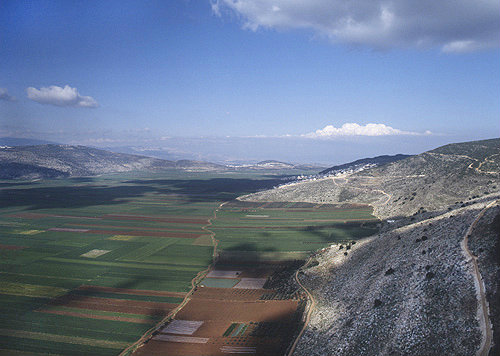 Διαβάστε την αρχαιολογική έκθεση στη σελίδα The Bible and Interpretation σχετικά με τα όρια της κοιλάδας Jezreel. Από αυτήν προκύπτει ότι τα όριά της ήταν πολύ μεγαλύτερα από όσο εικάζουμε:
Στο τρέχον τεύχος του ETR / In the current issue of ETR
Etudes théologiques et religieuses 89:3 (2014)
- Harold W. Attridge, "La christologie kénotique et l'Épître aux Hébreux" (abstract)
- Sara Schulthess, "Philippiens et Hébreux: proximité et dissonances. Réponse à Harold W. Attridge" (abstract)
- Élian Cuvillier, "Abaissement et exaltation en Philippiens 2,5-11: une poétique de la foi"
- Jörg Röder, "Poétique de la foi ou poétique de l'éthique ? Réponse à Élian Cuvillier"
Μερικές νέες μελέτες στο τρέχον τεύχος του Scriptura / Some new studies in the current issue of Scriptura
Scriptura 113 (2014)
- Sidney K Berman, "Cognition and context in translation analysis : contextual frames of reference in Bible translation"
- Hendrik Bosman, "From divine command and prophetic goals to sapiential character formation : a survey of Old Testament ethical reflection informed by philosophical ethics"
- Christo Lombaard, "Dating and debating : late patriarchs and early canon"
- Lilly Nortje-Meyer, "Effeminacy as vilification in the letter of Jude : female sexuality and the constitution of hierarchy and authority"
- Mark Wilson, "Noah, the ark, and the flood in early Christian literature"
Εγγραφή σε:
Σχόλια (Atom)