Παρασκευή 4 Σεπτεμβρίου 2020

Στο τρέχον τεύχος του RRE / In the current issue of RRE

 Religion in the Roman Empire 6/1 (2020)

  • Harry O. Maier, Emiliano R. Urciuoli, "Urban Religion at the Neighbourhood Level in the Roman Empire: Christ Religion as Case Study,"  3-19 (abstract)
  • Emiliano R. Urciuoli, "Good) People Next Door," 20-47 (abstract)
  • Jan N. Bremmer, "Urban Religion, Neighbourhoods and the Early Christian Meeting Places,"  48-74 (abstract)
  • Richard Last, "The Silence of a God-Fearer: Anonymous Dedication in CIL 6.390a = 30752,"  75-103 (abstract)
  • Harry O. Maier, "Romans Watching Romans: Christ Religion in Close Urban Quarters and Neighbourhood Transformations," 104-121 (abstract)

Το τρέχον τεύχος του Revue Biblique / The current issue of Revue Biblique

 Revue Biblique 127/3 (2020)

  • Émile Puech, "L'inscription 1 de Ḥorvat 'Uza, un document sapientiel," 321 - 337 (abstract)
  • Łukasz Niesiolowski-Spanò, "The History of Passover: Changes in the Religion and Cult of the Judeans in 7th-5th Centuries BCE," 338 - 351 (abstract)
  • Paul Carbonaro, "Le contexte littéraire et théologique du livre de Tobit," 352 - 370 (abtsract)
  • Paolo Garuti, "La cohérence des images spatiales du psaume 48 (cf. Ez 43,7-9): Un oracle de fondation?" 371 - 393 (abstract)
  • Rodrigo Franklin de Sousa, "Le vocabulaire de la guérison dans la littérature prophétique," 394 - 413 (abstract)
  • Antonio Landi, "«Non più stranieri né ospiti» (Ef 2,19a): Lo statuto cristologico degli etnico-cristiani in Ef 2,11-22," 414 - 437 (abstract)

Notes historiques

  • Christophe Lemardelé, "La notice d'Hécatée d'Abdère sur les Juifs et Flavius Josèphe," 438 - 441 

Το τρέχον τεύχος του Biblica / The current issue of Biblica

 Biblica 101/2 (2020)

  • Israel Finkelstein - Thomas Römer, "The Historical and Archaeological Background behind the Old Israelite Ark Narrative," 161 - 185 (abstract)
  • Ziony Zevit, "When Left is not Right: אטר יד ימינו in its Literary and Linguistic Contexts," 186 - 207  (abstract)
  • Danilo Verde, "Trauma, Poetry, and the Body: On the Psalter's Own Words for Wounds," 208 - 230 (abstract)
  • Mark Wilson, "Eutychus in Troas: The Architecture and Archaeology of his Fall," 231 - 247 (abstract)
  • Antonio Portalatín, "The Apocalyptic Lamb and Dragon: From Symbols to Ugly Images," 248 - 271 (abstract)

Animadversiones

  • Stefan Bojowald, "Vögel als Entsorger negativer Kräfte in biblischen, ägyptischen und altorientalischen Texten," 272 - 276 (abstract)
  • Peter Juhás, "Again the Twenty-Fifth Year of Jeconiah: A Note on 2 Bar 1,1," 277 - 281 (abstract)
  • Joseph R. Dodson, "A Short Note on Seneca's Hercules Furens and the Imperial-Critical Reading of Hebrews," 282 - 291 (abstract)

Πέμπτη 3 Σεπτεμβρίου 2020

Στο τρέχον τεύχος του ASE / In the current issue of ASE

 Annali di storia dell' esegesi 37/1 (2020)

Die Rezeptionsgechichte des Jona-Buches in christlicher Literatur

  • Manuel Vogel, "Menschensohn und Jonazeichen: Exegetische und theologische Beobachtungen zu Mt 12,28-42 / Lk 11,29-32," 13-28
  • Katharina Bracht, "Die Rezeption des Jona-Buches bei Hieronymus von Stridon: Der Jona-Kommentar als heteronomer Text," 29-52
  • Boško Erić, "Prophet Jonah and the Ninevites in the Madrashe on Virginity by Ephrem the Syrian," 53-72
  • Rodoljub Kubat, "Reception of the Book of Jonah in the Exegesis of Theodore of Mopsuestia," 73-88
  • Dragan Radic, "The Reception of the Book of Jonah by Theodoret of Cyrus," 89-100
  • Ivaylo Naydenov, "Jona im orthodoxen Gottesdienst," 101-108
  • Eva-Maria Gummelt, "Reception History and its Value—a German Lutheran View," 109-120
  • Cosmin Pricop, "Bibel-Rezeption durch liturgische Texte: Das Beispiel des orthodoxen Verlobungsgottesdienstes," 121-136
  • Moschos Goutzioudis, "The Narrative of Jesus’ Baptism and its Reception in the Worship of the Church," 137-150
  • Darko Krstić, "Stephan Nemanja, Ruler and Seer. The Reception of Apocalyptic Visions in Purpose of the Theological Articulation of “translatio imperii” in the Hagiography of Saint Symeon by Stephan II Nemanjic (the First-Crowned)," 151-164
  • Vladan Tatalović, "The Reception of Jesus’ First Sign in Serbian Medieval Fresco Painting," 165-170

Early Christianity

  • Jan Bremmer, "Early Christians in Corinth (A.D. 50–200): Religious Insiders or Outsiders?" 181-202

Ένα εντυπωσιακό παλάτι από την εποχή του Πρώτου Ναού / An impressive palace of First Temple period

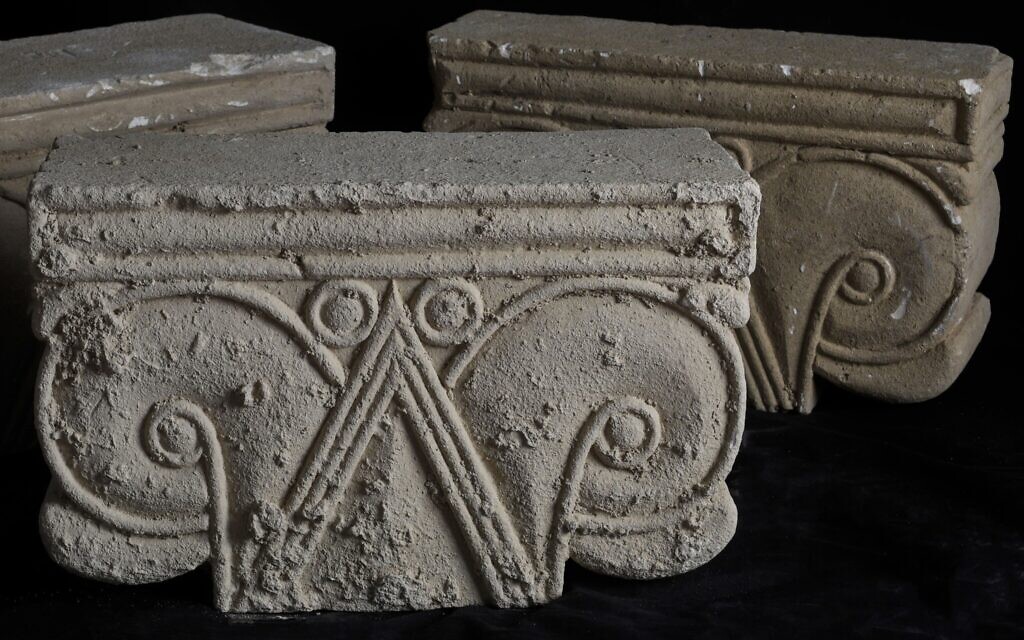
Column heads dating back to First Temple era (Shai Halevi, Israel Antiquities Authority)
Κιονόκρανα πολυτελούς κτιρίου της εποχής του Πρώτου Ναού 
(Φωτο: Shai Halevi, Israel Antiquities Authority)

 Σύμφωνα με δημοσίευμα των Τhe Times of Israel αρχαιολόγοι εντόπισαν ίχνη μίας πολυτελούς οικίας στην περιοχή Armon Hanatziv της Ιερουσαλήμ. Συγκεκριμένα πρόκειται για τρία κιονόκρανα από ασβεστόλιθο τα οποία προέρχονται από πολυτελές οικοδόμημα το οποίο χρονολογείται στην εποχή του Πρώτου Ναού, στην περίοδο μεταξύ της βασιλείας του Εζεκία και του Ιωσία. Μαζί με το παλάτι που βρέθηκε στην Ramat Rachel  και το διοικητικό κτίριο στην Arnona  βεβαιώνουν την επέκταση της πόλης της Ιερουσαλήμ έξω από τα τείχη της πόλης στην περίοδο μετά την επίθεση των Ασσυρίων. Ο ιδιοκτήτης του κτιρίου παραμένει άγνωστος: 

At popular Jerusalem promenade, archaeologists find a First Temple-era palace

Ιουδαϊκές μεταφράσεις της Βίβλου / Jewish Bible translations

 Ο Leonard J. Greenspoon (Creighton University) κάνει μια σύντομη αλλά εξαιρετικά ενδιαφέρουσα ανασκόπηση των ιουδαϊκών μεταφράσεων της Βίβλου κατά τα νεότερα χρόνια με έμφαση στον 19ο αι.:

Jewish Bible Translations and Translators

Οι επιδημίες στην αρχαία Μεσοποταμία / Epidemics in ancient Mesopotamia

 Οι επιδημίες δεν είναι ένα φαινόμενο που ταλαιπωρεί το σύγχρονο άνθρωπο, αλλά, όπως προκύπτει από τις αρχαίες πηγές, ήταν το ίδιο απειλητικές και στην αρχαιότητα. Η Annie Attia παρουσιάζει και σχολιάζει μία σειρά αρχαίων μαρτυριών για τις επιδημίες στην αρχαία Μεσοποταμία:

Epidemics in Mesopotamia

Τετάρτη 2 Σεπτεμβρίου 2020

Η αποκρυπτογράφηση της Στήλης της Ροζέττας / Deciphering the Rosetta Stone

 Η στήλη της Ροζέττας, η οποία χρονολογείται στο 2ο αι. π.Χ. (στα χρόνια της βασιλείας του Πτολεμαίου Ε΄, του Επιφανούς) αποτελεί αναμφισβήτητα ένα σημαντικό μνημείο του οποίου η αποκρυπτογράφηση συνέβαλε στην κατανόηση του συστήματος των ιερογλυφικών. Η αποκρυπτογράφησή της, όμως, φαίνεται πως ήταν αντικείμενο συναγωνισμού μεταξύ του Jean-François Champollion, Γάλλου ιστορικού και γλωσσολόγου, ο οποίος τελικά διάβασε την επιγραφή, και του Thomas Young, ενός Βρετανού γιατρού. Μία νέα μελέτη, των Jed Buchwald και Diane Greco Josefowicz, η οποία σύντομα θα κυκλοφορήσει από τις εκδόσεις του Πανεπιστημίου Princeton (Τhe Riddle of the Rosetta: How an English Polymath and a French Polyglot Discovered the Meaning of Egyptian Hieroglyphs) θα παρουσιάσει μεταξύ άλλων τις ανέκδοτες σημειώσεις του Young φωτίζοντας έτσι κάποιες πτυχές της ιστορίας κατανόησης της γραφής της αρχαίας Αιγύπτου:

Discovery of scholar's notes shine light on race to decipher Rosetta Stone

Τα πρόσωπα των Ρωμαίων αυτοκρατόρων / The faces of Roman emperors

 Ο Daniel Voshart αξιοποίησε τις πληροφορίες στις αρχαίες πηγές καθώς και τις διάφορες απεικονίσεις των Ρωμαίων αυτοκρατόρων και με τη βοήθεια της ψηφιακής τεχνολογίας προτείνει ρεαλιστικές αποκαταστάσεις των προσώπων τους. Το αποτέλεσμα είναι εντυπωσιακό:

Photoreal Roman Emperor Project

Αρχαιολογικές ανακαλύψεις στο Ισραήλ κατά το 2020 / 2020 archaeological discoveries in Israel

 Μπορεί βέβαια η πανδημία να άλλαξε πολύ τις συνθήκες έρευνας, όμως παρόλες τις αντιξοότητες η αρχαιολογική έρευνα συνεχίσθηκε και το 2020. Διαβάστε το άρθρο του Lawrence Schiffman στο περιοδικό Ami σχετικά με τις σημαντικότερες αρχαιολογικές ανακαλύψεις στο Ισραήλ κατά το 2020:

2020 Discoveries