Scriptura 115 (2016)
Παρασκευή 1 Ιουλίου 2016


Νέα άρθρα στο τρέχον τεύχος του HTS / New articles of biblical interest in the current issue of HTS
Hervomde teologiese studies 73:3 (2016)
Hervomde teologiese studies 73:4 (2016)
- Bradley Trout, "Matthew 5:17 and Matthew's Community"
- Andries Snyman, "Persuasion in Romans 5:12-21"
Hervomde teologiese studies 73:4 (2016)
- William Loader, "What light does Matthew’s use of Mark in Matthew 1–4 throw on Matthew’s theological location?"
- Peter Nagel, "The theological significance of the Isaiah citation in Mark 4:12"
- Jeremy Punt, "A cultural turn in New Testament studies?"
Ενδιαφέρουσες ανακαλύψεις στο βυθό της Δήλου / Interesting discoveries in Delos seabed
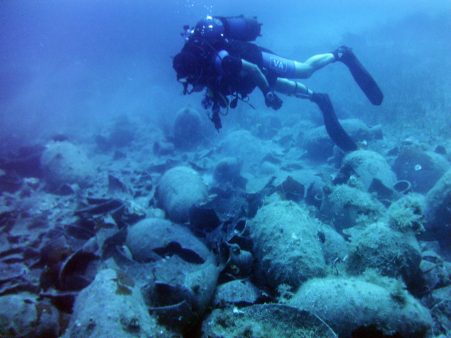

Σύμφωνα με δημοσιεύματα στον ηλεκτρονικό τύπο καταδυόμενοι αρχαιολόγοι και ειδικοί επιστήμονες της Ενιάλειας Εφορίας Αρχαιοτήτων εντόπισαν στην θαλάσσια περιοχή της συνοικίας Σκαρδανά τοίχους κτισμάτων και κατασκευή που μάλλον ανήκε σε λιμενική εγκατάσταση. Επιπλέον στην ίδια περιοχή και κατά μήκος της ακτογραμμής της νήσου Ρήνειας εντοπίστηκαν επτά ναυάγια, έξι της Ύστερης Ελληνιστικής περιόδου κι ένα της Ρωμαϊκής.
Σύμφωνα με τις εκτιμήσεις των ειδικών φαίνεται ότι στον όρμο λειτουργούσε εμπορικό λιμάνι, το οποίο εξυπηρετούσε τις εμπορικές ανάγκες του νησιού μαζί με το κύριο λιμάνι της Δήλου.
Αρχαία ναυάγια εντοπίστηκαν στη Δήλο (Αρχαιολογία online)
Seven shipwrecks located off Delos’ shores (Archaeology wiki)
Πέμπτη 30 Ιουνίου 2016
Το τρέχον τεύχος του PzB / The current issue of PzB
Protokolle zur Bibel 25:1 (2016)
- Magdalena Lass, "„Verdrehte“ Familienverhältnisse. Die Beziehung zwischen Rahel, Lea und Jakob und ihre Entwicklungen"
- Andrea Taschl-Erber, "Die Familie in Betanien (Joh 11,1‒12,19) als narrativ inszenierte Modellgemeinde"
- Agnethe Siquans, "Die Erschaffung der Tiere (Gen 1,20‒25) in der Interpretation von Origenes und Augustinus"
Γλωσσάρι των χειρογράφων / Manuscript glossary
Στην ιστοσελίδα της Βρετανικής Βιβλιοθήκης υπάρχει ένα πολύ χρήσιμο γλωσσάρι με όρους που χρησιμοποιούνται για την περιγραφή των χειρογράφων. Οι επεξηγήσεις και περιγραφές συνοδεύονται από φωτογραφικό υλικό:
Στο τρέχον τεύχος του ThQ / In the current issue of ThQ
Theologische Quartalschrift 196:2 (2016)
Michael Theobald, "Weder Magd noch Hofnarr. Vom unverzichtbaren Dienst katholischer Exegese des Neuen Testaments," 107-126
Michael Theobald, "Weder Magd noch Hofnarr. Vom unverzichtbaren Dienst katholischer Exegese des Neuen Testaments," 107-126
What relevance do New Testament Studies have for the Catholic Church today? – This question is raised by anyone who studies the New Testament in a professional, academic way and who remembers the depressing biographies of exegetes in pre-Vatican II times. Church authorities used to try to downgrade exegesis to the level of a handmaid who had to provide the philological knowledge for a theological interpretation of the texts for which it was no longer responsible. Today many exegetes find themselves in the position of court jesters who enjoy their freedom of speech, but who have to fall silent as soon as the situation becomes tense or decisive. The lecture probes the indispensable service ecumenically inspired exegesis of the New Testament renders to the Church. With reference to the most important subject of exegesis, the Jesus research, it shows how the historical-critical analysis of the texts, in particular, has theological relevance.
Hans Reinhard Seeliger, "Lehre und Lebensform. Über die „Hellenisierung“ und „Enkratisierung“ des antiken Christentums," 127-138
Eckart David Schmidt, "„Lazarus, oder die Feyer der Auferstehung“ · Die Erzählung von der Auferstehung des Lazarus im Johannesevangelium und ihre Interpretationen durch den Dramatiker August Hermann Niemeyer und den Komponisten Franz Schubert,"
Στο τρέχον τεύχος του GRBS / In the current issue of GRBS
Greek Roman and Byzantine Studies 56:2 (2016)
Vladimir F. Stolba, "Two Hellenistic Defixiones from West Crimea," 263-292
Vladimir F. Stolba, "Two Hellenistic Defixiones from West Crimea," 263-292
Οι δύο αφηγήσεις της δημιουργίας στα Γεν 1 και 2 / The two creation accounts in Gen 1 and 2
Οι δύο αφηγήσεις της δημιουργίας στα Γεν 1 και 2 κι ο τρόπος που συγκεκριμένες ομάδες (π.χ.δημιουργιστές, φονταμενταλιστές κ.ά.) προσπαθούν να τις ερμηνεύσουν ώστε να τις προσαρμόσουν στο δικό τους γενικότερο ιδεολογικό πλαίσιο είναι το θέμα της μελέτης του Steven DiMattei που έχει αναρτηθεί στην ιστοσελίδα The Bible and Interpretation.
Τετάρτη 29 Ιουνίου 2016
Στο τρέχον τεύχος του SemBib / In the current issue of SemBib
Sémiotique et Bible 162 (2016)
- Jean-Yves Thériault, "A l’écoute du sermon sur la montagne (MT 5-7) - Croître en filiation (MT 6,1-18)" (abstract)
- Gérard Degrond, "Ezékias recourt à Yhwh : La mort de sennachérib (IS 37)" (abstract)
- Jean-Claude Giroud, "Genèse 2 à 5 – De la génération ou la question de l’engendrement (2)" (abstract)
Στο τρέχον τεύχος του RHPR / In the current issue of RHPR
Revue d'Histoire et de Philosophie Religieuses 96:2 (2016)
Christian Grappe, "Le début du quatrième évangile (Jean 2 à 5), témoin d’un dialogue avec d’autres traditions religieuses?," 113-125
It is striking to note that in John 2-5 we see Jesus performing signs which are unusual in Jewish tradition and encountering non-Jews and syncretising Jews. The postulate defended here is that the author of the Fourth Gospel suggests in this way that Jesus – having encountered them on their home ground – surpasses those in whom Samaritans or pagans placed their trust : Dionysus and his cult (John 2 :1-11), Jacob and the temple of Gerizim (John 4), and the gods or at least cults of healing (John 5 :1-9).
Εγγραφή σε:
Αναρτήσεις (Atom)