Henoch 36:2 (2014)
CONTENTS / SOMMARIO
Editorial / Editoriale (Maria Luisa Russo)................................................... 163
THEME SECTION / SEZIONE MONOGRAFICA
Archives of the Orient. Selected Papers from the International Conference on
Paul Ernst Kahle (Turin, April 10-11, 2014)
Bruno Chiesa, Paul Kahle and the Hebrew Bible.......................................... 167
Geoffrey Khan, Paul Kahle and the Cairo Genizah Manuscripts................ 177
Corrado Martone, Forgotten Legacy. A Reassessment of Paul Kahle’s
views on the Dead Sea Scrolls.......................................................................... 188
Andrea Ravasco, Paul Kahle as a Septuagint Scholar................................. 198
Alessandro Mengozzi, “Das zur Zeit Jesu in Palästina gesprochene
Aramäisch” by Paul Kahle. Research on Aramaic, Then and Today............... 208
Elvira Martín-Contreras, Building Research Projects. The Correspondence
between Paul E. Kahle and Federico Pérez Castro kept at the Consejo
Superior de Investigaciones Científicas (csic)................................................. 222
Bruno Chiesa, Paul Kahle and Some of His Jewish Pupils........................... 231
Thomas Beck er - Wilhelm Bleek, Paul Kahle and the University of Bonn. 238
Hyder Abbas, Scholar and Collector. Paul Kahle and Chester Beatty in the
Chester Beatty Library Archives...................................................................... 248
Fabrizio A. Pennacchietti, La missione a Düsseldorf nella primavera del
1966 per espletare le pratiche relative all’acquisto della Biblioteca Kahle.... 270
Maria Luisa Russo, The Rearrangement and Preservation of the Documentary
Heritage of Paul Ernst Kahle..................................................................... 273
Articles / Articoli
Helen R. Jacobus, Noah’s Flood Calendar (Gen 7:10-8:19) in the Septuagint.... 283
Paolo Sacchi, Il Patto di Gesù (Mc 14,22-24), Reimarus e l’origine del
cristianesimo.................................................................................................... 297
Giuseppe Veltri - Gianfranco Miletto, “... per esser buon Catolico Cristian,
è necessario esser perfettamente Ebreo”. Difesa inedita del senatore
veneziano Loredan in favore degli ebrei nel 1659/60, basata sul “Discorso”
di Simone Luzzatto........................................................................................... 307
NEWS / NOTIZIARIO.................................................................................... 328
Séminaire Qumrân de Paris 2013-2014 “Questions actuelles sur les manuscrits de
Qumrân et les littératures connexes” [Christophe Batsch], p. 328
Τετάρτη 4 Φεβρουαρίου 2015


Το τρέχον τεύχος του BTB / The current issue of BTB
Biblical Theology Bulletin 45:1 (2015)
- Pekka Pitkänen, "Reading Genesis–Joshua as a Unified Document from an Early Date: A Settler Colonial Perspective," 3-31 (abstract)
- David J. Zucker and Moshe Reiss, "Subverting Sexuality: Manly Women; Womanly Men in Judges 4–5," 32-37 (abstract)
- Philip F. Esler, "Intergroup Conflict and Matthew 23: Towards Responsible Historical Interpretation of a Challenging Text," 38-59 (abstract)
Τρίτη 3 Φεβρουαρίου 2015
Το τρέχον τεύχος του VT / The current issue of VT
Vetus Testamentum 65:1 (2015)
- Mark A. Awabdy, "Teaching Children in the Instruction of Amenemope and Deuteronomy," 1-8 (abstract)
- Noga Ayali-Darshan, "The Seventy Bulls Sacrificed at Sukkot (Num 29:12-34) in Light of a Ritual Text from Emar (Emar 6, 373)," 9-19 (abstract)
- Raanan Eichler, "When God Abandoned the Garden of Eden: A Forgotten Reading of Genesis 3:24," 20-32 (abstract)
- Daniel A. Frese, "A Land of Gates: Covenant Communities in the Book of Deuteronomy," 33-52 (abstract)
- Rainer Kessler, "Debt and the Decalogue: The Tenth Commandment," 53-61 (abstract)
- Mark Leuchter, "The Exegesis of Jeremiah in and beyond Ezra 9-10," 62-80 (abstract)
- Elvira Martín-Contreras, "The Marginal Nun in the Masora of the Cairo Codex of the Prophets: Use and Function," 81-90 (abstract)
- Matthew Michael, "Secret Talk and Eavesdropping Scenes: Its Literary Effects and Significance in Biblical Narrative," 91-113 (abstract)
- Adam E. Miglio, "Imagery and Analogy in Psalm 58:4-9," 114-135 (abstract)
- Adina Moshavi, "Between Dialectic and Rhetoric:Rhetorical Questions Expressing Premises in Biblical Prose Argumentation," 136-151 (abstract)
- Aren Wilson-Wright, "From Persepolis to Jerusalem: A Reevaluation of Old Persian-Hebrew Contact in the Achaemenid Period," 152-167 (abstract)
Τα θαύματα στη συνοπτική παράδοση (V): Αναστάσεις
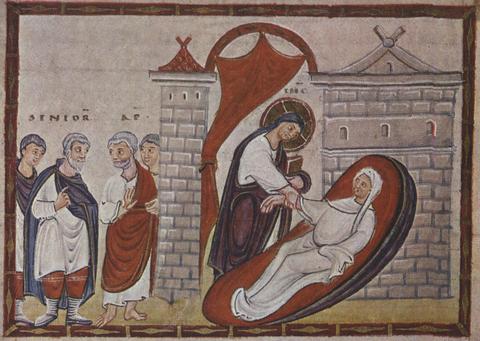
Οι αναστάσεις συνδέονται με τα θαύματα θεραπείας, καθώς α) συνήθως έχει προηγηθεί η ασθένεια του προσώπου που ο Ιησούς ανασταίνει (βλ. για παράδειγμα την περίπτωση της κόρης του Ιαείρου στη συνοπτική παράδοση και εκείνη του Λαζάρου στο κατά Ιωάννην ευαγγέλιο) και β) ο θάνατος θεωρείται η έσχατη και μη αναστρέψιμη μορφή ασθένειας.
Στα ευαγγέλια διασώζονται τρεις αφηγήσεις θαυμάτων ανάστασης που επιτέλεσε ο Ιησούς (δύο στα συνοπτικά και μία στο κατά Ιωάννην):
(1) η ανάσταση της κόρης του Ιαείρου (Μκ 5,22-24.35-43 / Μτ 9,18-26 /Λκ 8,40-56)
(2) η ανάσταση του γιου της χήρας της Ναΐν (Λκ 7,11-17) και
(3) η ανάσταση του Λαζάρου (Ιω 11,1-44)
Σε αυτά θα πρέπει να προστεθούν δύο ακόμη αφηγήσεις θαυμάτων ανάστασης που απαντούν στις Πράξεις των Αποστόλων:
(1) η ανάσταση της Ταβιθά / Δορκάδος από τον Πέτρο (9, 36-41)
(2) η ανάσταση του Ευτύχου στην Τρωάδα από τον Παύλο (28, 3-6)
Φυσικά το κατεξοχήν θαύμα ανάστασης είναι η ίδια η
ανάσταση του Ιησού, η οποία αποτελεί θεμελιώδες στοιχείο της πίστης της αρχαίας
Εκκλησίας και του πρωτοχριστιανικού κηρύγματος.
Ιστορία της έρευνας των θαυμάτων ανάστασης
Οι ευαγγελικές αφηγήσεις των θαυμάτων ανάστασης που επιτέλεσε ο Ιησούς αντιμετωπίσθηκαν διαφορετικά στις διάφορες φάσεις της έρευνας (γι’ αυτές βλ. σσ. 4-6).
 • Η λογοκρατική προσέγγιση των θαυμάτων (19ος αι.) υποστήριξε ότι δεν πρόκειται για πραγματικές αναστάσεις, αλλά για νεκροφάνειες, φαινόμενο γνωστό στον αρχαίο κόσμο και παρέπεμπαν σε ανάλογες αφηγήσεις από τον αρχαίο κόσμο. Μια τέτοια ανάγνωση όμως φαίνεται να παραβλέπει το βαθύτερο θεολογικό νόημα των θαυμάτων και τη θέση τους μέσα στο θεολογικό πρόγραμμα των ευαγγελίων.
• Οι εκφραστές της μυθολογικής ερμηνείας θεώρησαν όλες τις αφηγήσεις αναστάσεων ως μη ιστορικά κατασκευάσματα της χριστιανικής κοινότητας, τα οποία διαμορφώθηκαν μετά την Ανάσταση και με βάση ανάλογες αφηγήσεις της Π.Δ. και του ελληνορωμαϊκού κόσμου. Η βασική ένσταση σε αυτή την θέση είναι α) το γεγονός ότι το θεολογικό κέντρο βάρους στα θαύματα της Κ.Δ. είναι αλλού, από ό,τι στα άλλα παραδείγματα και β) η αναφορά ονομάτων συγκεκριμένων προσώπων (π.χ. Ιάειρος) ή τοπωνυμίων (π.χ. Ναΐν) οδηγεί στο συμπέρασμα ότι πρόκειται για αρχαίες παραδόσεις που ανάγονται σε πραγματικά γεγονότα.
• Η Θρησκειολογική Σχολή αναζήτησε ανάλογα παραδείγματα στο εθνικό περιβάλλον της Καινής Διαθήκης. Δύο είναι οι σημαντικότερες αφηγήσεις από μη χριστιανικά κείμενα, οι οποίες αναφέρονται ως παράλληλες: η ανάσταση νεκρού από τον Ασκληπιάδη της Προύσας (Απουλήιος, 19,92-96) και η ανάσταση που επιτελεί ο Απολλώνιος ο Τυαννεύς (Φιλοστράτου, Απολλώνιος 4,45). Όσον αφορά στο πρώτο περιστατικό, οι διαφορές με τις ευαγγελικές εμφανίσεις είναι σημαντικές ώστε μία εξάρτησή τους από αυτήν ή από παρόμοιες αφηγήσεις να μην μπορεί να υποστηριχθεί ούτε το περιστατικό να μπορεί να θεωρηθεί θαύμα ανάστασης με τη σημασία που έχει στα ευαγγέλια (ο νεκρός στην περίπτωση του Ασκληπιάδη έχει ακόμη ίχνη ζωής μέσα του, επανέρχεται στη ζωή με τη βοήθεια φαρμάκων, το ενδιαφέρον του Ασκληπιάδη φαίνεται να είναι καθαρά επιστημονικό, η ανάσταση του νεκρού δυσαρεστεί τους συγγενείς, η αφήγηση αφήνει να εννοηθεί ότι πρόκειται για νεκροφάνεια). Η αφήγηση του Φιλοστράτου όμως είναι πολύ μεταγενέστερη των ευαγγελικών, οπότε είναι πιθανό να είναι η εθνική απάντηση στις χριστιανικές αφηγήσεις για αναστάσεις που επιτέλεσε ο Ιησούς.
• Οι εκπρόσωποι της ψυχολογικής ερμηνείας σύνδεσαν τις αναστάσεις με τη νεκροφάνεια ή με διάφορα ψυχολογικά φαινόμενα. Πρόκειται για ερμηνεία που σήμερα έχει εγκαταλειφθεί.
Θεολογικό περιεχόμενο των θαυμάτων ανάστασης στη συνοπτική παράδοση
Οι διηγήσεις αναστάσεων επιτελούν ένα διπλό θεολογικό σκοπό μέσα στην ευαγγελική αφήγηση: α) τονίζουν την εξουσία του Ιησού επί του θανάτου, ως ένα ακόμη σημείο της Βασιλείας την οποία αυτός εγκαινιάζει με την έλευσή του και β) προτυπώνουν την δική του Ανάσταση.
Μέσα από διακειμενικές αναφορές σε ανάλογα θαύματα της Παλαιάς Διαθήκης ο Ιησούς παραλληλίζεται με τον Ηλία και τον Ελισσαίο, για τους οποίους αναφέρεται ότι επιτέλεσαν αναστάσεις (1 Βασ 17,17-23 και 2 Βασ 4,8-37). Όμως ο Ιησούς δεν συγκρίνεται ή ταυτίζεται απλά με αυτούς, αλλά αποδεικνύεται κατά πολύ ανώτερός τους καθώς επιτελεί τα θαύματά του με εξουσία και χωρίς να επικαλεστεί τη δύναμη κάποιας ανώτερης από αυτόν θεότητας.
Αυτός ο παραλληλισμός του Ιησούς με τους μεγάλους προφήτες της Παλαιάς Διαθήκης (ιδιαίτερα στην περίπτωση του θαύματος της ανάστασης του γιου της χήρας της Ναΐν) τον αναδεικνύει ως ένα ισχυρό προφήτη, αλλά παραπέμπει ταυτόχρονα στη νέα εποχή (μεσσιανική) που αυτός εγκαινιάζει. Θα πρέπει εδώ να σημειωθεί ότι οι Ιουδαίοι της εποχής του Ιησού ανέμεναν την έλευση του Ηλία, ο οποίος θα εγκαινιάσει τη μεσσιανική εποχή. Μέσα από τους συνειρμούς που δημιουργούνται στους αναγνώστες των ευαγγελικών αφηγήσεων με τη βοήθεια διακειμενικών αναφορών ο Ιησούς ταυτίζεται με το Μεσσία και η Βασιλεία του Θεού, που εξαγγέλλει, είναι στην πραγματικότητα ο νέος κόσμος των μεσσιανικών προσδοκιών. Ταυτόχρονα τα θαύματα ανάστασης υποδηλώνουν τη θεϊκή ιδιότητα του Ιησού, κάτι το οποίο αποκαλύπτεται στο τέλος του κάθε ευαγγελίου με την αφήγηση της δική του ανάστασης.
Τέλος, σε ένα προσωπικό και υπαρξιακό επίπεδο όλες αυτές οι αναστάσεις αποτελούν παραδείγματα, πρόγευση και προ-οδοποίηση (Θεοφάνης Κεραμεύς) της ανάστασης των νεκρών στα έσχατα, στοιχείο επίσης βασικό της πρωτοχριστιανικής πίστης (βλ. Α΄ Θεσ 4, 13-18).
To τρέχον τεύχος του JSPs / The current issue of JSPs
Journal for the Study of Pseudepigrapha 24:2 (2014)
- Thomas P. Dixon, "Knowledge and Deeds in the Two Spirits Treatise," 71-95 (abstract)
- Tyson L. Putthoff, "Aseneth's Gastronomical Vision: Mystical Theophagy and the New Creation in Joseph and Aseneth," 96-117 (abstract)
- Lawrence M. Wills, "Wisdom and Word among the Hellenistic Saviors: The Function of Literacy," 118-148 (abstract)
Ένα νέο βιβλίο για το κατά Μάρκον / An new book on Mark
 Από τις εκδόσεις Fortress Press κυκλοφόρησε ένα ενδιαφέρον βιβλίο σχετικά με την πρόσληψη του κατά Μάρκον ευαγγελίου κατά τον 2ο αι. μ.Χ.:
Michael J. Kok, The Gospel on the Margins: The Reception of Mark in the Second Century, Fortress Press 2015
ISBN-13: 978-1451490220
400 σελίδες
36,48$ (pb)
Περιγραφή / Description
Scholars of the Gospel of Mark usually discuss the merits of patristic references to the Gospel’s origin and Mark’s identity as the “interpreter” of Peter. But while the question of the Gospel’s historical origins draws attention, no one has asked why, despite virtually unanimous patristic association of the Gospel with Peter, one of the most prestigious apostolic founding figures in Christian memory, Mark’s Gospel was mostly neglected by those same writers. Not only is the text of Mark the least represented of the canonical Gospels in patristic citations, commentaries, and manuscripts, but the explicit comments about the Evangelist reveal ambivalence about Mark’s literary or theological value.
Michael J. Kok surveys the second-century reception of Mark, from Papias of Hierapolis to Clement of Alexandria, and finds that the patristic writers were hesitant to embrace Mark because they perceived it to be too easily adapted to rival Christian factions. Kok describes the story of Mark’s Petrine origins as a second-century move to assert ownership of the Gospel on the part of the emerging Orthodox Church.
Δευτέρα 2 Φεβρουαρίου 2015
Βιβλιοκρισία του Forbidden Oracles / Book Review of Forbidden Oracles
Διαβάστε στη σελίδα Biblical and Early Christian Studies τη βιβλιοκρισία της Sarah Parkhouse για το νέο βιβλίο του AnneMarie Luijendijk, Forbidden Oracles? The Gospel of the Lots of Mary, Mohr Siebeck, Tübingen 2014:
CFP: Graeco-Roman Society and the New Testament (EABS, Cordoba, July 12-15 2015)
Research Group Description
The research group focuses a) on various aspects of the social life of the Graeco-Roman world (e.g. household networks and religion, kinship, friendship and other relationships, slavery, prostitution, social and geographical mobility, social groups, everyday life in Graeco-Roman cities etc.) that are part of the socio-historical context of the New Testament texts and therefore provide insight into them, and b) on artifacts from the Graeco-Roman world (e.g. inscriptions, papyri and archeological findings) that can shed light on various aspects of the New Testament texts and events.
Papers that present interdisciplinary approaches to the topics under discussion and offer new insights and fresh interpretations of New Testament texts placing them within their socio-historical context are welcome.
Call for Papers — 2015 Cordoba
Two sessions are scheduled for the meeting in Cordoba:
a) an open session where papers on any topic within the range of the interests of the research group are welcome.
b) a session focused on ‘Christians, connectivity and networks in the ancient Mediterranean':
The research group focuses a) on various aspects of the social life of the Graeco-Roman world (e.g. household networks and religion, kinship, friendship and other relationships, slavery, prostitution, social and geographical mobility, social groups, everyday life in Graeco-Roman cities etc.) that are part of the socio-historical context of the New Testament texts and therefore provide insight into them, and b) on artifacts from the Graeco-Roman world (e.g. inscriptions, papyri and archeological findings) that can shed light on various aspects of the New Testament texts and events.
Papers that present interdisciplinary approaches to the topics under discussion and offer new insights and fresh interpretations of New Testament texts placing them within their socio-historical context are welcome.
Call for Papers — 2015 Cordoba
Two sessions are scheduled for the meeting in Cordoba:
a) an open session where papers on any topic within the range of the interests of the research group are welcome.
b) a session focused on ‘Christians, connectivity and networks in the ancient Mediterranean':
In recent years ‘connectivity’, mobility and the fluidity of the movement of people, goods, and ideas have emerged as influential paradigms in studies of the ancient Mediterranean. At the same time, critical reassessments of the Mediterranean as an interconnected region emphasise regional diversity and restricted access to mobility and exchange. The current interest in connections has come with a new upsurge of network analysis, utilised as a heuristic perspective or as a methodological tool, to map nodes, flows and ties and to analyse political, economic and religious interaction. For the study of Christian origins much remains to be explored, beyond the commonplace notion that the relatively peaceful conditions and road network of the early Roman Empire facilitated the
spread of the Christian message.
The purpose of this session is to explore 1) the implications of Mediterranean connectivity, and its boundaries, for Christian origins, 2) how Christian networking mapped onto contemporary practices, and 3) the possibilities and limitations of network analysis for Christian origins, the New Testament writings and the context in which they were produced. Issues which papers might address include, but are not limited to: the possibilities and limits of mobility and travel; the social roles of envoys and letter carriers; diplomatic practices and correspondence; connections between private associations, on local or trans-local levels; social networks and conversion; the spread of religious knowledge, ideas and practices.
Chairs:
Ekaterini Tsalampouni, Aristotle University of Thessaloniki, GR (etsala@past.auth.gr)
Birgit van der Lans, University of Groningen, NL (b.e.a.l.van.der.lans@rug.nl)
Paper proposal submissions on the website of EABS (http://www.eabs.net/site/)
G. Stroumsa: Sacrifice and Martyrdom in the Roman Empire
Για να διαβάσετε ένα παλαιότερο κείμενο του Guy Stroumsa σχετικά με το μαρτύριο και τη έννοια της θυσίας στο Archivio di filosofia / Archives of Philosophy, Vol.76:1-2 (2008) πατήστε στον παρακάτω τίτλο:
Ένα νέο άρθρο στο τρέχον τεύχος του JGRChrJ / A new article in the current issue of JGRChrJ
Journal of Greco-Roman Christianity and Judaism 10 (2014)
Cynthia Long Westfall, "The Meaning of αὐθεντέω in 1 Timothy 2.12," 138-73
Cynthia Long Westfall, "The Meaning of αὐθεντέω in 1 Timothy 2.12," 138-73
Εγγραφή σε:
Αναρτήσεις (Atom)