Ο Lester Grabbe συγκεντρώνει και παρουσιάζει τις λιγοστές μη χριστιανικές μαρτυρίες για τον Ιησού στην πρόσφατή του ανάρτηση στο ιστολόγιο ANE Today:
Τετάρτη 8 Μαΐου 2019


Τρίτη 7 Μαΐου 2019
Το τρέχον τεύχος του EC / The current issue of EC
Early Christianity 10:1 (2019)
- Clare K. Rothschild, "Editorial: Christian Oxyrhynchus," 1-2
- Thomas A. Wayment, "Oxyrhynchus as a Test Case: Describing the Tensions That Led to the Creation of Textual Variation Units," 3-20 (abstract)
- Malcolm Choat, Rachel Yuen-Collingridge, "Texts without Authors: Unidentified Texts in the Christian Tradition from Roman Oxyrhynchus," 56-71 (abstract)
- Peter Arzt-Grabner, "Three Weavers of the First Century CE: Tryphon of Oxyrhynchus, Pausiris of Oxyrhynchus, and Paul of Tarsus," 72-86 (abstract)
- Brice C. Jones, "A Newly Published Fragment of the Gospel of Mark (P¹³⁷), " 89-93 (abstract)
Στο τρέχον τεύχος του ZThK / In the current issue of ZThK
Zeitschrift für Theologie und Kirche 116:1 (2019)
Benjamin Schliesser, "Vom Jordan an den Tiber: Wie die Jesusbewegung in den Städten des Römischen Reiches ankam," 1-45
Benjamin Schliesser, "Vom Jordan an den Tiber: Wie die Jesusbewegung in den Städten des Römischen Reiches ankam," 1-45
Δευτέρα 6 Μαΐου 2019
Η αρχαία Άζωτος / The ancient Ashdod
Με αφορμή τον εντοπισμό μάλλον της βυζαντινής πόλης της Αζώτου Παραλίου δημοσιεύεται στην ηλεκτρονική εφημερίδα Haaretz ένα εκτενές άρθρο σχετικά με τις αρχαιολογικές ανακαλύψεις που συνδέονται με τις διάφορες φάσεις ζωής αυτής της αρχαίας πόλης:
Στο τρέχον τεύχος του ITQ / In the current issue of ITQ
Στο τρέχον τεύχος του RHPR / In the current issue of RHPR
Revue d'Histoire et de Philosophie Religieuses 99:1 (2019)
Qu'est -ce que la verité? Hommage à André Birmerlé
Qu'est -ce que la verité? Hommage à André Birmerlé
Το τρέχον τεύχος του SJOT / The current issue of SJOT
Scandinavian Journal of the Old Testament 33:1 (2019)
- Ehud Ben Zvi, "Memories of Kings of Israel and Judah within the Mnemonic Landscape of the Literati of the Late Persian/Early Hellenistic Period: Exploratory Considerations," 1-15 (abstract)
- Jørn Varhaug, "The Decline of the Shepherd Metaphor as Royal Self-Expression," 16-23 (abstract)
- Louis C. Jonker, "Achaemenid Understanding of Law and Justice in Darius I’s Tomb Inscriptions: Are There Any Connections with Hebrew Bible Pentateuchal Conceptions?" 24-41 (abstract)
- Tamara Prosic, "Experimental Pesah or, How do you Eat a Lamb while Holding a Staff in your Hand?" 42-64 (abstract)
- Michael Nathanson, "The Name Game: Archaeologies of the Land of the Bible, Eretz Yisrael, the Holy Land and Palestine," 65-81 (abstract)
- Årstein Justnes, "Predetermined for Predestination? On the Assumed Notion of Predestination in the Dead Sea Scrolls," 82-94 (abstract)
- Frank Clancy, "The Chronicler’s Vorlage, Kalimi verses Auld," 95-110 (abstract)
- Pauli Rahkonen, "Personal Names of the Pentateuch in the Northwest Semitic Context: A Comparative Study," 111-135 (abstract)
- Nadav Na’aman, "The Jacob Story: Between Oral and Written Modes," 136-158 (abstract)
Κυριακή 5 Μαΐου 2019
Το τρέχον τεύχος του VT / The current issue of VT
Vetus Testamentum 69:2 (2019)
- Avraham Faust, "The World of P: The Material Realm of Priestly Writings," 173–218 (abstract)
- Marianne Grohmann, "Metaphors of Miscarriage in the Psalms," 219–231 (abstract)
- Andrew Messmer, "A Possible Chiastic Center for Primary History (Genesis-2 Kings)," 232–240 (abstract)
- Michael Pietsch, "König und Tempel: Die Nathanverheißung in der ‚deuteronomistischen‘ Geschichtsschreibung," 241–257 (abstract)
- Aron Pinker, "On the Odd לארצו in Job 37:13," 258–276 (abstract)
- Hermann-Josef Stipp, "Jer 25,1-14 im masoretischen und im alexandrinischen Text des Jeremiabuchs Ein Gespräch mit Shimon Gesundheit," 277–306 (abstract)
- Jonathan Yogev, "The Seven Eyes of God," 307–319 (abstract)
- Reinhart Ceulemans, "Hexaplaric Excavations: (Genesis, the Psalms, Micah, Isaiah, Jeremiah and Ezekiel), 321–327 (abstract)
Στο τρέχον τεύχος του PRS / In the current issue of PRS
Perspectives in Religious Studies 49:1 (2019)
Nicholas R. Werse, "The Literary Function of ψευδοπροφήτης in Jeremiah LXX," 3–17
Nicholas R. Werse, "The Literary Function of ψευδοπροφήτης in Jeremiah LXX," 3–17
The Jeremiah LXX selectively employs the term ψευδοπροφήτης in nine instances within the four conflict pericopes of Jer 33-36 (MT 26-29) and one oracle (6:13-15). Scholars struggle to explain the reason for this selective use in light of the vast number of instances in which the LXX presents a false prophet with the common term προφήτης. This article argues that by selectively employing ψευδοπροφήτης in these passages, the translator links the false prophets of the conflict pericopes (Jer 33-36 [MT 26-29]) with the condemnation of false prophets in Jer 6:13-15 for trivially responding to the destruction of the Lord’s people. This concern with the false prophets’ response unifies these five pericopes and distinguishes them from the broader condemnation of false prophets in Jeremiah LXX. This selective use of ψευδοπροφήτης fits within the broader theological concern of Jeremiah LXX over the destruction of Jerusalem.
Tony W. Cartledge, "The Use, Misuse, and Abuse of Archaeology in the Media," 19–28
Media providers make use of archaeological finds for commercial, political, or religious purposes. Commercial users report or interpret finds in order to promote tourism at biblical/historical sites or to attract readers. These sometimes over-hype or misunderstand new finds but generally remain true to the archaeologists’ reports or interviews. Academic and some religious media tend to report stories responsibly. Unfortunately, many popular religion-based sites exaggerate and misuse archaeological finds, drawing unwarranted conclusions to promote Israeli nationalism and Zionist expansion into the West Bank, or to claim “proof” of biblical stories in support of fundamentalist Christian interpretations of scripture. This article reviews specific examples of such use in recent years and bemoans the rise of “fake news” in the reporting of archaeology.
Διεθνές Συνέδριο: Παύλος και ρητορική τέχνη / International conference: Paul and rhetoric
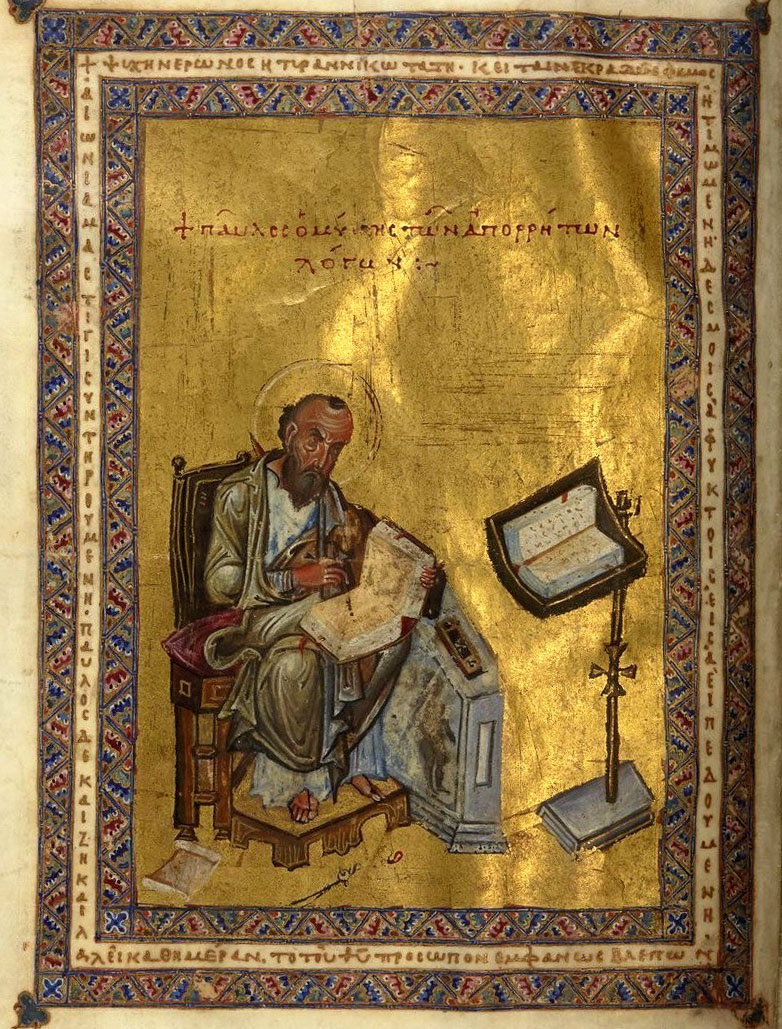 Στις 16 και 17 Μαΐου 2019 ένα ενδιαφέρον συνέδριο για τη χρήση της ρητορικής τέχνης από τον Παύλο στις επιστολές του θα λάβει χώρα στο Στρασβούργο:
Πρόγραμμα / Programme
Jeudi 16 mai
- 14h Accueil par James Hirstein, directeur du CARRA Accueil par Laurent Pernot, membre de l’Institut, directeur de l’Institut de Grec
- 14h20 Introduction aux travaux par Jonathan Thiessen
- 14h45 Stanley Porter, McMaster Divinity College, Hamilton, Ontario: “Paul among the Rhetoricians and Epistolographers”
- 15h30 Marc Philonenko, Membre de l’Institut, Université de Strasbourg: « L’illumination du cœur : une métaphore paulinienne »
- 16h15 Pause
- 16h45 Roy Jeal, Booth University College, Winnipeg, Manitoba: “From Method to Analytic: Pauline Rhetoric Calling for Wisdom”
- 17h30 Jonathan Thiessen Université de Strasbourg, “How to study the rhetoric of one ‘ignorant in speech’ (ἰδιώτης τῷ λόγῳ)”
Vendredi 17 mai
- 9h Christos Kremmydas, Royal Holloway, London/Humboldt Universität, Berlin “Emotions and argumentation in Paul’s Pastoral Epistles and in the Epistle to the Philippians”
- 9h45 Ian Henderson, McGill University, Montreal, Québec, “The Rhetoric of the Thessalonian Letters Revisited: a Case-Study in contrastive (Classical) Rhetoric 30 years after F.W. Hughes”
- 10h30 Pause
- 11h00 Jaqueline Assaël, Université de Nice-Sophia-Antipolis, « La rhétorique spirituelle et l’éloquence singulière et univoque de Paul dans 2 Corinthiens 1, 13-19 »
- 11h45 Jean-Noël Aletti, Pontifical Biblical Institute, Rome, “Milestones on the Road to Understanding Paul’s Rhetoric”
- 12h30 Conclusions des travaux par Jonathan Thiessen
Εγγραφή σε:
Σχόλια (Atom)