Κυριακή 5 Μαΐου 2019

Διεθνές Συνέδριο: Παύλος και ρητορική τέχνη / International conference: Paul and rhetoric

Στις 16 και 17 Μαΐου 2019 ένα ενδιαφέρον συνέδριο για τη χρήση της ρητορικής τέχνης από τον Παύλο στις επιστολές του θα λάβει χώρα στο Στρασβούργο:


Πρόγραμμα / Programme

Jeudi 16 mai
  • 14h Accueil par James Hirstein, directeur du CARRA Accueil par Laurent Pernot, membre de l’Institut, directeur de l’Institut de Grec
  • 14h20 Introduction aux travaux par Jonathan Thiessen
  • 14h45 Stanley Porter, McMaster Divinity College, Hamilton, Ontario: “Paul among the Rhetoricians and Epistolographers”
  • 15h30 Marc Philonenko, Membre de l’Institut, Université de Strasbourg: « L’illumination du cœur : une métaphore paulinienne »
  • 16h15 Pause
  • 16h45 Roy Jeal, Booth University College, Winnipeg, Manitoba: “From Method to Analytic: Pauline Rhetoric Calling for Wisdom”
  • 17h30 Jonathan Thiessen Université de Strasbourg, “How to study the rhetoric of one ‘ignorant in speech’ (ἰδιώτης τῷ λόγῳ)”


Vendredi 17 mai
  • 9h Christos Kremmydas, Royal Holloway, London/Humboldt Universität, Berlin “Emotions and argumentation in Paul’s Pastoral Epistles and in the Epistle to the Philippians”
  • 9h45 Ian Henderson, McGill University, Montreal, Québec, “The Rhetoric of the Thessalonian Letters Revisited: a Case-Study in contrastive (Classical) Rhetoric 30 years after F.W. Hughes”
  • 10h30 Pause
  • 11h00 Jaqueline Assaël, Université de Nice-Sophia-Antipolis, « La rhétorique spirituelle et l’éloquence singulière et univoque de Paul dans 2 Corinthiens 1, 13-19 »
  • 11h45 Jean-Noël Aletti, Pontifical Biblical Institute, Rome, “Milestones on the Road to Understanding Paul’s Rhetoric”
  • 12h30 Conclusions des travaux par Jonathan Thiessen

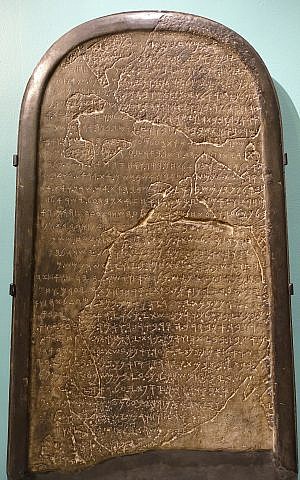
Η στήλη του Mesha και ο οίκος του Δαυίδ / The Mesha stele and the House of David

Η στήλη του Mesha
(Φωτο: wikipedia commons)
Η στήλη του Mesha και η πιθανή αναφορά της στον οίκο του Δαυίδ αποτελεί το θέμα ενός νέου ακαδημαϊκού άρθρου και μίας σειράς δημοσιευμάτων στο διαδίκτυο. Η στήλη αυτή βρέθηκε στα 1868, χρονολογείται στον 9ο αι. και συνδέεται με το βασίλειο του Μωάβ. Δυστυχώς έχει υποστεί σημαντική φθορά με αποτέλεσμα η αποκατάσταση του κειμένου σε κάποια σημεία να προκαλεί διαφωνίες στην επιστημονική κοινότητα. Αυτό ισχύει και για τον στ. 31, όπου ο ερευνητής André Lemaire αναγνώρισε τη φράση beit David και συνέδεσε την στήλη με τον οίκο Δαυίδ. Αυτή η ανάγνωση σήμερα αμφισβητείται από ένα άρθρο στο περιοδικό Tel-Aviv που συνοψίζει την έρευνα με τη βοήθεια ηλεκτρονικών υπολογιστών, η οποία δημοσιεύθηκε πριν λίγες  (αναφορά έγινε ήδη σε χτεσινή ανάρτηση στο ιστολόγιο). Σύμφωνα με τις πληροφορίες της ηλεκτρονικής Times of Israel θα υπάρξει συνέχεια στη συζήτηση με ένα άρθρο στο νέο τεύχος του περιοδικού Semitica. Από ό,τι φαίνεται η στήλη του Mesha θα συνεχίσει να απασχολεί την επιστημονική κοινότητα για πολύ καιρό:


Κι εδώ μπορείτε να βρείτε το πλήρες άρθρο του περιοδικού Tel-Aviv: 

Σάββατο 4 Μαΐου 2019

Η ιστορία του Μωυσή στη συναγωγή της Dura-Europos / The story of Moses in the synagogue of Dura-Europos

Στην ιστοσελίδα The Torah διαβάστε ένα σύντομο άρθρο για τη συναγωγή της Dura-Europos και τις τοιχογραφίες εκεί σχετικά με τη ζωή του Μωυσή:

Ζώα ως κατοικίδια κι ως σύμβολα / Animals as pets and symbols

Κορίτσι με περιστέρι, 5ος αι. π.Χ.
(Φωτο: A Classics and AncientHistory Blog)

Στην ηλεκτρονική εφημερίδα ekathimerini αναδημοσιεύεται ένα σύντομο άρθρο για τα ζώα, τη σημασία τους στην καθημερινή ζωή των αρχαίων και το συμβολισμό τους:

Στο τρέχον τεύχος του FeRA / In the current issue of FeRA

Frankfurter elektronische Rundschau zur Altertumskunde 38 (2019)

Kresimir Matijevic, "Asinius Pollio und Augustus: Geschichtsschreibung im frühen Principat," 30-43

Το τρέχον τεύχος του JSNT / The current issue of JSNT

Journal for the Study of the New Testament 41:4 (2019)

  • Kai-Hsuan Chang, "Questioning the Feasibility of the Major Synoptic Hypotheses: Scribal Memory as the Key to the Oral–Written Interface," 407-432 (abstract)
  • A.D. Macdonald, "Resurrection in Mark 12: Refining the Covenant Hypothesis," 433–457 (abstract)
  • Olivia Rahmsdorf, "‘You shall not wash my feet εἰς τὸν αἰῶνα’ (John 13.8): Time and Ethics in Peter’s Interactions with Jesus in the Johannine Narrative," 458-477 (abstract)
  • Jason N. Yuh, "Analysing Paul’s Reference to Baptism in Galatians 3.27 through Studies of Memory, Embodiment and Ritual," 478-500 (abstract)
  • J. David Woodington, "Crafting the Eschaton: The Second Death and the Lake of Fire in Revelation," 501-518 (abstract)
  • Simon Butticaz, "Theologies of the New Testament in Twentieth-Century Francophone Scholarship: An Assessment of an (Absent) Tradition," 519–536 (abstract)


Το τρέχον τεύχος του HeBAI / The current issue of HeBAI

Hebrew Bible and Ancient Israel 7:4 (2018)

Ritual and Innovation in Biblical and Ancient Jewish Discourse

  • Scott Scullion, "Preface," 405-411
  • Nathan MacDonald, Hindy Najman, Jonathan Stökl, Elizabeth Stell, Rebekah Van Sant-Clark, "Ritual and Innovation in Biblical and Ancient Jewish Discourse," 412-414 
  • Nathan MacDonald, "Scribalism and Ritual Innovation," 415-429 (abstract)
  • Shlomo Zuckier, "»Acceptable« to »Will«: The Rabbinic Transformation of Ratzon in Sacrifice and Prayer," 430-448 (abstract)
  • Judith H. Newman, "Ritualizing the Text in Early Judaism: Two Examples of Innovation," 449-465 (abstract)
  • Naphtali S. Meshel, "Hermeneutics and the Logic of Ritual," 466-482 (abstract)
  • Jonathan Stökl, "Innovating Ordination," 483-499 (abstract)
  • Jacqueline Vayntrub, "Like Father, Like Son: Theorizing Transmission in Biblical Literature," 500-526 (abstract)


Παρασκευή 3 Μαΐου 2019

Το τρέχον τεύχος του NTS / The current issue of NTS

New Testament Studies 65:3 (2019)

  • Harold W. Attridge, "Ambiguous Signs, an Anonymous Character, Unanswerable Riddles: The Role of the Unknown in Johannine Epistemology," 267-288 (abstract)
  • L. L. Welborn, "How ‘Democratic’ Was the Pauline Ekklēsia? An Assessment with Special Reference to the Christ Groups of Roman Corinth," 289-309 (abstract)
  • Eve-Marie Becker, "Das introspektive Ich des Paulus nach Phil 1–3: Ein Entwurf," 310-331 (abstract)
  • John Granger Cook, "μαλακοί and ἀρσενοκοῖται: In Defence of Tertullian's Translation," 332-352 (abstract)  
  • Brittany E. Wilson, "Imaging the Divine: Idolatry and God's Body in the Book of Acts," 353-370 (abstract)
  • Tucker S. Ferda, "Flesh from Heaven: The Text of John 6.52 and its Intertext," 371-387 (abstract)
  • Candida R. Moss, "A Note on the Death of Judas in Papias," 288-297 (abstract)
  • J. Thomas Hewitt, "Ancient Messiah Discourse and Paul's Expression ἄχρις οὗ ἔλθῃ τὸ σπέρμα in Galatians 3.19," 398-411 (abstract)
  • Ken M. Penner, "Select Ancient Names for Hebrew and Aramaic: A Case for Lexical Revision," 412-423 (abstract

Ένα νέο βιβλίο για τον Φίλωνα και τους αρχαίους χριστιανούς συγγραφείς / A new book on Philo and ancient Christian authors

Διαβάστε τη βιβλιοπαρουσίαση του βιβλίου της Jennifer Otto, Philo of Alexandria and the Construction of Jewishness in Early Christian Writings. Oxford University Press, 2018, στην ιστοσελίδα Ancient Jew Review: 

"

Στο τρέχον τεύχος του ThBeitr / In the current issue of ThBeitr

Theologische Beiträge 19:2 (2019)

Maximilian Zimmermann, "Im Anfang war das Bild? Impulse der Theologie Martin Kählers zur gegenwärtigen theologischen Diskussion um den iconic turn," 85-97 
Gottfried Boehm’s term iconic turn implies the priority of the image over the word, for the meaning of language is based on visual perception. This is inconsistent with the widespread theological emphasis on the priority of the word, often with reference to John 1:14 and Romans 10:17. However, the Protestant theologian Martin Kähler (1835–1912) placed emphasis on pictoral terms such as image, impression and portrait. Kähler did so based on his understanding of revelation as defined by Col 1:15: the invisible God revealed himself through visible or scenic events in history, or through images (e.g. Mark 15:39). Therefore, images are highly significant for the biblical understanding of God’s revelation in history and continue to be essential to Christian life and theology by being put into words (and texts) and by being communicated to others (through words) as normative images of salvation history.