Εμφάνιση αναρτήσεων με ετικέτα Ηρώδης. Εμφάνιση όλων των αναρτήσεων

Κυριακή 8 Μαρτίου 2026

Συναγωγές, αρχαιολογία και ιστορία μέσα από τα μάτια της Jodi Magness / Synagogues, Archaeology, and History Through the Eyes of Jodi Magness

Η Jodi Magness στο ανασκαφικό
πεδίο της συναγωγής
στο Huqoq της Γαλιλαίας.
Photo: Jim Haberman
Στη σειρά άρθρων Retrospectives της σελίδας Ancient Jew Review δημοσιεύθηκε πρόσφατα (4 Μαρτίου 2026) ένα αυτοβιογραφικό κείμενο της Jodi Magness, Kenan Distinguished Professor for Teaching Excellence in Early Judaism στο Πανεπιστήμιο της Βόρειας Καρολίνας (Chapel Hill), με τίτλο "Jodi Magness: Retrospective". Πρόκειται για την προσωπική αφήγηση της ακαδημαϊκής πορείας μίας αξιόλογης αρχαιολόγου-ιστορικού του αρχαίου Ιουδαϊσμού, το οποίο ταυτόχρονα λειτουργεί ως χάρτης ερευνητικής εξέλιξης.

Η προσωπική της διαδρομή στο χώρο της αρχαιολογίας/ιστορίας ξεκινά πολύ νωρίς, όταν στα 12 της χρόνια ήρθε σε επαφή με τον κόσμο της αρχαιότητας χάρη σε έναν καθηγητή της στο γυμνάσιο. Η μετέπειτα πορεία της είναι εντυπωσιακή: από τα σπήλαια της Ιουδαϊκής Ερήμου και τον Β.Α. της στο Εβραϊκό Πανεπιστήμιο, ως τις ανασκαφές στη Μασάδα, στο Χουκόκ της Γαλιλαίας και τη συστηματική μελέτη της κεραμικής της ύστερης Ρωμαϊκής και Βυζαντινής περιόδου.. Εδώ βρίσκεται ένα από τα πιο γόνιμα σημεία του κειμένου: η Magness εξηγεί πώς η μελέτη της κεραμικής—συχνά υποτιμημένη έναντι της μνημειακής αρχιτεκτονικής, των επιγραφών και των ψηφιδωτών—είναι καθοριστική για τις χρονολογήσεις που στηρίζουν κάθε ιστορική ερμηνεία.

Ιδιαίτερα ενδιαφέρουσα σε αυτήν την περιγραφή της ερευνητικής της πορείας είναι η αναφορά της στο πώς μια πρόσκληση σε συνέδριο για τα Χειρόγραφα της Νεκράς Θάλασσας το 1992 την έκανε αυθημερόν «ειδικό στην αρχαιολογία του Κουμράν», ή πώς ένας επίμονος εκδότης της Oxford University Press την οδήγησε σε μία από τις πιο φιλόδοξες μελέτες της, στη  Jerusalem Through the Ages (2024).

Το νέο ερευνητικό της εγχείρημα: Herod the Messiah

Η Magness επίσης κάνει μία εκτενή αναφορά στο νέο της βιβλίο, το οποίο θα εκδοθεί από τον εκδοτικό οίκο Oxford University Press και φέρει τον προκλητικό τίτλο Herod the Messiah. Το project ξεκίνησε από ένα άρθρο του 2019, στο οποίο υποστήριξε ότι ο Ηρώδης σχεδίασε το μαυσωλείο του στο Ηρώδειο (ανακαλύφθηκε το 2007) ως βασιλικό δυναστικό μνημείο που τον τοποθετούσε μέσα στην ελληνιστική παράδοση των ηρωοποιημένων και θεοποιημένων βασιλέων. Καθοριστικής σημασίας είναι, κατά τη Magness, η θέση του Ηρωδείου: η οπτική γειτνίαση με τη Βηθλεέμ δεν ήταν τυχαία, αλλά αντανακλούσε μεσσιανικές διεκδικήσεις δαβιδικής προέλευσης. Στο νέο βιβλίο η θεματική αυτή επεκτείνεται: περιλαμβάνει άλλες οικοδομικές δραστηριότητες του Ηρώδη, τον Ναό της Ιερουσαλήμ, καθώς και τις αντιδράσεις που εκφράζουν τα Χειρόγραφα της Νεκράς Θάλασσας, η Καινή Διαθήκη και οι πρώτοι χριστιανοί συγγραφείς στις μεσσιανικές του αξιώσεις.

Ο συνδυασμός αρχαιολογικής και φιλολογικής τεκμηρίωσης στο συγκεκριμένο project είναι ιδιαίτερα ελκυστικός για όσους ασχολούνται με τη βιβλική έρευνα: ο Ηρώδης ως μεσσιανική φιγούρα δεν είναι απλώς ιστορικό ερώτημα, αλλά ανοίγει νέες προοπτικές στην ερμηνεία κειμένων της περιόδου του Δεύτερου Ναού και της πρώιμης χριστιανικής γραμματείας.

Ας μη λησμονούμε, τέλος, τη συμμετοχή της Magness στις ανασκαφές  της συναγωγής της Huqoq: μιας συναγωγής που χρονολογείται γύρω στο 400 μ.Χ., με εντυπωσιακά μωσαϊκά βιβλικών σκηνών αλλά και αφηγήσεων που δεν είναι «καθαρά βιβλικές». Η Magness δείχνει πώς τέτοια ευρήματα ανοίγουν συζήτηση για τη συλλογική μνήμη, την ταυτότητα και την «οπτική ερμηνεία» της Γραφής μέσα σε κοινότητες της ύστερης αρχαιότητας.

Ένα μεθοδολογικό σχόλιο

Πέρα από το βιογραφικό και ερευνητικό ενδιαφέρον, το κείμενο της Magness θέτει με σαφήνεια ένα ζήτημα που αφορά άμεσα τη βιβλική έρευνα: τη σχέση αρχαιολογικής και κειμενικής μαρτυρίας. Η Magness επιμένει ότι η αρχαιολογία δεν είναι απλώς επικουρική στη μελέτη των κειμένων· δε λειτουργεί ως «εικονογράφηση» ή επιβεβαίωση της γραπτής παράδοσης, αλλά αποτελεί ανεξάρτητη πηγή ιστορικής γνώσης που χρήζει ανεξάρτητης αξιολόγησης. Αυτή η θέση έχει άμεσες συνέπειες για την ερμηνευτική: εάν η αρχαιολογία μπορεί να αμφισβητήσει, να ανατρέψει ή να εμπλουτίσει αυτό που γνωρίζουμε από τα κείμενα, τότε ο διάλογος των δύο πεδίων πρέπει να είναι ισότιμος και κριτικός.

Πρόκειται για μια υπενθύμιση που η βιβλική έρευνα χρειάζεται διαρκώς — και η εντυπωσιακή πορεία της Magness είναι ένα πειστικό επιχείρημα υπέρ της.

Το πλήρες κείμενο του retrospective είναι διαθέσιμο στο Ancient Jew Review.

-------------------------------------------

[ENG]

The Ancient Jew Review recently published (March 4, 2026) an autobiographical piece by Jodi Magness, Kenan Distinguished Professor for Teaching Excellence in Early Judaism at the University of North Carolina (Chapel Hill), entitled "Jodi Magness: Retrospective." It is a personal account of the academic journey of a remarkable archaeologist and historian of ancient Judaism, which simultaneously functions as a map of scholarly evolution.

Her personal path in archaeology and history began very early, when at the age of 12 she was introduced to the ancient world by a middle school teacher. Her subsequent career is impressive: from the caves of the Judean Desert and her B.A. at the Hebrew University, to excavations at Masada, at Huqoq in Galilee, and the systematic study of late Roman and Byzantine pottery. Here lies one of the most productive points of the piece: Magness explains how the study of pottery — often undervalued in comparison to monumental architecture, inscriptions, and mosaics — is in fact decisive for the chronologies that underpin every historical interpretation.

Particularly striking in her account is the description of how an invitation to a 1992 conference on the Dead Sea Scrolls made her virtually overnight an "expert in the archaeology of Qumran," or how a persistent editor at Oxford University Press led her to one of her most ambitious works, Jerusalem Through the Ages (2024).

Her New Research Project: Herod the Messiah

Magness also offers an extended discussion of her forthcoming book, to be published by Oxford University Press, bearing the provocative title Herod the Messiah. The project grew out of a 2019 article in which she argued that Herod designed his mausoleum at Herodium (discovered in 2007) as a royal dynastic monument situating him within the Hellenistic tradition of heroized and deified kings. Central to Magness's argument is the location of Herodium: its visual proximity to Bethlehem was no accident, but reflected messianic claims rooted in Davidic tradition. The new book expands on this theme, encompassing Herod's other building projects, the Jerusalem Temple, and the reactions to his messianic claims as expressed in the Dead Sea Scrolls, the New Testament, and early Christian writers.

The combination of archaeological and philological evidence in this project is particularly compelling for those engaged in biblical research: Herod as a messianic figure is not merely a historical question, but opens new interpretive horizons for texts of the Second Temple period and early Christian literature.

We should not overlook, finally, Magness's role in the excavations of the synagogue at Huqoq — a synagogue dating to around 400 CE, adorned with stunning mosaics depicting biblical scenes as well as narratives that are not strictly biblical. Magness shows how such discoveries open up discussion about collective memory, identity, and the "visual interpretation" of Scripture within late antique communities.

A Methodological Note

Beyond its biographical and scholarly interest, Magness's piece articulates with clarity a question that bears directly on biblical research: the relationship between archaeological and textual evidence. Magness insists that archaeology is not merely ancillary to the study of texts — it does not function as "illustration" or confirmation of the written tradition, but constitutes an independent source of historical knowledge that requires independent evaluation. This position has direct hermeneutical consequences: if archaeology can challenge, overturn, or enrich what we know from texts, then the dialogue between the two fields must be one of equals, and critically engaged.

For biblical research in particular — and especially for the study of the New Testament — this means that the archaeological record is not simply a "backdrop" for understanding texts, but an independent interlocutor capable of changing the questions we ask. This is a reminder that biblical scholarship continually needs — and the remarkable career of Jodi Magness is a compelling argument in its favor.

The full text of the retrospective is available at the Ancient Jew Review. 

Τετάρτη 28 Ιανουαρίου 2026

Novum Testamentum 68/1 (2026)

Νovum Testamentum 68/1 (2026

  • Phillip A. Davis, "The Wisdom of God Said: Luke 11:49–51 Revisited," 1–18 (abstract)
  • Daniel J. Crosby, "Caiaphas's Prophecy: Christian Cledonomancy in John 11:45–53," 19–37 (abstract)
  • 🔓 Rogier Boogaard & Arjan van den Os, "The Angel Strikes: The Sennacherib Narrative in 2 Kings 18–19 as a Background to Herod's Death in Acts 12:20–23," 38–53 [Open Access]
  • Armin D. Baum, "Unpaulinische Stilmerkmale im 2. Thessalonicherbrief? Die stilkritischen Argumente Wolfgang Trillings in statistischer Perspektive," 54–85 (abstract)
  • 🔓 Nicholas J. Moore, "Jude and the Watchers in the Early Church," 86–104 [Open Access]
  • Stephen C. Wunrow, "Defilement and Cleansing in Heaven: A Proposal for Revelation 11:1–2," 105–123 (abstract)
  • Barbara Beyer, "New Approaches in Digital Biblical Studies," 125–136 [Review Article] (abstract)


Κυριακή 24 Ιουλίου 2022

Το τρέχον τεύχος του Revue Biblique / The current issue of Revue Biblique

 Revue Biblique 129/2 (2022)

  • Daniel Pioske, "'And I will make Samaria a ruin in the open country' (Micah 1:6): On Biblical Ruins, Then and Now," 161 - 182 (abstract)
  • Stefan Krauter, "Exilliteratur und die Gattung des Zweiten Timotheusbriefs," 183 - 198 (abstract)
  • Michel Quesnel, "Identifier les parties pauliniennes de la 2ème lettre à Timothée," 199 - 212 (abstract)
  • Raphaël Angevin, "Les racloirs tabulaires gravés de Tell el-Fâr'ah (Samarie)," 213 - 246 (abstract
  • Dominique-Marie Cabaret, "Les sièges de Jérusalem de Pompée et d'Hérode le Grand," 247 - 260 (abstract)

Notes épigraphiques

  • Émile Puech, "La jarre inscrite de Tel Arad et grgr - 'olive'," 261 - 267

Τετάρτη 2 Ιουνίου 2021

Στο τρέχον τεύχος του JJS / In the current issue of JJS

 Journal of Jewish Studies 72/1 (2021)

  • Theo A.W. van der Louw, Pieter B. Hartog, "Physical and economic aspects of the earliest Septuagint papyri" 1-22 (abstract)
  • Jonathan Bourgel, "Herod’s golden eagle on the Temple gate: a reconsideration," 23-44 (abstract)
  • Ohad Abudraham, "‘Joshua Son of Nun and the Seven Angels’: a Hebrew lamella from the Wolfe  Collection," 45-58 (abstract)
  • Yehoshua Granat, "The Hebrew epithalamium in late antiquity: new evidence from the Cairo Genizah and beyond," 59-78 (abstract)
  • Yehudit Henshke, "Defective spelling in manuscripts of the Mishnah: a proposed explanation," 77-94 (abstract)

Τρίτη 15 Δεκεμβρίου 2020

Το τρέχον τεύχος του JSJ / The current issue of JSJ

 Journal for the Study of Judaism 51/4-5 (2020)

  • Jacob P.B. Mortensen, "Signs of Greek Education in the Book of Judith," 457–486 (abstract)
  • Matan Orian, "The Purpose of the Balustrade in the Herodian Temple," 487–524 (abstract)
  • Blake Wassell, "εἰ δή τις … συκοφαντοίη: Impiety and the fiscus Iudaicus in Josephus, War 1.11," 525–570 (abstract)
  • Avner Ecker and Boaz Zissu, "The Boule of Baitolethepha (Beit-Nattif): Evidence for Village and Toparchy Administration in Judea," 571–582 (abstract)

Τρίτη 21 Απριλίου 2020

Το τρέχον τεύχος του JAJ / The current issue of JAJ

Journal of Ancient Judaism 10:3 (2019)
  • Jodi Magness, "Herod the Great’s Self-Representation Through His Tomb at Herodium," 258–287 (abstract)
  • Zeev Gur, "The Bathsheba Affair as a Royal Apology of King Solomon," 288–353 (abstract)
  • Eliran Arazi, "Corpse Impurity in Second Temple Judaism: A Revised Approach in Light of the Order of Meaning of Honor and Shame," 354–394 (abstract)
  • Jonathan Klawans, "Masked: Sagacity, Sophistry and Pseudepigraphy in Aristeas," 395–415 (abstract)
  • Karin Hügel, "Jüdische gesetzliche Auslegungen zu weiblicher Homoerotik," 416–454 (abstract)

Τρίτη 31 Δεκεμβρίου 2019

Η τελευταία πριγκίπισσα των Ασμοναίων / The last Hasmonean princess

Στην ιστοσελίδα TheTorah διαβάστε την ιστορία της Μαριάμμης, συζύγου του Ηρώδη του Μεγάλου, και τελευταία πριγκίπισσας της δυναστείας των Ασμοναίων:

Τετάρτη 25 Σεπτεμβρίου 2019

Στο τρέχον τεύχος του Annales Theologici / In the current issue of Annales Theologici

Annales Theologici 33:1 (2019)

  • Fernando La Greca - Liberato De Caro, "La datazione della morte di Erode e l’inizio dell’era cristiana," 11-54 (abstract)
  • Anthony Sepulveda, "An Inquiry on the Pharisees’ Search for Proselytes (Mt 23:15)," 91-117 (abstract)
  • Michelangelo Tábet, "Annotazioni sull’ispirazione e la verità biblica. A proposito di un libro di James D.G. Dunn, Parola viva," 219-230 (abstract)


Τρίτη 24 Σεπτεμβρίου 2019

Πόσο Ιουδαίος ήταν ο Ηρώδης; / How Jewish was Herod?

Ο Ηρώδης αναμφισβήτητα αποτελεί μία αμφιλεγόμενη προσωπικότητα. Οι ιουδαϊκές κι οι χριστιανικές πηγές τον παρουσιάζουν με σκοτεινά χρώματα ως ασεβή, πονηρό και σκληρό ηγεμόνα. Ιδουμαίος στην καταγωγή, παντρεύτηκε την πριγκίπισσα Μαριάμμη και δημιούργησε ισχυρούς δεσμούς με τη δυναστεία των Ασμοναίων. Γρήγορα εξόντωσε τους πολιτικούς του αντιπάλους, δημιούργησε ένα ιερατείο πιστό σε αυτόν και συνέχισε τις καλές σχέσεις με τους Ρωμαίους ακολουθώντας το παράδειγμα του πατέρα του Αντιπάτρου. Μισητός από τους Ιουδαίους που τον είδαν ως ξένο σώμα και τύραννο, αγαπητός στον ελληνικό κόσμο για τις ευεργεσίες του, πιστός σύμμαχος των Ρωμαίων, με μεγάλο έργο ανοικοδόμησης κτιρίων και πόλεων. Η Evie Gassner συζητά το θρησκευτικό προφίλ του μεγάλου αυτού άνδρα στη σελίδα TheTorah.com: 


Πέμπτη 19 Σεπτεμβρίου 2019

Το τρέχον τεύχος του JSJ / The current issue of JSJ

Journal for the Study of Judaism 50:3 (2019)

  • James M. Scott, "Paul’s Comparison of Himself with “the Abortion” (1 Cor 15:8): A Missing Link between the Qumran Book of Giants and the Manichaean Book of Giants," 291-318 (abstract
  • Anthony I. Lipscomb, "She is My Sister”: Sarai as Lady Wisdom in the Genesis Apocryphon," 319–347 (abstract)
  • Shem Miller, "Traditional History and Cultural Memory in the Pesharim," 348–370 (abstract)
  • Bryan R. Dyer, "'Like Phalaris in Every Way': 3 Maccabees and Its Portrait of Tyranny," 371–382 (abstract)
  • Ken M. Penner, "Philo’s Eschatology, Personal and Cosmic," 383–402 (abstract)
  • Ari Finkelstein, "Taking Herod to Task: Source Critical and New Historical Methods of Reading Herod’s Trial," 403–422 (abstract)

Παρασκευή 15 Μαρτίου 2019

Ποιος ήταν ο Ηρώδης ο Μέγας / Who was Herod the Great?

Στην ιστοσελίδα LiveScience o Owen Jarus σκιαγραφεί σε ένα σύντομο κείμενο την προσωπικότητα του Ηρώδη του Μεγάλου και αφηγείται τη βιογραφία του:

Τρίτη 29 Ιανουαρίου 2019

Ένα σπάνιο νόμισμα του Ηρώδη Αγρίππα Α΄ / A rare coin of Herod Agrippa I

To νέο σπάνιο νόμισμα του
Ηρώδη Αγρίππα Α΄ 
Ένα σπάνιο νόμισμα του Ηρώδη Αγρίππα Α΄, γνωστού κι από την Καινή Διαθήκη, βρέθηκε από μαθητή στο Nachal Shiloh στη Σαμάρεια. 

Δευτέρα 3 Ιουλίου 2017

Φρούριο του Μαχαιρά: ανακάλυψη τελετουργικού λουτρού / Machaerus Fortress: the Discovery of a Herodian miqveh

Aναπαράσταση του φρουρίου του Μαχαιρά (Πηγή: Ουγγρική Αρχαιολογική
Αποστολή στο Μαχαιρά)
Η ανακάλυψη ενός τελετουργικού λουτρού miqveh που χρησιμοποιούσε η οικογένεια του Ηρώδη στο φρούριο του Μαχαιρά αποτελεί το θέμα αρκετών δημοσιευμάτων της προηγούμενης εβδομάδας. Το miqveh ήρθε στο φως κάτω από το βασιλικό παλάτι του φρουρίου κατά τις ανασκαφές που πραγματοποίησε ομάδα αρχαιολόγων με επικεφαλής τον Győző Vörös το 2016. Το ανάκτορο και το φρούριο είχαν κτισθεί στα χρόνια του Αλέξανδρου Ιανναίου γύρω στο 90 π.Χ., ανακαινίσθηκε όμως από τον Ηρώδη,  ο οποίος στο αρχικό οικοδόμημα του παλατιού πρόσθεσε μία αυλή με περιστύλιο, ρωμαϊκό λουτρό και τρικλίνιο. 
Τα σκαλιά που οδηγούν στο miqveh (Πηγή: Ουγγρική
Αρχαιολογική Αποστολή στο Μαχαιρά)
Το βασιλικό Miqveh εντοπίστηκε 3 μ. κάτω από την αυλή του παλατιού. 12 σκαλοπάτια οδηγούσαν σε αυτό κι ήταν σκεπαστό με θολωτή οροφή. Στις διαστάσεις και το σχήμα ομοιάζει τα miqvah που βρέθηκαν στο Κουμράν. Διαθέτει και δεξαμενή συγκέντρωσης νερού η οποία ανανέωνε την κύρια δεξαμενήμε νερό στις περιπτώσεις που αυτό λιγόστευε. Η οροφή του καταστράφηκε το 71 μ.Χ., όταν το φρούριο καταλήφθηκε από τη ρωμαϊκή λεγεώνα X Frentensis:

Τρίτη 16 Μαΐου 2017

Οι Ηρώδες της εποχής της Καινής Διαθήκης / The Herods of the NT period

Ένα εξαιρετικά κατατοπιστικό κείμενο για τους Ηρώδες που εμφανίζονται στην Καινή Διαθήκη αλλά και σε άλλα κείμενα της ίδιας περιόδου έχει αναρτηθεί στην ιστοσελίδα Is that the Bible?:

Κυριακή 30 Απριλίου 2017

Το λιμάνι της Καισάρειας / The harbor of ancient Caesarea

Αποτέλεσμα εικόνας για caesarea harbor renovation
Aεροφωτογραφία του αρχαίου λιμένα της Καισάρειας όπου
γίνονται οι εργασίες αναστήλωσης (Πηγή: jns.org)
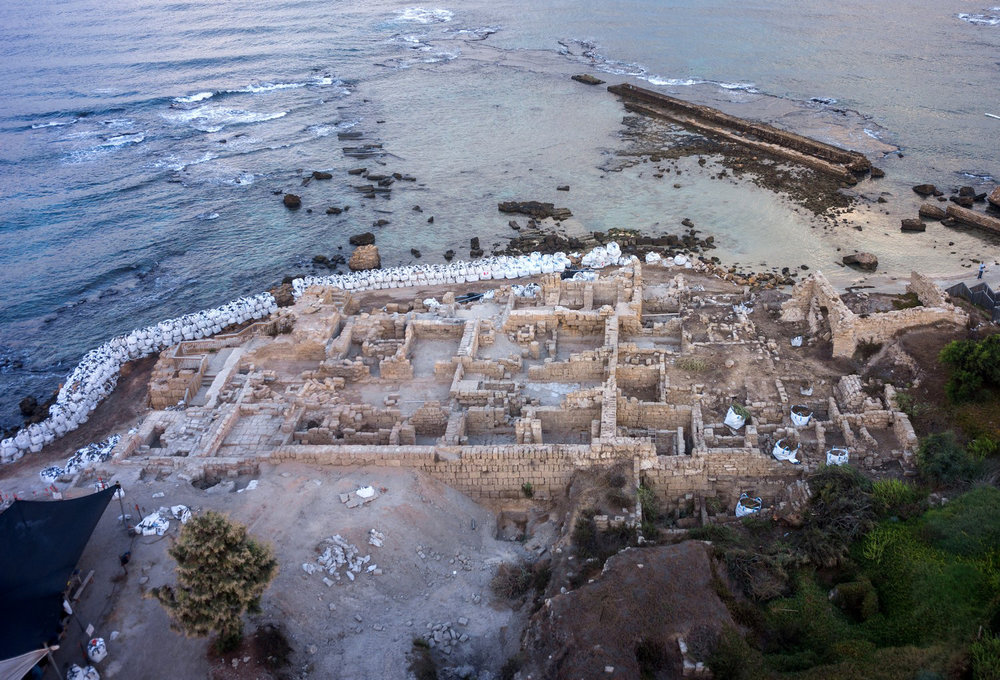
Το έργο αναστήλωσης του λιμένα της αρχαίας Καισάρειας έφερε στο φως ενδιαφέροντα ευρήματα, όπως την είσοδο του αρχαίου λιμένα, τη βάση βωμού της λατρείας των αυτοκρατόρων, επιγραφές και μικρά αντικείμενα (παράσταση της επτάφωτης λυχνίας ή αγαλματίδια θεών) αλλά και μία συναγωγή. Σύμφωνα με το σχετικό δημοσίευμα της Haaretz τα ευρήματα επιβεβαιώνουν σε γενικές γραμμές τη μαρτυρία του Ιωσήπου στο έργο του Ιουδαϊκός Πόλεμος σχετικά με το φιλόδοξο σχέδιο ανοικοδόμησης της πόλης από τον Ηρώδη. Για περισσότερα διαβάστε το σχετικό δημοσίευμα της εφημερίδας:


Τρίτη 29 Νοεμβρίου 2016

Στο τρέχον τεύχος του JRA / In the current issue of JRA

Journal of Roman Archaeology 29 (2016)

  • Joanne Berry, "Boundaries and control in the Roman house," 125-141 (abstract)
  • Roi Porat, Yakov Kalman, Rachel Chachy, "Excavation of the approach to the mountain palace-fortress at Herodium," 142-164 (abstract)
  • Candace Rice, "Shipwreck cargoes in the western Mediterranean and the organization of Roman maritime trade," 165-192 (abstract)
  • Andreas J. M. Kropp, "The Aphrodite of Emesa: miniature marble sculpture and religious life in Roman Syria," 193-222 (abstract)

Τρίτη 8 Νοεμβρίου 2016

Το τρέχον τεύχος του Henoch / The current issue of Henoch

Henoch 36:1 (2016)

Torah Traditions and Ancient Readers in Early Judaism and Christianity

  • Jessi Orpana, "Transmission and Reinterpretation of Scriptural Imagery and Traditions on the Creation of Humanity in the Book of Ben Sira," 4-14
  • Tavis A. Bohlinger, "A Survey of the Akedah in Pseudo-Philo," 15-31
  • Beate Kowalski, " 'Let My People Go, That They May Serve Me.' (Exod 10:3). Exodus Motifs in the Revelation of John," 32-53
  • Kaspar Dalgaard, " Multiple Melchizedeks in the Books of Jeu and Pistis Sophia," 54-66


Articles

  • David Rothstein, "Biblical Allusion, Compositional Rhetoric and Cultic Praxis. Decoding the Intertextual Web in 4Q266,"  67-88
  • Travis Trost, "Herod the Great, the Magi, and Parthia," 89-110
  • Augusto Cosentino, "Jewishness and non- (or anti-)Jewishness in the Pauline Corpus," 111-122